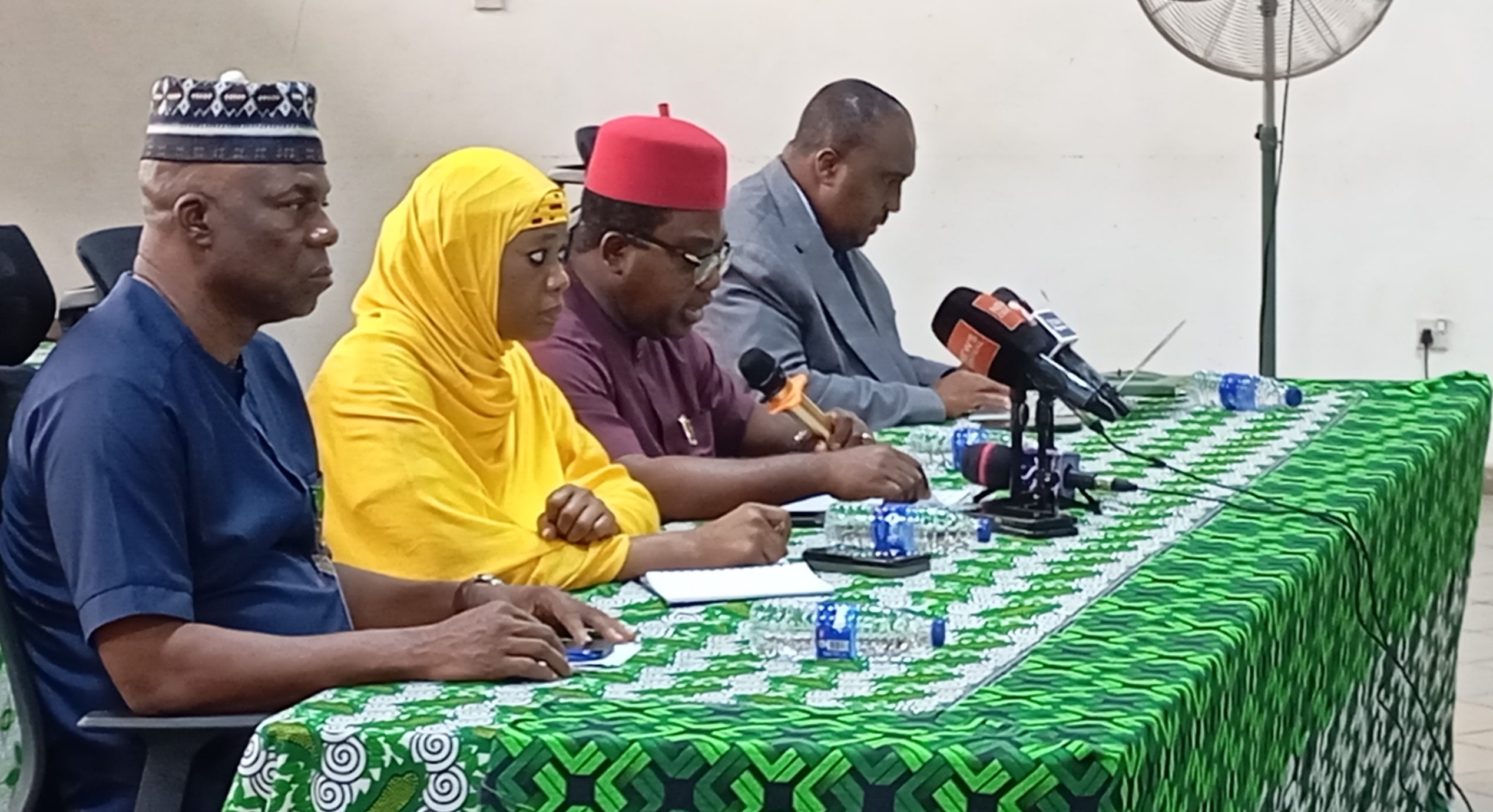
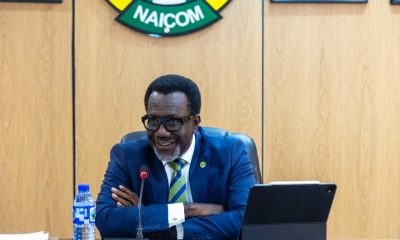
The NHRC Executive Secretary, Dr. Tony Ojukwu, SAN, (2nd from right) delivering an opening address; and the Director, Corporate Affairs and External Linkages, Fatimah Agwai Mohammed (3rd from right), flanked by other top officials of the NHRC during the presentation of the September 2026 Dashboard. Photo credit: Optimum Times -14/10/2026
By Clement Nwoji, Abuja
The Dr. Tony Ojukwu-led National Human Rights Commission (NHRC) has raised fresh concerns over chronic underfunding, warning that the cost of investigating and resolving millions of human rights complaints across Nigeria already exceeds the agency’s entire annual budget.
The Commission says it needs at least N30 billion yearly for complaint-handling operations alone, yet it received N20 billion in the current budget, a sum that must also cover salaries, office maintenance and nationwide operations.
Speaking after the presentation of his Speech for September 2026 Dashboard presentation, the NHRC Executive Secretary Dr. Ojukwu, SAN, disclosed that the Commission’s field operations are being hampered by inadequate resources, forcing investigators to rely on commercial transport services, including ride-hailing platforms, to carry out investigations across the country.
According to him, the Commission estimates that investigating a single complaint could cost about N10,000 in logistics alone.
Applied to the roughly three million complaints received annually, the figure translates to about N30 billion, significantly higher than the agency’s current allocation.
“Today our budget is N20 billion; last year it was N8 billion,” Ojukwu said, noting that the appropriation also caters for more than 900 staff members, nearly 40 offices nationwide, rent, electricity bills and vehicle maintenance.
The NHRC boss described the funding gap as “grossly inadequate”, revealing that electricity costs for the Commission’s headquarters alone exceed N6 million monthly.
The funding challenge comes as the Commission reported a surge in human rights complaints. In its September 2026 Human Rights Situation Dashboard, the NHRC recorded 338,810 complaints nationwide, a 14 per cent increase from the 297,943 recorded in August.
The Commission said the rise reflects both growing public awareness and the scale of rights violations requiring attention.
Beyond funding constraints, Ojukwu identified manual processing of complaints as another major challenge slowing investigations and case management.
He said the Commission has commenced plans to digitise its operations to improve efficiency, continuity and response time in handling cases.
“How far can you do it manually?” he asked, expressing hope that full digitisation would help the Commission better manage the growing volume of complaints.
He appealed to government, development partners and other stakeholders to support the agency’s reform efforts.
The Executive Secretary argued that the Commission’s interventions often prevent social tensions from escalating into wider crises.
He cited the NHRC’s role in resolving community disputes, family conflicts, cases of unlawful arrests and other grievances, saying such interventions contribute significantly to national stability.
“If the Human Rights Commission was not there to do these things, the military would have more problems in their hands, the police would have more problems in their hands,” he said.
The funding appeal comes against the backdrop of a worsening human rights environment highlighted in the September Dashboard.
The report documented rising complaints, cases of insecurity, kidnappings and attacks on communities, including concerns over mass abductions in Niger State.
The Commission also drew attention to the reported deaths of 37 persons in custody following operations against artisanal mining activities in the state and called for an independent and transparent investigation.
The NHRC further expressed concern over the continued vulnerability of women and children to violence, abuse and exploitation, while urging stronger child protection measures and institutional reforms.
Despite the challenges, Ojukwu insisted the Commission would continue to discharge its mandate, while pushing for a doubling of its budget to N40 billion to strengthen investigations, accelerate complaint resolution and improve access to justice for Nigerians.
















 Business News6 days ago
 News1 week ago
 Business News1 week ago