By Mohammed Abubakar Dutse
The Jigawa State House of Assembly on Wednesday adopted a report presented by the House Committee on Public Accounts which recommended the recovery of alleged mismanaged public funds by the local government council chairmen across the 27 LGAs.
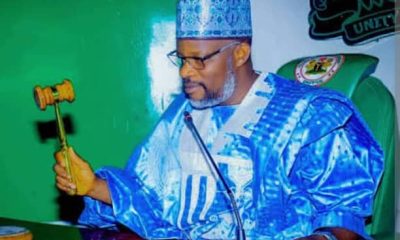
The resolution was passed through a unanimous vote at the resumed plenary presided over by its speaker, Haruna Aliyu Dangyatin where the committee presented a comprehensive report from the chairman of the House Committee on Public Accounts.
Curiously, the period covered the period between 2019-2024 under the administration of former governor Alhaji Mohammed Badaru Abubakar, the immediate past Defence Minister
The chairman said the panel conducted public hearings and a detailed review of audit reports from the Office of the Auditor-General for the State and the Local Government Councils for the period under review.
He explained that the committee examined audited financial statements, payment vouchers, contract records, and procurement documents of Ministries, Departments, and Agencies (MDAs), as well as those of the 27 local councils.
According to him, top government officials, including commissioners, permanent secretaries, accounting officers, and directors of administration and finance, were invited to respond to audit queries and observations.
Similarly, local government chairmen, directors of administration and general services, directors of planning, research and statistics, treasurers, and other key officers appeared before the committee to defend their records.
Abubakar noted that the committee scrutinized submissions and, where necessary, carried out verification exercises to assess the credibility of responses.
“The committee adopted a balanced approach, giving MDAs and local councils the opportunity to respond while upholding the principles of transparency, accountability, and fiscal discipline,” he said.
The report highlighted key irregularities at the state level, including expenditures exceeding approved budgets, lapses in procurement processes, and weaknesses in revenue collection.
At the local government level, the committee uncovered discrepancies in documentation and record-keeping, irregular and unauthorized payments, flaws in procurement and project execution, non-compliance with financial memoranda, and missing or destroyed records.
It further identified instances of overpayments, unaccounted cheques, and unverifiable expenditures, and recommended the full recovery of such funds and disciplinary action against culpable officers.
The committee also pointed to systemic challenges, including inadequate training for accounting and audit personnel, weak enforcement of financial regulations, a lack of deterrent sanctions, and the continued use of manual financial systems that are vulnerable to manipulation.These weaknesses undermine fiscal discipline, erode public trust, and hinder effective service delivery,” the chairman stated.
To address the issues, the committee recommended regular training and professional certification for finance officers, strengthening the Office of the Auditor-General through improved funding and operational independence, and strict enforcement of sanctions against erring officials.
It also urged the recovery of “all unaccounted and unverifiable funds,” alongside reforms to improve financial management systems across the state and local governments. Similarly the committee recommended that all officers responsible for the financial violations should be disciplined in accordance with civil service rules and financial regulations to deter future misconduct
The committee reaffirmed it’s commitment to promoting transparency accountability and prudent management of public funds n the state
Dangyatin commended the committee for what he described as a thorough and diligent assignment, assuring that the report would be transmitted to the executive arm for necessary action.


















 Business News4 days ago
 For Records1 week ago
 Business News1 week ago