
Business News
FROM THE BRINK TO BILLIONS: How CBN’s Bold Reforms Lifted Nigeria’s External Reserves To Historic $58.81 Billion

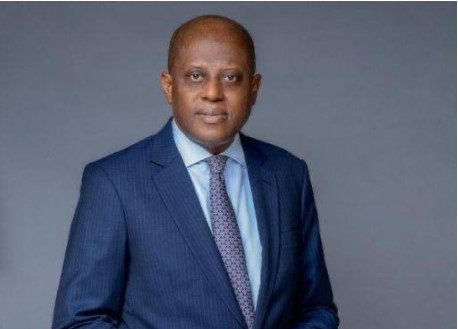
*Olayemi Cardoso, CBN Governor
Cardoso’s Monetary Revolution Restores Investor Confidence, Attracts Foreign Capital and Rebuilds Nigeria’s Financial Buffers
By Clement Nwoji, Abuja
In what many economists now regard as one of the most remarkable macroeconomic turnarounds in Nigeria’s recent history, the Central Bank of Nigeria (CBN) has engineered a dramatic resurgence in the nation’s external reserves, raising them from a period of severe vulnerability ($33.22 billion gross reserve) in 2023 to an unprecedented $58.81 billion, with net reserves estimated at about $46 billion, the highest level recorded since 2008.
The achievement represents more than a statistical milestone. It signals a restoration of confidence in Africa’s largest economy after years of foreign exchange instability, dwindling reserves, multiple exchange rates and investor scepticism. At the centre of the turnaround is the policy direction of the CBN under Governor Olayemi Cardoso, whose orthodox monetary reforms, foreign exchange liberalisation initiatives and strategic reserve management measures have reshaped the country’s financial landscape.
Beyond the headline figure, economists argue that stronger reserves could translate into tangible benefits for ordinary Nigerians.
Higher reserves typically support exchange rate stability, improve the country’s ability to finance imports, strengthen investor confidence and provide a critical buffer during periods of global economic turbulence.
At the recent annual World Bank/IMF meetings held in Bangkok, Olayemi Cardoso assured that Nigeria’s policy objective remains ensuring that macroeconomic stabilisation leads to lower inflation, improved production capacity, cheaper credit and stronger household purchasing power.
A Nation on the Edge
When the current administration assumed office in 2023, Nigeria’s macroeconomic fundamentals faced severe strain. Investor confidence had weakened, foreign exchange liquidity was constrained, inflationary pressures were mounting and the economy was grappling with structural distortions that had discouraged foreign capital inflows.
Faced with these challenges, the CBN embarked on an ambitious programme of reforms designed not merely to stabilise the economy but to rebuild Nigeria’s credibility in the international financial system.
The Interest Rate Strategy That Changed the Game
One of the most significant policy tools deployed by the apex bank was an aggressive tightening of monetary policy.
By maintaining benchmark interest rates at historically elevated levels, ranging between 26.5 and 27 per cent, the Monetary Policy Committee sent a powerful signal to global investors that Nigeria was serious about combating inflation and restoring monetary discipline.
The strategy yielded immediate benefits. Attractive yields on Treasury Bills and sovereign debt instruments drew substantial foreign portfolio investment into the country, bringing in fresh dollar inflows and strengthening reserve levels. Simultaneously, strict cash reserve requirements helped curb excess naira liquidity and reduced speculative pressure on the foreign exchange market.
Dismantling a Distorted Forex Market
Perhaps the most transformative move was the overhaul of Nigeria’s foreign exchange regime. The CBN’s decision to unify multiple exchange rate windows under a market-driven “willing buyer, willing seller” framework fundamentally altered the dynamics of the forex market. The reform significantly narrowed the gap between official and parallel market rates, reduced arbitrage opportunities and improved transparency.
In another major confidence-building step, the bank cleared a backlog of approximately $7 billion in verified foreign exchange obligations inherited from previous years. The move reassured international investors and businesses that Nigeria remained committed to honouring its financial obligations. Financial analysts widely credit this action as one of the catalysts for renewed foreign investor participation in Nigeria’s markets.
Tapping the Diaspora Dollar Powerhouse
Recognising the immense potential of remittances, the CBN launched targeted initiatives aimed at increasing formal diaspora inflows. The bank streamlined remittance procedures, expanded the operating framework for International Money Transfer Operators (IMTOs), and later introduced Non-Resident Nigerian accounts to encourage Nigerians abroad to save and invest in the domestic economy. These measures redirected billions of dollars from informal channels into the formal financial system, strengthening reserve accumulation.
Banking Sector Recapitalisation as a Foreign Exchange Magnet
The banking sector recapitalisation programme launched in March 2024 became an unexpected source of foreign currency inflows.
Commercial banks mobilised over ₦4.65 trillion in fresh capital, with a significant portion originating from foreign investors. Beyond strengthening the financial system, the exercise contributed directly to Nigeria’s external reserve position by attracting new hard-currency investment into the economy.
Tough Regulation, Stronger Confidence
The Cardoso-led CBN also embarked on a sweeping regulatory clean-up. Thousands of non-compliant Bureau de Change operators lost their licences while new standards were introduced to improve transparency, compliance and market discipline. Enhanced anti-money laundering measures, stricter supervision and improved collaboration with local and international regulators further strengthened confidence in Nigeria’s financial system. The result has been a more transparent and rules-based financial environment capable of attracting long-term investment.
Diversifying the Reserve Base
In a landmark development, the CBN expanded its reserve diversification strategy through the acquisition of locally sourced gold refined to London Bullion Market Association standards under the Domestic Gold Purchase Programme. By purchasing gold in naira and adding it to the nation’s reserve assets, the bank strengthened reserve quality while reducing dependence on foreign exchange for reserve accumulation.
This move places Nigeria among a growing number of countries seeking to diversify reserve holdings beyond traditional currencies.
A New Era of Policy Credibility
The restoration of reserves has coincided with broader reforms, including the introduction of an inflation-targeting framework, the launch of the Nigerian Foreign Exchange Code, improvements in digital financial regulations, enhanced investor protection mechanisms and initiatives to deepen domestic financial markets.
The CBN’s partnership with the International Finance Corporation (IFC), expected to unlock more than $1 billion in local currency financing over the coming years, further underscores growing international confidence in Nigeria’s economic direction.
The Bigger Picture
For ordinary Nigerians, the reserve figure is more than a headline number. Strong external reserves provide a critical buffer against external shocks, improve exchange rate stability, enhance the country’s ability to meet international obligations and boost investor confidence.
While challenges remain, particularly in the battle against inflation and the quest for sustained economic growth, the rebuilding of Nigeria’s reserves to $58.81 billion stands as powerful evidence that disciplined monetary policy, structural reform and institutional credibility can deliver tangible results.
For many observers, the rise of Nigeria’s external reserves from a position of vulnerability in 2023 to $58.81 billion today may become one of the defining economic stories of the decade.
What began as a rescue mission has evolved into a broader programme of economic stabilisation. And if current trends continue, the reserves build-up could stand as one of the strongest indicators that Nigeria’s financial architecture is being rebuilt on a foundation of transparency, discipline and renewed global confidence. As Nigeria charts its economic future, the rise in external reserves may well be remembered as the foundation upon which a broader economic recovery was built, transforming a nation once grappling with uncertainty into one increasingly regarded as an emerging destination for global capital.






Click to read full text









FROM THE BRINK TO BILLIONS: How CBN’s Bold Reforms Lifted Nigeria’s External Reserves To Historic $58.81 Billion

Tunde-Anjous: Long-Term Financial Security Key to Household Resilience, Economic Stability

Court Warns Against Delay In Trial Of Four IPOB Members Allegedly Linked To Killing Of DSS Operative

Swift Telephone Network Recieves NCC’s Unified Access Service License, Ventures Into Full Telcom Services

NAF Commences Comprehensive Probe Over 931 Aircraft Accident, Releases Names Of 25 Deceased Persons

Grid Stability, Reliability: FG Kickstarts Construction of Modern National Control Centre As Existing One Becomes Substandard


-

 News1 week ago
SERAP Sues CBN Over Failure To Account For $6.23 Million In ‘Missing’ Election Funds, ₦1.63 Trillion In Other Public Funds
-

 Business News1 week ago
Customer Service Week: NCRIB Allays Fears over Unpaid Insurance Claims
-

 News6 days ago
Ignored Warnings, Fiery Consequences: Gas Pipeline Explosion Tears Through Rivers Community, Leaves Scores Injured