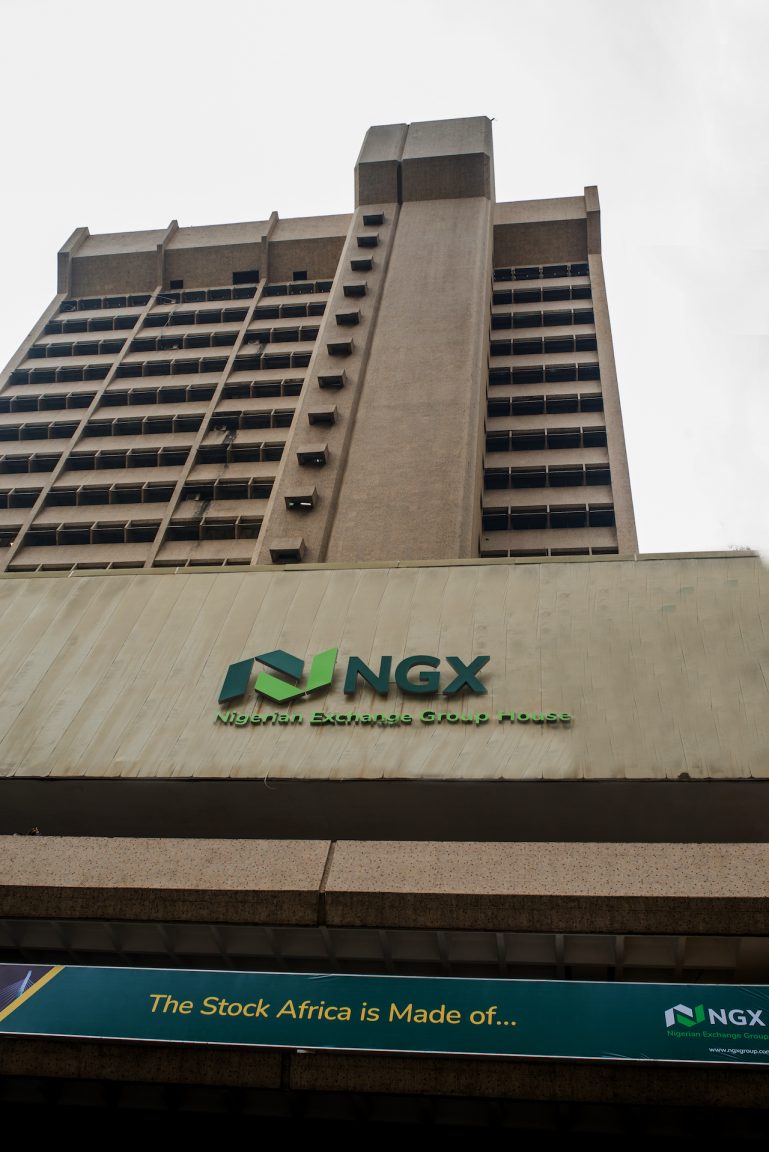
The Nigerian Exchange Limited (NGX) has sanctioned 15 listed entities with fines amounting to N123.17 million for failing to submit their audited and interim scorecards within statutory timelines, with quoted underwriting firms notably Cornerstone Insurance Plc, International Energy Insurance (IEI) Plc, and Regency Alliance Insurance Plc facing scrutiny over recurring disclosure lapses.
The enforcement disclosures, captured in the latest X-Compliance Report released by NGX Regulation Limited (NGX RegCo), documented 22 distinct infractions across full-year audited financial statements and periodic unaudited interim results.
A granular breakdown of the penalties shows that defaults on audited financial statements accounted for N87.30 million of the total levy, while overdue interim filings attracted N35.87 million.
Underwriting firms featured prominently among the most sanctioned entities. International Energy Insurance recorded the single highest penalty on the bourse at N28.20 million. Cornerstone Insurance and Regency Alliance Insurance also breached regulatory submission schedules across both reporting categories, joining a cluster of six dual-defaulting entities that amassed a collective fine of N56.10 million.
Beyond the insurance sub-sector, logistics operator Caverton Offshore Support Group accumulated N19.20 million in sanctions across both categories, while technology firm Legend Internet was fined N16.80 million. Alongside International Energy Insurance, these three companies alone accounted for N64.20 million, representing roughly 52.12 per cent of the total sanctions imposed.
Other quoted companies sanctioned for regulatory filing defaults include energy major Oando Plc (N10.40 million), Jaiz Bank Plc, Sterling Financial Holdings Company Plc, NCR (Nigeria) Plc, Fidelity Bank Plc (N4.20 million), Ecobank Transnational Incorporated (N1.30 million), International Breweries Plc (N1 million), and PZ Cussons Nigeria Plc (N600,000).
The persistent recurrence of reporting defaults by insurance companies comes despite ongoing regulatory drives by the National Insurance Commission (NAICOM) and the NGX to boost market transparency and investor confidence.
Market data comparing filing lag times between the 2024 and 2025 financial years against the exchange’s March 31 benchmark revealed that while some underwriters improved, others deteriorated. Regency Alliance reduced its filing lag from roughly 155 days to 116 days, and Prestige Assurance compressed its delay from 140 days to 45 days. Conversely, Cornerstone Insurance saw its filing lag widen from 66 days to 78 days, mirroring slippages in other sectors such as Oando, whose reporting delay stretched from 65 days to 97 days.
Capital market operators have questioned the deterrent value of nominal financial sanctions, pointing out that well-capitalized corporates often treat the levies as routine administrative overheads. Oando’s N10.40 million fine, for instance, represents less than 0.01 per cent of the N135.76 billion pre-tax profit it posted in 2025.
Reacting to the trend, the Pioneer Registrar of the Institute of Capital Market Registrars (ICMR), Dr. David Walter Ogogo, urged the self-regulatory organisation to escalate chronic defaulters to the Securities and Exchange Commission (SEC).
“Sanctions may not be enough. A company may pay a penalty and continue doing what it was doing before. The NGX can report such companies to the SEC, which can consider additional measures, including summoning affected boards before its Administrative Proceedings Committee (APC) to institutionalize board-level accountability,” Ogogo stated.
Corroborating this stance, the Managing Director of ECL Asset Management Limited, Mr. Charles Fakrogha, advocated direct board intervention and mooted delisting for persistent non-compliance.
“When companies deliberately default and repeatedly pay penalties, the exchange needs to consider other measures. There is no point remaining on a platform when you are not meeting its requirements,” Fakrogha argued.
However, the Chief Executive Officer of Globalview Securities Limited, Mr. Aruna Kebira, cautioned that while transparency is mandatory for quoted companies—stressing that listed firms “must be willing to dance naked for everyone to see”—arbitrary delistings could impair liquidity and trap minority shareholders.
The repeated appearance of insurance firms on the penalty list highlights deep-seated operational bottlenecks in reconciling audited accounts, even as stakeholders call for synchronized regulatory supervision between NAICOM and the SEC to enforce compliance.














 Business News1 week ago

 News6 days ago

 News3 days ago