MONDAY PHILIPS EKPE writes that rival candidates in next year’s presidential poll do not stand much chance outside coalition
For now, it appears like kite-flying. The August 2, 2026 open letter conceived and signed by the self-styled G100 will need to be backed soon by stronger energies and actions in order to pass the test of a true catalyst for any consequential political engineering in the runup to the 2027 presidential election. The group had given itself two weeks to bring together the leading lights of the opposition political parties in order to kickstart the process of unifying them towards presenting a single candidate to challenge the incumbent president. The members didn’t seem to consider the conflict with the Osun State governorship poll this weekend.
But the awkward announced timing shouldn’t take any shine off the validity and urgency of this proposition. The group’s front-liners like former National Vice Chairman of All Progressives Congress (North-West), Malam Salihu Lukman, former member of the House of Representatives, Honourable Nnenna Ukeje, ex-Deputy Governor of Kogi State, Chief Simon Achuba, and political economist and public intellectual, Professor Anthony Kila, must be sufficiently conversant with the centrality of virile opposition to the integrity of any democracy and, by implication, every election cycle. Ordinarily, the summit they’re planning with their 96 colleagues should be embraced by all lovers of inclusive, collaborative democratic practice.
As altruistic as their mission is, whether it’ll come to fruition remains to be seen. The G100’s initial statement titled, “The Doctrine of a Necessary Democratic Opposition”, reads thus, in part: “We have fashioned a political order that too often rewards loyalty over merit, patronage over service, and power over accountability. We should not wonder that such a system produces poverty and misery; for, a nation cannot harvest prosperity from institutions that perpetuate poverty and deprivation.
“The ruling party grows stronger, not only because of its own organisation, but because it has surrendered internal dissent to the authority of the executive. At the same time, those entrusted with presenting Nigerians with an alternative have become divided by ambition rather than united by purpose. While the executive consolidates power, the opposition fragments…. The liberty of a people depends not only upon the existence of government, but upon the certainty that government may be peacefully challenged, corrected and, when necessary, replaced. A government that fears no opposition soon forgets the people. An opposition that cannot oppose soon forgets its purpose.
“Nigeria cannot be rescued by opposition leaders who march separately toward the same defeat. Personal ambition must submit to national necessity, for a people divided at the moment of decision will remain governed by those who profit from that division….” A well-crafted epistle which could turn out to be historic or prophetic. Or, perhaps, be remembered only for its poetic qualities – something even enemies of Nigeria shouldn’t wish this underperforming giant of Africa and a potentially bold and respected global player.
The country, no doubt, is at a crossroads, a delicate phase of nation-building and growth. A point where the slide on the graph of decent and progressive human development is yet to show appreciable signs of going upwards. It won’t be correct to lay all the blames for the nation’s current misfortune at the doorsteps of President Bola Tinubu and his government since the origin of most of the challenges does not, in truth, belong to the present. Sadly, though, Nigerians are now saddled with the wisdom or unwisdom of investing so much confidence in Tinubu’s ability to deliver the good life, especially against the backdrop of succeeding a lacklustre President Muhammadu Buhari administration.
Attribute it to nostalgia, short memory, mischief, ignorance, sincere testimony, or jejune politics, for all you want. Many people today think that their lives were much better during Buhari’s time than now, as painful as it was. Tinubu’s official and self-appointed image minders won’t mind losing a limb in defence of their master’s intentions, reforms and programmes. Not surprisingly. But one thing, in God’s name, they mustn’t do is to view the quest for a strong political rivalry as an unpatriotic, evil gang-up. So much has been said about Tinubu’s combative role in the processes that led to the unseating of President Goodluck Jonathan in 2015. If he hadn’t done so, together with his aggressive, relentless co-travellers, the then overfed ruling party, People’s Democratic Party (PDP), would still be running the show today. And now that many Nigerian citizens feel much the same towards this government, erecting a viable platform that would project a viable alternative is a most patriotic thing to do.
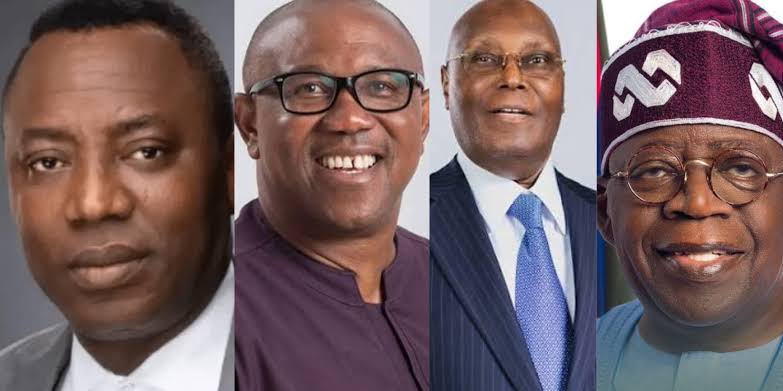
Ironically, the president may not even be the greatest worry at this point. One immediate hurdle is for Malam Lukman and Co to get the heavyweight targets of this move to first attend the parley and then show respect to its ideals. It’s instructive that the highest losers in the 2023 presidential election are in this mix: Wazirin Atiku Abubakar, now presidential candidate of African Democratic Congress (ADC), Mr Peter Obi of the Nigeria Democratic Congress (NDC) and his running mate, Dr Rabiu Kwankwaso; among other political titans.
These men can serve their country and themselves creditably if they dwell less on their own past records, particularly the rankings of the last outing. Reason: Times have changed remarkably. So have attitudes. The figures that were recorded in their favour by the Independent National Electoral Commission (INEC) – whatever veracity is left of them – may have lost their relevance. Any permutations based on those numbers now may actually be in futility. For instance, I’ve met many young people who are so disappointed by Obi’s loss that they’ve lost faith in the country’s electoral system altogether. And, quite frankly, it’ll take more than simply hammering of the people’s unending suffering to turn the tide.
Getting apathetic individuals and sections to participate this time would be a function of several variables, one of which is the readiness of the front bench players to sacrifice their own ambitions – not minding legitimacy and expediency – for the general good. The ever-increasing incidence of voter indifference validates this. By now, the presidential frontrunners might have learnt some critical lessons. One simple arithmetic of the 2023 outing is that if Abubakar and Obi had run on the same ticket, nothing would have given Tinubu the victory, as demonstrated by the declared results. Now that the beneficiary of that costly calculation is in power, no soothsayer is required to declare that it’ll take extraordinary efforts (in this case, a well-mobilised coalition) to remove him. Anything short of that would be sleep-walking into a certain trouncing.
*Ekpe, PhD, is a member of THISDAY Editorial Board
X: @monday_ekpe2




















 Business News6 days ago
 News1 week ago
 Business News1 week ago