
Analysis
How We’re Stabilising Grid, Boosting Transmission Despite Setbacks At Distribution End – TCN


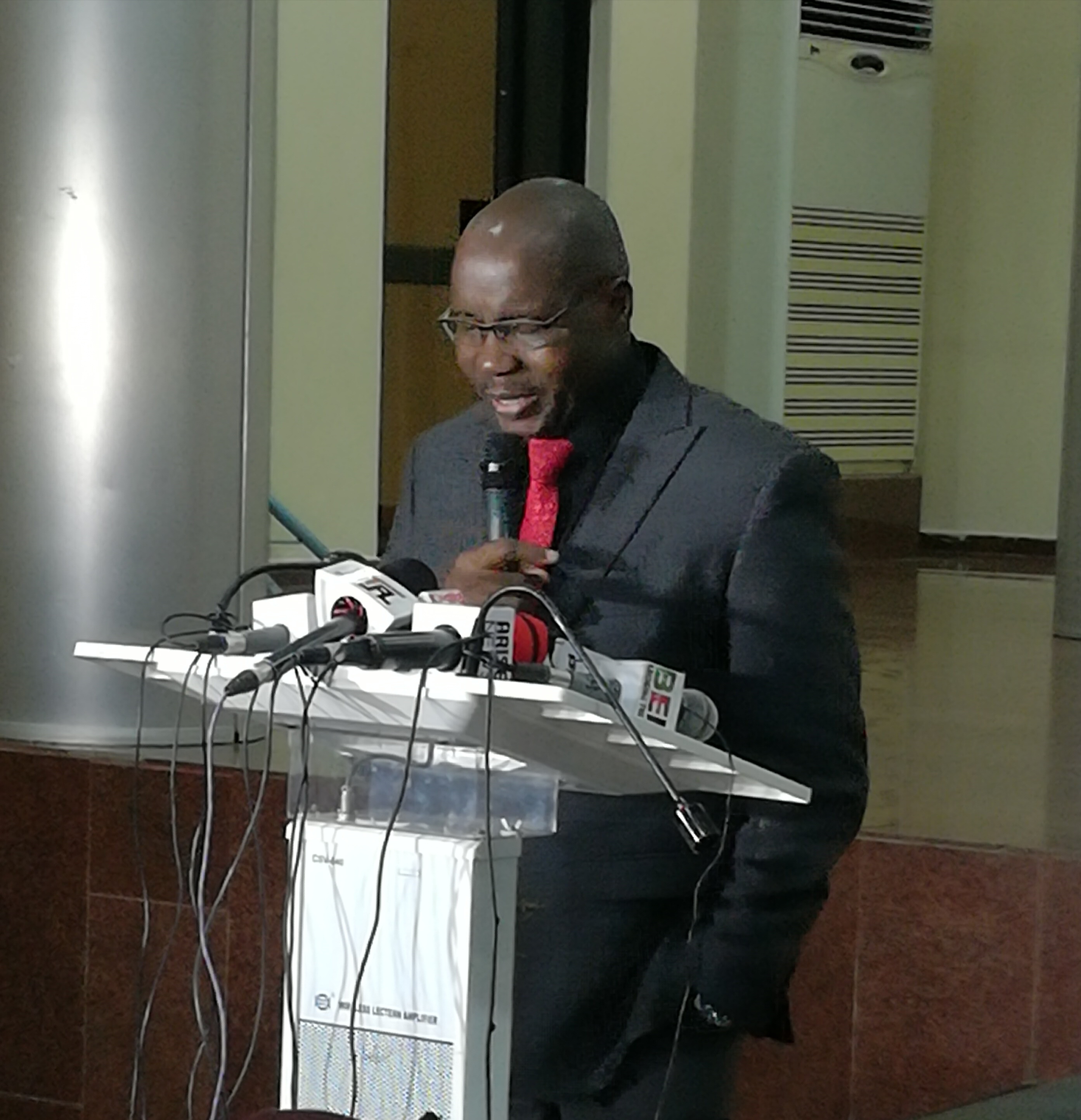
TCN Managing Director, Usman Gur Mohammed
***Raises $1.661 Billion From Multinational Donors For Investments
By CLEMENT NWOJI, Abuja
(The Transmission Company of Nigeria (TCN) as an intermediary between power Generation Companies (GenCos) and Distribution Companies (DisCos) has herculean task of evacuating generated power and releasing same to the DisCos for distribution to the end users to maintain stability in the grid. To this end, in an interactive session with Journalists, the TCN Managing Director, Usman Gur Mohammed, gives update on the processes, indicating how the company is stabilising grid, boosting transmission despite setbacks at distribution end.)
Before now, the power transmission system had been unreliable just as the frequency control remained unstable but following planned reforms and investments, the Transmission Company of Nigeria (TCN) has for the first time in Nigeria achieved frequency control of 49.8 and 50.2 hertz which is the standard for West Africa Power Pool (WAPP).
This was made possible through massive mobilization of funds from within and from multinational donors and investments of same in substations, expansion of transmission lines and reconduction of some lines with high capacity conductors. Even as the TCN embarked on this grid stabilisation programme and subsequent achievement of successes, this presents challenges as this was not matched with equal level investments and expansion in the distribution network.
According to the TCN managing director, Usman Gur Mohammed while giving insight into the frequency control, “I’m happy to tell you that from December 23, 2018 to May 5, 2019, we have achieved frequency control at the rate of West Africa Power Pool (WAPP) standard that is 49.8 and 50.2 hertz at 66 percent of the time. If you look at the standard, it is exactly the standard of Ghana. This is the best ever achieved by Nigeria in history.

“But let me tell you the negative side of this and that is, from May 6 to date we are struggling to achieve control of 49.8 and 50.2 at about 30 percent because one, we have weak distribution network that once it starts raining, all the distribution network are almost collapsing and as a result of that, frequency management becomes a big issue.”
In course of embarking on critical investments in lines and substations without delay, the TCN has resorted to using its in-house staff to save cost and ensure prompt accomplishments of projects within timeframe. The projects include those either abandoned by initial contractors or were being unnecessarily delayed.
It is not surprised when Mr. Mohammed revealed that it has almost recovered its containers of equipment hitherto abandoned in ports for several years. This is just as he confirmed that high capacity conductors it the company had procured for reconducting weak transmission lines will be arriving Nigeria on July 27.
He said: “Out of 800 containers that were stranded at the ports, we have recovered as at last week 775 containers. We have discovered that two containers were missing and we have reported to the police and customs who are now investigating it. Also, we have discovered a container which is empty and we have reported to the police and customs who are investigating it.
“Since last time when we met and I told you that we have added 3,100 MW to the National grid, we have commissioned so many other new substations. We have commissioned Damaturu, Maiduguri, Ilesha and so many other substations. We have added several new transformers across the region.
“As I earlier told you that part of our plans to expand the grid include re-conducting some lines where we have transformer capacities but the lines are not robust enough to carry power to those transformer capacities. Now the high capacity conductors which we procured, conductors that are currently lighter than those conductors that we have on those lines, and are carrying almost two and half times of the current conductors, half of the conductors are arriving Nigeria on 27 July.
“And these are the lines we are going to re-conductor with those conductors and all of them are at 123KVs. We are re-conducting Onitsha, Awka, Oji River line so that we can optimise the capacities in Awka and Oji River. In Awka, NIPP has built New substation.
“We are reconducting Ikeja West, Alimosho to Ogba, Ogba to Ota. We are also reconducting Alimosho to Alausa, Kaduna to Zaria, Zaria to Funtua, Funtua to Gwozo, Birini Kebi to Sokoto. We are also reconducting the line from Aba to Itu and so on. So these are the lines we are going to use these high capacity wires to reconductor them. By doing these, we are going recover between 2000 and 3000 MW. Which means automatically the grid is going to increase from 8,000 to at least 10,000 MW.”
On investments and contract execution, the TCN Managing Director said: “We are using our staff to forcefully takeover and execute some contracts and we are still using them to execute some contracts that are not completed. We have raised significant amount of investments for reinforcing the system under the critical investments in lines and substations. And as at today the amount we have raised from multilateral donors has raised to $1.661 billion.
“Those projects includes the Abuja wheeling scheme which will bring five substations in Abuja and bring new supply root from Lafia to Abuja. The project will put three 230KV substations and put additional substations. The contract for all the projects have been signed.
The budget for the whole investments is N165 million. Another project I want to report to you is the Northern corridor. The project was designed to do three 230KV lines.”
Despite the progress in actualization of stable grid and transmission, he noted that this goes with some challenges and difficulties. “It’s not that we don’t have challenges. We have one in Benin recently and some time past in Apo, Abuja and these are some of the difficulties we have had in the past. But I want to assure you that the journey to stable grid is on tract.
“However, one important message I want to tell you is that we have discovered that everything we are doing for stable grid will amount to nothing except we have same thing on the distribution side.What I mean is that the sustainability of the investments we are putting in TCN will not be guaranteed if we don’t have commensurate investments on the distribution side because we are connected to each other.”






Click to read full text









NAICOM Clears Seven More Insurers, Closes Recapitalisation Exercise At 50 Operators

Kari Opposes Regulatory Concessions For Insurance Recapitalization Defaulters

Vom: Plateau People Cannot Have It Both Ways

FG flags Off Smart Meters Installers Training programme, Targets Installing Seven Million Meters Nationwide

MPC Meeting: Nigeria’s Economy Remains Resilient To External Shocks, Cardoso Assures As Members Commit To Sustain Financial Stability

NHRC Tasks FG, State Govts, People Of Means To Make Practical Interventions Towards Combating Poverty, Inequity


-

 News4 days ago
Police Arrest Clergyman, Air Force, Navy Personnel Over Alleged Plot To Kidnap Bishops’ Wives In Plateau
-
 Business News1 week ago
Asset Integrity, Life Extension, Fixing Obsolescence Key To Sustaining Value For Independents – Seplat CEO
-
 News6 days ago
Gov Abiodun Commends Army, Police, DSS, Others For Intelligence-led Rescue Of Five Kidnapped Poly Students, Two Others