In grid operations, it is necessary to maintain a delicate equilibrium, ensuring that the electricity grid’s load, representing the demand for power by consumers and industries, remains in a balance with its generation capacity, which encompasses the multitude of power plants and sources responsible for producing electricity.
A Grid Control System refers to the coordinated control and management of an electrical grid to ensure a constant balance between electricity generation and load consumption. This critical function is vital for maintaining the stability of the grid. Without effective grid control, the grid is at risk of becoming unstable, leading to potential system collapse—a situation where generators automatically shut down to protect themselves. The necessity of achieving this equilibrium cannot be overstated, as the failure to do so can plunge the grid into a perilous state of instability, ultimately culminating in a catastrophic event universally recognized as a “system collapse.”
Loss of Grid Control: System Collapse
A system failure is nothing short of a nightmare in grid management. When the delicate balance between load and generation is broken and the grid becomes unstable, a dreadful chain reaction begins. In such extreme situations, generators, the grid’s critical heartbeats, take self-protective steps and initiate an emergency shutdown to avoid damage or catastrophic collapse.
This seemingly prudent reaction of generators, while protecting the equipment, has a disastrous result: a widespread power outage affecting homes, industries, businesses, and essential infrastructure alike. A system failure can have far-reaching consequences that go beyond basic inconvenience; it can result in economic losses, disruptions in key services, and even jeopardise public safety.
TCN Efforts At Preventing Collapses:
Understanding the disastrous consequences of a system failure emphasises the critical need of averting such an event at all costs. The ramifications are not just disruptive, but also far-reaching, hurting citizens’ livelihoods and well-being. In response to this necessity, the TCN management has invested in different schemes and taken strategic approach to make the Nigerian Grid Control System more responsive at preventing collapses.
The results of TCN’s efforts are showing hope and progress. For the first time in a long time, TCN’s electrical grid went 420 days without a major outage or system failure. This remarkable achievement marks a major advance in the nation’s power infrastructure rebuilding efforts.
Steps Taken towards Grid Stability
This excellent grid stability was achieved through uncompromising actions and careful planning. Key strategies for preventing system breakdowns and ensuring grid stability include:
1. Configuration and Enforcement of Free Governor Control:
TCN Management organized a three-person team to configure and activate Primary reserve with Power station and Grid code provisions nationwide. The committee established a system to monitor and enforce compliance at each producing station after the governor control was activated. This makes most grid units Free Governor Control compliant.
Free Governor Mode of Operation automatically adjusts frequency and generation to accommodate for frequency changes. A turbine governor controls rotational speed in response to load change. As electricity demand changes, the governor control adjusts generator output to maintain output frequency within the statutory limit.
This has improved grid stability, dependability, and transmission loss to an acceptable level.
2. Effective Under Frequency Relay Scheme:
Under frequency relays works by monitoring the system frequency to see if it reaches a threshold below the operating frequency. If this occurs, the relay activates and can either automatically trip a circuit breaker or alert the network operator. This operate when the demand is more than output of generators at a threshold below the operating frequency.
Due to generation shortfall, the load demand occasionally more than the generators output, thus result in decline of frequency below acceptable threshold. To address this decline frequency which can result to cascade tripping of generators on under frequency and eventually lead to system collapse, the TCN management implement a strategic deployment of under frequency relay scheme to operate in two critical stages of frequency to trip a specify load and restore the system frequency to acceptable value. The relays were carefully mapped and successfully deployed across TCN substations on rotational basis.
The implementation of free governor control and under frequency relay schemes enable the grid to be stable and reliable.
3. Deployment of IoT/VPN for Enhanced Grid Visibility:
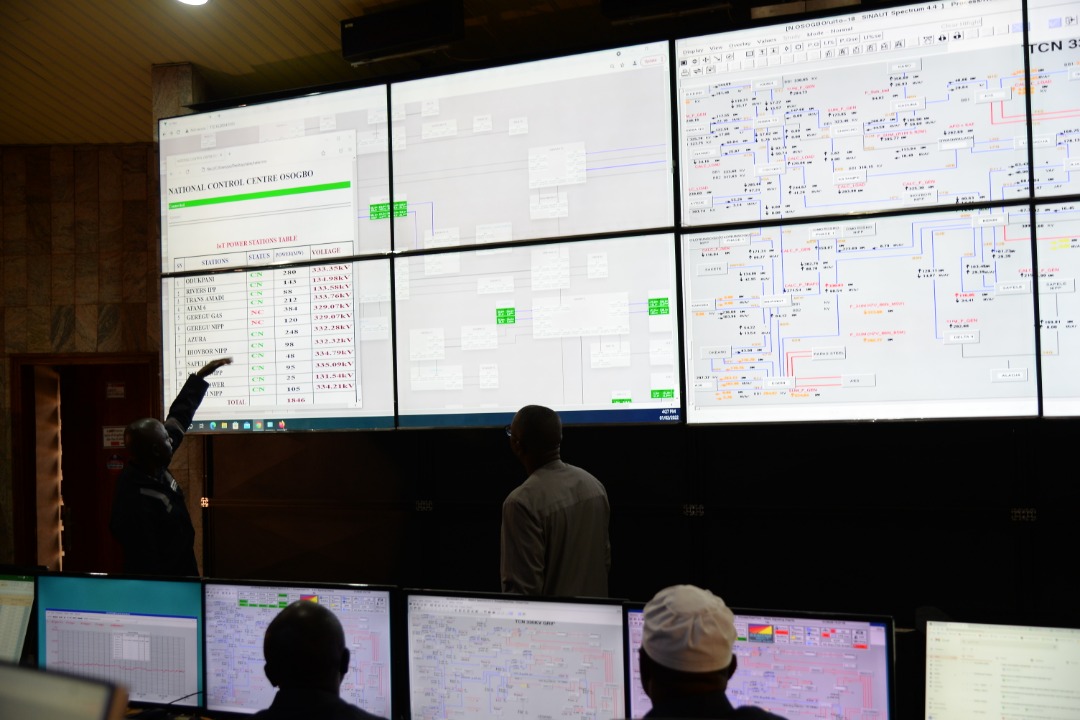
Grid visibility has been the fulcrum for Grid operation and management, as efforts are being made to rehabilitate the SCADA/EMS system the management of TCN inaugurated a task force of in-house Engineers that provided a stop-gap solution to the Grid visibility, now the System Operators at National Control Centre can see over ninety percent (90%) of the Generating stations and Transmission sub stations with the corresponding line flows. This well-considered choice has resulted in notable improvements in overseeing the power grid. By deploying IoT sensors and devices development by the in-house TCN Engineers, the ability for real-time monitoring has been established, enabling operators to proactively identify potential issues before they escalate into disruptive incidents. This predictive capability has played a pivotal role in maintaining the grid’s stability. Moreover, continuous efforts are in progress to expand this visibility further by incorporating additional transmission stations through this IoT integration.
4. Infrastructure Upgrades / N-1 CONTINGENCY:
The TCN management, has successfully ringed the Grid by meeting up with N-1 CONTINGENCY, by implication the grid is no longer a radial network where tripping of individual line may cause instability in the system. The Grid is now a loop system due to massive investment in construction and dualization of critical circuits/Lines.
These strategic investments have significantly elevated the grid’s operational capabilities, substantially lowering the likelihood of overloads or outages. The modernized infrastructure has not only met the growing power demands but has also positioned the power system to adapt to future challenges and evolving energy needs. The TCN management’s commitment to these upgrades underscores their dedication to providing a reliable and resilient power supply, contributing positively to both the community and the broader energy landscape.
5. TCN/NESI Collaborative Efforts:
The TCN management, in close partnership with other stakeholders within the Nigerian Electricity Supply Industry (NESI), has cultivated a spirit of collaboration to effectively tackle challenges and execute cohesive strategies. Notably, initiatives such as Power Purchase Agreements (PPA), Service Level Agreements (SLA), Power Evacuation Agreements (PEA) and NESI situation room daily reports have been orchestrated through this joint effort.
The NESI daily situation room evaluations signify an active commitment to real-time monitoring and adjustment. By scrutinizing grid performance on a regular basis, issues are promptly identified and addressed, bolstering the overall reliability and effectiveness of the power ecosystem.
This collaborative approach has not only addressed existing challenges but has also ushered in a more resilient and robust power landscape.
Conclusion:
While the TCN has made excellent progress in improving its Grid Control System and gaining significant grid stability, it recognizes that excellence in this difficult field is a never-ending road. The pursuit of grid reliability and resilience is never completely accomplished since new challenges and opportunities emerge on a regular basis. TCN is totally committed to this purpose and will continue to pursue innovative ways to completely eliminate the threat of system collapse.


















 News5 days ago
 Business News1 week ago
 News7 days ago