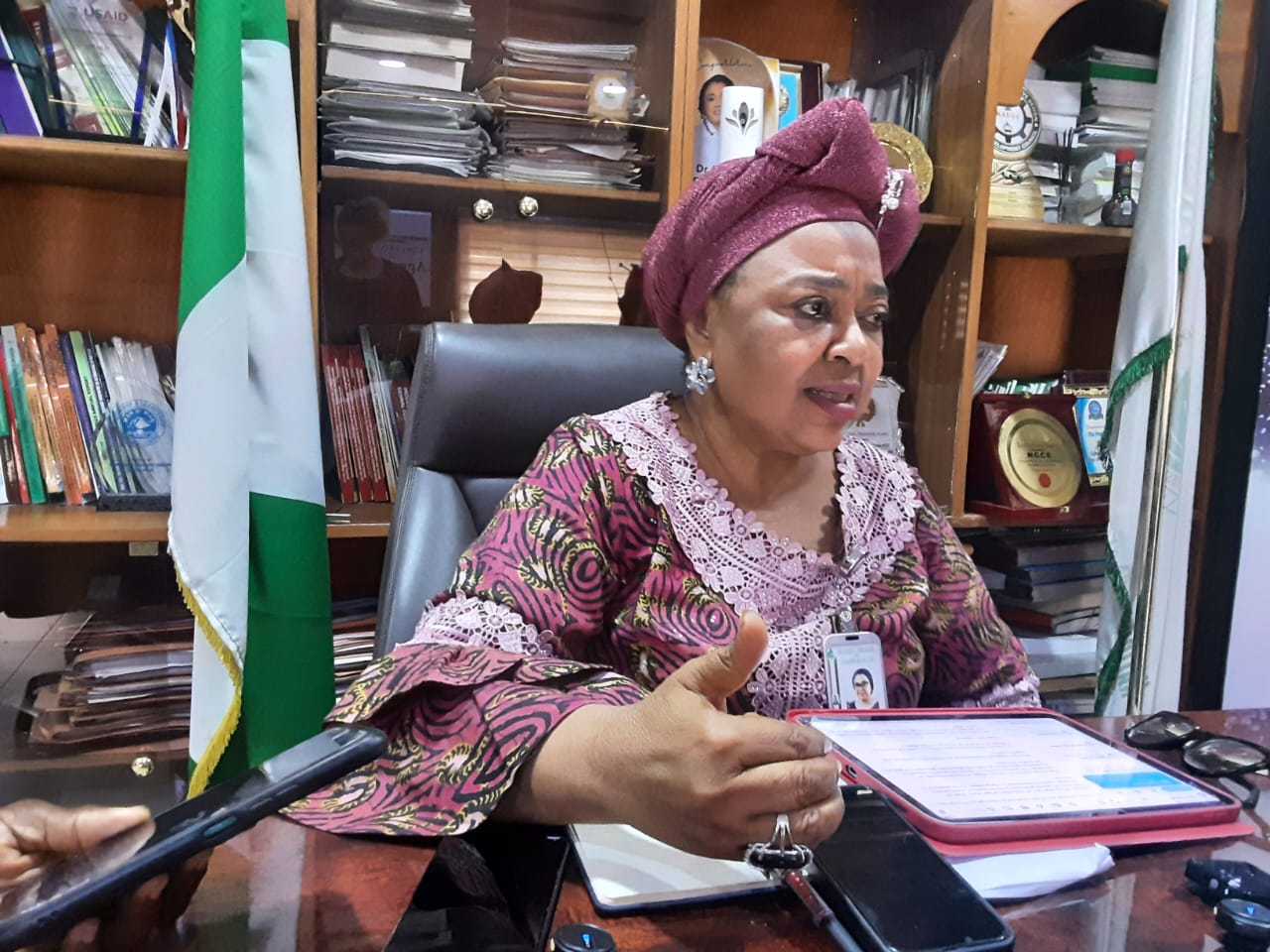
The Executive Secretary of the National Commission for Colleges of Education (NCCE), Dr Angela Ajala, has urged the Federal Government and stakeholders to make teacher education a top national priority, warning that Nigeria cannot achieve a world-class education system without sustained investment in training quality teachers.
Speaking during an interview with the Association of Corporate Online Editors (ACOE) in Abuja on Tuesday, Ajala said teacher education is the foundation of national development because every profession relies on the knowledge and skills imparted by teachers.
“Nigeria cannot build a world-class education system with second-class attention to teacher education. Teacher education must be at the front burner of anything Nigeria wants to do. If you miss it with teacher education, you miss it with Nigeria,” she said.
Ajala disclosed that the NCCE is implementing sweeping reforms to strengthen Colleges of Education and attract more young Nigerians to the teaching profession.
Key among the reforms is the dual mandate policy, signed into law by President Bola Tinubu in 2023, which allows Colleges of Education to award both the Nigeria Certificate in Education (NCE) and Bachelor of Education (B.Ed.) degrees.
She explained that the policy was introduced to address declining enrolment in teacher education programmes and enhance the status of the NCE qualification.
The NCCE boss also highlighted the introduction of a competency-based curriculum, with 70 per cent emphasis on practical training and 30 per cent on theory. The revised curriculum incorporates emerging fields such as artificial intelligence, robotics, cybersecurity, data analytics and coding.
According to her, the commission has further integrated skills certification into the five-year NCE-to-degree programme to equip future teachers with vocational and entrepreneurial competencies that can create additional economic opportunities.
On funding, Ajala said government resources alone are insufficient to drive the reforms, stressing the importance of partnerships with development organisations and global institutions.
She revealed that the NCCE is collaborating with the European Union, UNESCO and the British Council, while Oxford University is supporting aspects of the reform programme and Cambridge University has expressed interest in participating.
To ensure effective implementation, the commission has established a Reform Delivery Unit to monitor progress through quarterly reports and is developing a digital dashboard to track activities across Colleges of Education nationwide.
Ajala said the commission’s 2026–2031 strategic plan aims to have at least 80 per cent of Colleges of Education operating under the dual mandate system by 2031.
She reiterated the need to improve professional opportunities for teachers, strengthen training institutions and showcase the career prospects within the profession, urging policymakers and development partners to give teacher education the attention required to drive Nigeria’s long-term development.