By James Kolawole
Science and technology continue to transform our lives, from routine chores like using the washing machine for laundry to complex processes such as AI-assisted medical diagnostics that enhance healthcare outcomes. Their exponential advancements consistently deliver higher quality results.
This power of technology was evident in the recent rescue of an American navigator whose F-15E fighter jet was shot down over southwestern Iran during the ongoing Israel-US conflict with Iran. Reports describe the mission as one of the most complex operations in recent memory. While modern warfare often showcases sophisticated equipment for both defense and destruction, this rescue highlighted how technology can be harnessed holistically – not only to wage war but also to save lives.
At the core of the multimillion-dollar rescue was a compact, 800-gram satellite-based lifesaving device known as the Combat Survivor Evader Locator (CSEL), manufactured by Boeing. The CSEL is a rugged survival communicator, resembling a military radio combined with a handheld computer. Built to withstand extreme forces during emergency ejection, it begins transmitting immediately after it is activated. It continuously sends location coordinates and short encrypted messages using rapid frequency-hopping signals, making detection by enemy electronic warfare systems extremely difficult. It can also receive encrypted instructions without voice communication, ensuring secure and discreet guidance for the survivor in hostile environments.
The system relies on military communication satellites to relay data from hostile territory to U.S. command centers and strategic bases. By enabling secured two-way communication, the device provides critical data to both the survivor and the rescue team, leveraging a robust infrastructure purposely designed for survival missions.
The CSEL illustrates how a small, rugged device can determine survival in hostile territory. Juxtaposing this with the Nigeria Electricity Supply Industry (NESI), which is grappling with survival and requires a rescue mission from collapse, reveals stark parallels. NESI’s challenges – high ATC&C losses, weak collections, inadequate metering, and unreliable data ̶ mirror the vulnerabilities of a downed pilot stranded without communication. The CSEL’s strength lay in its ability to transmit accurate, encrypted signals under extreme conditions, ensuring both visibility and trust. These features made the survival and extraction of the downed pilot possible. For NESI, the equivalent would be a robust, transparent, and secure revenue assurance system: advanced metering infrastructure (AMI) coupled with reliable communication networks.
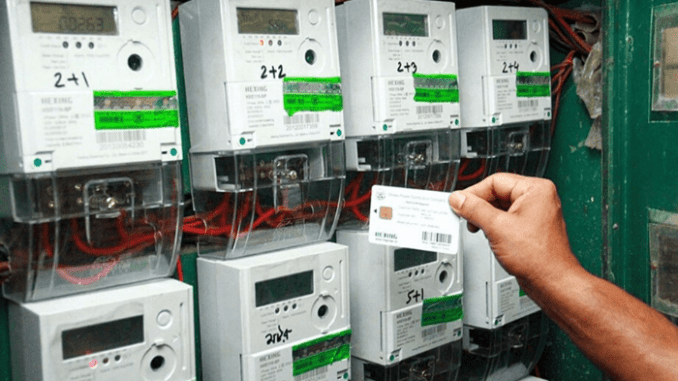
To bring about fiscal responsibility in NESI, a rugged, well-designed, and properly implemented rescue mission must be directed toward securing revenue assurance within the Distribution Companies (DisCos). Without this, solvency in the sector will remain elusive. The Federal and State Governments should urgently review and address the challenges facing recent and ongoing smart metering programs – DISREP, PMI, MAF, and MAP ̶̶̶̶ which were intended to strengthen revenue assurance. Unlike the CSEL device, which created immediate visibility and secure communication in hostile environments, these programs have fallen short due to inefficient communication solutions and inadequate investment in supporting infrastructure.
Modern utilities deploy AMI not merely to bridge the metering gap, but to achieve full operational control, secure revenue assurance, and enhance customer satisfaction. Smart metering must therefore be understood as a deliberate mission to improve operational performance, create financial sustainability, and drive change management — not just a technical exercise in installing meters.
The Federal Government’s settlement of accrued legacy debt to Generation Companies (GenCos) is commendable, as it provides temporary financial fluidity. However, such measures alone will not deliver long-term stability or restore investor confidence. At best, they enable GenCos to meet obligations, keep plants operational, and ease cash flow pressures across the value chain for a limited period.
Meanwhile, calls for tariff increases under the MYTO framework, on the grounds that current tariffs are not cost-reflective, remain contentious. While higher tariffs may improve balance sheets in the short term, they do not stop the financial haemorrhage. Such a move risks exploiting customers, who would be forced to pay for operational inefficiencies. The real solution lies in plugging leakages and drastically reducing losses.
There must be a paradigm shift from the current smart metering approach in NESI. Programs like DISREP, PMI, MAF, and MAP have been treated largely as technical exercises to bridge the metering gap. But smart metering should be repositioned as a strategic mission for financial sustainability and operational transformation.
The paradigm shift should look like this:
From gap-filling to revenue assurance
From fragmented programs to integrated AMI
From technical rollout to change management
From customer burden to customer satisfaction
From short-term fixes to financial sustainability
In essence, smart metering should be seen as the CSEL of NESI – a rugged, resilient rescue tool that provides visibility, secure communication, and survival in hostile conditions. Without this paradigm shift, tariff hikes and bailouts will only mask inefficiencies while the industry continues to bleed financially.
A lasting solution to be pursued must be one that halts the ongoing financial haemorrhage and tackles structural inefficiencies at the root. Only through systemic reforms and technology-driven interventions can NESI achieve sustainable stability and regain investor trust. Crucially, greater investment must be directed toward communication infrastructure, ensuring that smart metering programs deliver their full benefits. To achieve this, NESI – particularly the DisCos, must embrace robust and reliable two-way communication solutions purpose-built for utilities, such as the CSEL model.
*James F Kolawole
MD/CEO, Aquivis Technologies Limited
















 News1 week ago
 News1 week ago
 Business News5 days ago