By Mohammed Abubakar Dutse
As Nigeria joined the rest of the world to mark International Women Day (IWD) Saturday, stakeholders in Jigawa state have tasked government at various levels to create an enabling environment for women to thrive economically.
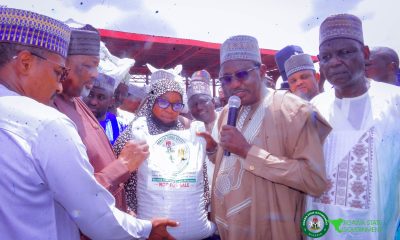
The event coincided with the flag off of the training of 600 women on the waste to wealth Initiative programme as part of the efforts to empower women selected across the 27 local government areas of the state.
Organized by the State Environmental Protection Agency (JISEPA) in collaboration with the United Nations Children’s Fund (UNICEF), the forum witnessed participation from major women organizations in the state.
The Minister of State for Education, Prof. Suwaiba Sai’d Ahmed, who delivered a keynote address at the occasion stressed the need for the government to deliberately evolve policies that bridge the educational gap between the male and female gender.
The minister, who was represented at the occasion said education of women was an important tool for achieving gender parity.
She however, admitted giant stride being made by the present administration in the state, but noted that a lot still needed to be done.
Wife of the governor, Hajia Amina Namadi, in her address described the programme as a wake up call for women in the state to stand up and be counted among self made individuals in the society.
Mrs. Namadi, who lauded the training programme, especially on an auspicious occasion said, the initiative aligns with the state government commitment as outlined in the 12-Point agenda on environmental sustainability, waste to wealth and women empowerment initiatives.
According to her, “Up cycling plastic straps into marketable products serves as a tangible solution to two pressing global challenges: plastic waste management and climate change mitigation.
“By reducing reliance on virgin plastic production, lowering green house gas emission and promoting a circular economy. This process offers an innovative and sustainable pathway to environmental resilience. Further more it spurs economic development and encourages sustainable consumer behaviour, a key ingredients for long-term climate action. ‘
Sanitarian Adamu Sabo, the managing director of JISEPA, lauded the role of UNICEF in building economically youths for tomorrow’s leadership.
Besides, he said the programme hoped to integrate up cycling waste into marketable products while ensuring both economic and environmental impacts are attained.
“This initiative bridges the gender gap by providing marketable skills in waste up cycling, entrepreneurship, and sustainability, ensuring that young women can contribute to both household income and national economic growth
According to him, “This programme by JISEPA aligns with UNICEF’s focus on scaling youths engagement and skills development, ensuring young people, especially women are empowered for economic independence.
‘This project focuses on learning-to-earning transition, while equipping young women with skills to turn waste to wealth through up cycling and entrepreneurship. By training 600 young women to up cycle waste into marketable products would ensure economic inclusion and financial independence.”
Halima Sani Muhammad, a representative of the National Human Rights Commission (NHRC) Jigawa state decried the rising rate of rape in the state and called for urgent steps by the authorities to stem the tide.
Delivering a goodwill messages, the NHRC, Mrs. Sani lamented the culture of silence among women as the major cause of rape in the state. She therefore called on parents to live up to responsibilities by reporting to the appropriate authorities for action.