Connect with us

News

How Electricity Tariff Reform Saves FG Annual Payment Of Over N1 Trillion Subsidy, NERC

Published

on

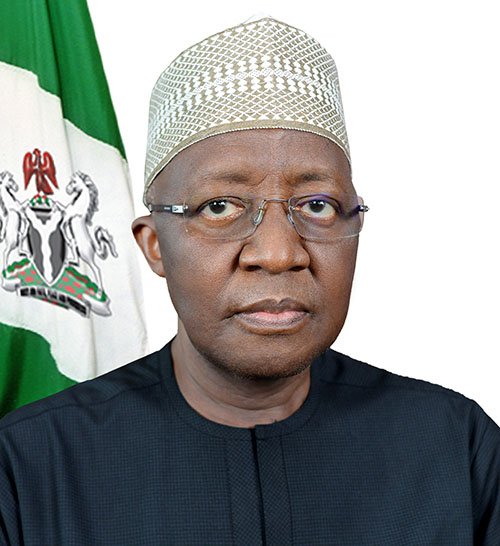
The NERC Chairman, Engr. Sanusi Garba

…As Minister Hints Of Restructuring TCN

The Nigerian Electricity Regulatory Commission (NERC) has revealed that through its tariff reform programme and introduction of Service Based Tariff (SBT), it has saved the Federal government from annual payment of over N1 Trillion, citing that it reduced federal government’s subsidy obligation from collosal N528 billion in 2019 to N155 billion in 2022

The NERC Chairman, Engr. Sanusi Garba, who disclosed this while making presentation at Power Sector Ministerial Retreat, stated that the N155 billion in 2022 translates to 23 percent of “Business As Usual” projection – ₦665bn) which the federal government would have been expected to cough out for tariff subsidy payment.

Further, he said that the Commission also improved electricity market liquidity as it achieved 198 percent growth in revenues.

Presenting statistical data, he cited that revenues grew from ₦282.20bn in 2015 to N841.81bn in 2022; remittance increased by
258% growth from ₦173.16bn in 2015 to ₦619.50bn in 2022, while growth in VAT collection showed 315% growth from ₦13.44bn in 2015 to ₦55.83bn in 2022.

According to the NERC Chairman, the key takeaways include that “Between Jan 2020 and Jan 2023, tariff increased from 55% of cost recovery to 94%. Without the tariff reviews that commenced in 2019, subsidies payable by the government would have grown to about a trillion naira per annum by 2023. Service-Based Tariff (SBT) was instrumental in the transition to cost-reflective levels.

“Annual subsidy reduced from N528bn in 2019 to N144bn in 2022. Subsidy in Jan-Apr, 2023 stood at N57Bn. Service-Based Tariff (SBT) was instrumental to the reduction of tariff subsidy.

The financial burden of tariff subsidies between 2015-2022 stood at NGN2.8tn
Estimated subsidy for 2023 is circa N600bn +.”

However, he raised concerns over the current exchange rate of the Naira and inflationary trend, saying unification of FOREX and current inflationary pressures in 2023 has pushed cost-reflective tariffs to N124/kWh.

Engr. Garba canvassed for policy support to review end-user tariffs to minimize fiscal burden and proposed to implement automatic monthly tariff adjustments to manage volatilities in FOREX and inflation rates.

As the year 2024 draws nearer, he said the sector priorities include addressing issues in financial Sustainability such as insufficient end-user tariffs, poor DisCo collections, revenue shortfalls which are threat to investments and sector viability; infrastructure deficit in terms of infrastructure constraints associated with gas, generation, transmission and distribution of electricity, among others.

Earlier in an opening address, the Minister of power, Chief Adebayo Adelabu, noted that in Nigeria Electricity Supply Industry (NESI), transmission sub-sector has been identified as a critical weak point in the value chain lately, a view widely shared.

According to him, “To align with the Electricity Act 2023 and the industry’s demands, it’s time to restructure the Transmission Company of Nigeria (TCN) into two entities: the Independent System Operator (ISO) and the Transmission Service Provider (TSP).

“This restructuring must synchronize with the evolving landscape of State Electricity Markets, addressing calls for the decentralization of the national grid into regional grids interconnected by a new higher voltage national or super-grid.”

Advertisement
Click to comment

Leave a Reply

Your email address will not be published. Required fields are marked *

FIRS – Dial *829#

Our Naira Our Pride

NNPC: WE ARE HIRING

THE RENEWED HOPE AGENDA

ADVERTISEMENT

PRESS RELEASE

Click to read full text


CAVEAT EMPTOR

Advertisement

CBN Advert

Click the link to visit
Advertisement
Advertisement
Advertisement

Happy New Year

Facebook

Advertisement
Advertisement

Breaking News...