Experts in power sector have lamented the increasing impacts of grid collapses on power Generating Companies (GenCos) in Nigeria, citing that this year alone, each has incurred at least N21,873,684,285 losses.
Prof. Stephen Ogaji while presenting a paper on “Understanding the impact of grid collapses and machine shutdowns on thermal GenCos machines (The technical and commercial implications), noted that apart from great revenue loss due to the inability to generate power into the grid, grid collapse affects not only the utilities but also the entire economic system that depends on a stable power supply.
He cited that the economic cost of power shortages in the country is estimated at around $28 billion annually, an equivalent of two percent of the nation’s Gross Domestic Product.
Prof. Ogaji also highlighted that grid collapses and forced shortdowns on thermal GenCos lead to decrease in capacity utilization resulting to a decrease in revenue by the station, poor efficiency in gas utilization, poor utilization of contracted gas on take-or-pay commitment, and deterioration or damage of key mechanical and electrical equipment during frequent startups and shortdowns, among others.
Also, presenting statistics on “Understanding the impact of grid collapse on the GenCos Hydro machines (the technical and commercial implication)”, a power sector expert, Engr. Jacob John Barasuno, who said each Hydropower GenCos had incurred at least N21,873,684,285 losses in 2024, noted that the losses this year are much higher than previous years.
The power sector experts spoke at a one-day media workshop on reporting in the power sector organised by the Association of Power Generation Companies (APGC) in Abuja.
He cited that while amount lost following grid collapse by each Hydro GenCos was at least N6,300,305,615 and N2,379,055,538 in 2023 and 2022 respectively, he maintained that it signified an increasing trend in grid collapses in the country.
Engr. John Barasuno explained that the implication includes generation target not being able to be met due to down time and damaged equipment, bilateral customer demand would not be met, company budgetary and loan repayments obligation would not be met and contractual energy agreement might not be met resulting to penalties.
Earlier in an opening remarks, the Executive Secretary of Association of Power Generation Companies (APGC), Dr. Joy Ogaji, said given the frequency of grid collapses in the country and the impact of it on our business they thought it wise to provide clarification on how it affects their businesses.
She said: “While we certainly need a huge jump in our electricity supply projection, it is imperative to preserve lives and equipment to sustain our rapid economic growth and meet the growing demand, we therefore need to make every effort to efficiently manage all stages of value chain with intentional focus on maximizing efficiency in the entire electricity chain.
“Grid collapse poses a significant threat to Nigeria’s power sector, resulting in frequent disruptions, equipment damage, and substantial revenue losses for GenCos.
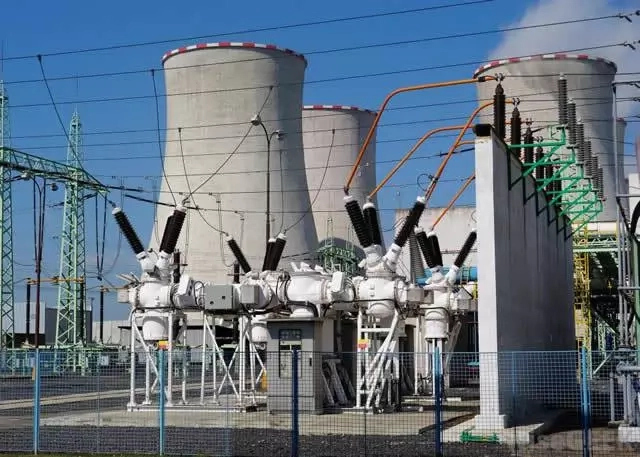
“Technically, grid collapse can cause catastrophic damage to generators, transformers, and other critical infrastructure, leading to prolonged downtime and costly repairs.
Commercially, the impact is equally severe, as GenCos face reduced power sales, penalties for non-delivery (in bilateral and cross border trades), and increased operational expenses.
“The dwindling resources exacerbate these challenges, making it difficult for GenCos to maintain, repair, and replace damaged equipment, ultimately compromising the reliability and efficiency of the power supply.”