Operators of Power Generation Companies (Gencos) under the Association of Power Generation Companies (APGC) have faulted recent claims by the Nigerian Bulk Electricity Trading Company Plc (NBET) that only five Gencos have active Power Purchase Agreements (PPAs).
They described such as a serious threat to the Nigerian
Electricity Supply Industry (NESI), in particular and the sector in general just as they debunked allegations that the GenCos had planned to keep the nation in perpetual darkness untill a debt of N1.6trillion is paid to them.
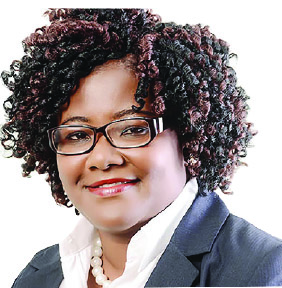
Executive Secretary, APGC, Dr. Joy Ogaji, stated this while speaking with journalist in Abuja at the weekend.
She noted that the absence of PPAs as claimed by NBET entails that Gencos are
exposed to the vagaries in the downstream electricity market:
“The fact that NBET claims that they have only five active PPAs entails that most of
the power plants do not have power purchase agreements (PPAs).
“This situation is a scary scenario for any investor as no guarantee of any sort is in place to assure any
form of return on investments,” she said.
She, however, disclaimed reports in some online media that quoted the Gencos operators insisting that the Federal Government most pay the over N1.6 trillion owned her members since 2013, hence total blackout across the country.
Dr. Ogaji had at a press conference in Abuja on Sunday, March 13, 2022 explained
the critical challenges facing the Gencos. She noted that a situation where the energy
dispatched by the power generators was used as an index for power generation capacity is detrimental to their survival.
Speaking on the negative implication of the debt situation, She said, “We are currently owed N1.644 trillion. One of the reasons that the power plants are down is due to
inefficient management of the grid.”
The Gencos, She said have exhausted all their borrowing sources, as the Central
Bank of Nigeria (CBN) had reportedly warned the banks to desist from lending money to them.
“If you give us gas, provide forex to carry out maintenance. I have told you most of the
units are down and they need money to fix them.
“Give us enough money to pay our gas suppliers because it is pre-payment. But for
power, it is take and pay later. There is no way that this misalignment will help us.”
Ogaji stated that the association have never threatened to deliberately put the nation
into darkness as reported by the online media.
Ogaji reiterated that “GENCOs are committed investors with patriotic zeal. We
commensurate with Nigerians on current situation as we are not exempted from it.
“All we plead for is an enabling environment for business capable of attracting more
investment into the power sector strive.”
Emphasizing the key role of PPAs in ensuring stability in electricity industry, Dr. Ogaji
said the assumption that Gencos are asking to be paid for electricity generation
capacity instead of the actual power consumption is unethical.
Many Nigerians, she said, have asked endless questions on why they pay for capacity
for power we did not consume.
“We have thought it wise to explain to Nigerians in a way it will be understood. Capacity
Charges are fees you pay to ensure that the electricity you might use, is there for you when you need to use it.
“Capacity payments are global norms in the electricity supply industry and play critical roles in enabling the GenCos to optimize their power
generation capacities, making such capacities available when called upon.
“In every Power Purchase Agreement (PPA), nominated capacity, metered energy, and deemed capacity are among the must-occur events.
“The GenCo makes its day-ahead declaration of how much it can generate (Available
Capacity) for that given date and the System Operator (SO) nominates the capacity it
can dispatch/transmit.
“In every Electricity Market, this nominated capacity is paid for
and with consideration for the suppressed capacity as prompted by System Operator’s instructions; a reasonable return on capital invested in the business is a critical
incentive for continued improvement in technical capacity as well as quality of service.
“Therefore, capacity payment forms a critical factor to investments, especially in
servicing the debts and equity component of the costs involved. This fact is further
corroborated in the Power Purchase Agreements (PPA’s), which generally set it at a
level designed to recover fixed and long-term variable costs such as debt service, fixed
Operations & Maintenance (O&M) costs and other fixed costs/charges and equity
return.
“Given the gestation period for a typical power plant to come on stream, if
capacity payment is not made it will be difficult to make it available when called upon.
“The current practice of ignoring capacity component, presents a wrong signal to
international and local investors, shatters/ negates the aim of the reform, and
prejudices the GenCos ability to meet financial ratios imposed by the Lenders, and
certainly reduces /erodes the Investors’ confidence in the Reforms and returns. This
practice also negates a key pillar of the Power Sector Recovery Program, approved by the Federal Executive Council, which seeks to establish a contract-based electricity
market as it restricts and undermines the robustness of the electricity market.
“In addition, it can deflate the appetite or ability of investors to invest, with detrimental
long- term effect of decreasing power plant financing options.
“The Nigerian scenario represents an absurdity of sorts.”














 Business News1 week ago
 News6 days ago