
Business News
FG Set To Embark On Poverty Survey Of 22,000 Selected Households Nationwide

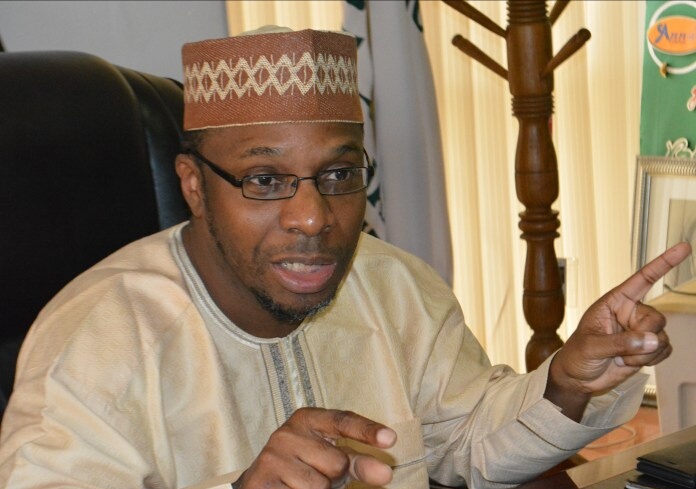
Statistician General, Yemi Kale
***NBS To Release Survey Result In 12-Months Time
By CLEMENT NWOJI , Abuja
The Federal Government, through the National Bureau of Statistics (NBS), is set to commence next week, gathering of data for the determination of the National Living Standard which among other indices will show the poverty level of the citizens.
Code named “Nigerian Living Standards Survey (NLSS)”, it is aimed at measuring the levels of poverty and welfare at both the National and sub-national levels of government and it will help inform the government in addressing the impact of its policies and programmes.
The Statistician General of the Federation, Dr. Yemi Kale, who disclosed that the survey will start on September 27, 2018, spoke at a one-day stakeholders sensitization workshop in Kefi, Nasarawa state.
Kale dismissed the question if the survey was prompted by the recent report by Brookings Institution which report indicated that Nigeria had about 87 million people in extreme poverty, compared with India’s 73 million. He also said that the survey has no political undertones.
He said that the National Bureau of Statistics (NBS) had in the past three years been working in collaboration with the National Social Safety Net Coordinating Office (NASSCO) and World Bank on the modalities for the execution of the survey project, adding that now the stage was set for the field officers to commence gathering of the data.
According to him on the importance of the survey, “Amongst the plethora of socio-economic variables and indicators it provides, it is from this exercise that we derive statistically sound indicators for measuring poverty and inequality in Nigeria.
“It also serves as a major source of data for the 2030 Sustainable Development Agenda for tracking Nigeria’s attainment or otherwise, of the Sustainable Development Goals (SDGs).”
The Statistician General further noted that the subject of poverty is very critical to a developing country like Nigeria.
He added that most government effort is geared towards ensuring that citizens are able to attain a decent standard of living, and not within the traps of poverty, with which comes several negative effects and implications for both the individual and the society.
“We will be failing in our mandate if we are not providing the public, government and policy makers with useful and reliable statistics for them to deploy in designing and implementing poverty-alleviating interventions and programs across the country”, he said.
Kale said that the result of the survey apart from many uses, will help government and policy makers across the country, both federal and states to evaluate and assess their current programs, redesign and re-strategize them for better effectiveness and outcomes for the citizens.
He said the NBS has put in place high quality assurance measures to ensure that the outcome meets the expectations of the people, citing that the planing and preparation for the survey had been one of the longest and detailed of any household survey in the country.
Some of the quality assurance measures include electronic method of information gathering, trained field officers and monitors.
He said: “There is a lot going on right now in the country, with all the visible socio-economic challenges being experienced; from the security challenges, to unemployment and environmental challenges, government and partners at various levels require this kind of information to help them understand what is going on, particularly how these challenges are affecting households and communities in the country. It will further assist them in designing policies and programs and assist them in monitoring and evaluating existing programs for the maximum benefit of the citizens.”
“Starting from next week, trained field officers will be deployed to selected households in Enumerated Areas across the country over the next 12 months, to collect information on consumption, expenditure, assets and general living conditions.
“Over twenty-two thousand selected households spread over the next 12 months starting from next week will be visited monthly by our field officers, as you can imagine, this is expected to be a very long and tedious process, requiring the cooperation of households and communities.”
He appealed to the public to cooperate with the field officers and give them adequate and correct information/ data requested from them.



Click to read full text








Just In: DSS, NIA To Probe NFF Over Alleged Sabotage Of National Interests

Ojukwu Confered With 2026 UTA International Humanitarian Awar

Electricity For Underserved Communities: REA, Alpha Morgan Bank Collaborate On ₦50 Billion Financing Facility To Accelerate Access

MPC Meeting: Nigeria’s Economy Remains Resilient To External Shocks, Cardoso Assures As Members Commit To Sustain Financial Stability

NERC Gives PHED 60-Days To Incorporate PHED SubCo To Oversee Interstate Power Supply As AKSERC Assumes Electricity Oversight

Asset Integrity, Life Extension, Fixing Obsolescence Key To Sustaining Value For Independents – Seplat CEO


-
 News5 days ago
NERC Gives PHED 60-Days To Incorporate PHED SubCo To Oversee Interstate Power Supply As AKSERC Assumes Electricity Oversight
-
 Business News1 week ago
President Tinubu’s New Deep Offshore Investment Framework, Game Changer For Nigeria’s Oil Sector – TDF
-
 Business News1 week ago
FGN Power Company Supports Visiola Foundation’s 2026 STEM Summer Camp, Inspires Next Generation Of Energy Innovators