
News
ECA Conference Of Ministers Calls For Bold Action To Drive AfCFTA


The potential for the African Continental Free Trade Area (AfCFTA) to become a powerful tool for driving industrialisation, economic diversification and development has been highlighted at the start of the UN Economic Commission for Africa’s (ECA) Conference of Ministers in Addis Ababa (Ethiopia).
The 4-day event (11-15 May) aims to advance the ambitious initiative to form a regional common market which the ECA believes could boost intra-African trade from its current level of 16% to 52% by 2022.
Addressing the gathering, Vera Songwe, Executive Secretary of the ECA, stated that realising the promise of the AfCFTA and its development goals required the continent to take ‘bold actions’ on many fronts. She told the 51st session of the Conference of Ministers: ‘Now we must seize the momentum at hand, to focus on how to operationalize the agreement in a manner that realises its potential to the benefit of the average African.’
The Executive Secretary also observed the most important and urgent action is to create the ‘fiscal space’ to foster public and private investment, while ensuring economic diversification with the view to creating jobs.
Her address also acknowledged concerns that the AfCTA may cause tariff revenues losses leading to ‘holes’ in national budgets. The AFCFTA’s impact upon taxes applied to imported and exported goods, however, would be ‘small and gradual’ according to the Executive Secretary who explained: ‘These tariff revenue losses may be outweighed by the additional revenues from growth to be generated by AfCFTA.’
Africa’s governments were also urged to take a broader review of macroeconomic policies, especially fiscal measures, in order to ensure they are ‘fit for purpose’ to make the most of the AfCFTA. Vera Songwe remarked: ‘We need to improve our levels of fiscal space. This includes boosting tax revenues, improving the efficiency of public expenditure management, tackling illicit financial flows and making use of private finance for public projects.’
This year’s conference follows the signing of the AfCFTA by 44 countries earlier this year, while a total of 50 signed either the agreement or the Kigali declaration underscoring their commitment to the visionary, pan-African project. On Thursday (11 May) Kenya and Ghana handed over to the African Union Commission the documents ratifying the continental free trade, becoming the first two countries to do so.
In addition to the ministerial proceedings, expert sessions and parallel side events will address the conference theme ‘Creating fiscal space for jobs and economic diversification’. These will highlight the importance of accompanying taxation measures to support and fully take advantage of the AfCFTA while also strengthening fiscal sustainability in Africa. Other topics include agriculture’s role in economic growth; financing infrastructure; tackling illicit financial flows; and an integrated strategy for the Sahel.
There will also be the launch of the 5th African Governance Report; the Global Education Monitoring Report; and the 2018 Assessing Regional Integration Report. The ECA’s annual Adebayo Adedeji Lecture (named in honour of the body’s longest-serving executive secretary who passed away in April) will be given by Prof. Mary Teuw Niane, Senegal’s Minister of Higher Education, Scientific Research and Innovation. It will pay also tribute to Prof. Calestous Juma, a renowned supporter of harnessing innovation and technology to advance Africa’s development, who died last month.
Stop reporting fake news – Onaiyekan urges media
The Catholic Archbishop of Abuja, John Cardinal Onaiyekan, has urged media practitioners in the country to refrain from reporting fake news.
Onaiyekan, who gave the advice on Sunday in Abuja at a forum to mark the 2018 World Communications Day, said fake news destroys character and communal living.
He also advised journalists to desist from sharing or lifting unverified sources of information from social media as this is capable of destroying the peaceful co-existence of a country.
Onaiyekan, who was represented by the Director of Social Communications in the Archdiocese, Rev. Patrick Alumuku, said media men must continue to work in truth in pursuit of peace.
The cleric, who spoke on the theme, “Journalism for Peace,’’ stressed that communications emanated from God right from creation and the church had always encouraged peaceful and sustainable communication in the family and society.
“Media men and women are called to work in truth and in the pursuit of peace. The church wants good news to reach the whole world, but we can’t achieve this without the media.
“It is as a result of this that the church is investing in the training of media personnel, especially in social media,“ he said.
The Minister of State for Petroleum, Dr Ibe Kachikwu, reiterated the commitment of President Muhammadu Buhari to uniting the nation and ushering in enduring peace.
He advised Nigerians not to despair but have absolute faith in the ability of the president to bring sustainable development and unity of purpose.
“I want to assure you that the president is really working round the clock to ensure that peace is maintained in our nation.
“Mr President is committed to improving the lot of the citizenry and I would appeal to Nigerians to give him a chance.
“We know things are tough but tough times don’t last forever and we shall overcome. I can assure you Nigeria will soon return to its old glory,” he said.
In his remarks, Special Adviser to the President on Media and Publicity, Mr Femi Adesina, gave an assurance that the challenges facing the nation would soon be a thing of the past.
He urged Nigerians to believe in the nation, stressing that the hardship many Nigerians may be undergoing would soon end.
“ We must believe in Nigeria instead of balkanising it. Nigeria may be in distress and this may be a challenging period for some of us but Nigeria will soon overcome this hardship,” he said.




Click to read full text









Bandits Confirm Killing Of Kachalla Muhammadu’s Lieutenant Biliya In Botched Operation In Katsina

WAEC Defends 2026 Results As Legal Threats Mount Over Alleged Irregularities

THE PROPOSED OPPOSITION CONSENSUS CANDIDACY

FG flags Off Smart Meters Installers Training programme, Targets Installing Seven Million Meters Nationwide

MPC Meeting: Nigeria’s Economy Remains Resilient To External Shocks, Cardoso Assures As Members Commit To Sustain Financial Stability

NHRC Tasks FG, State Govts, People Of Means To Make Practical Interventions Towards Combating Poverty, Inequity


-
 Business News1 week ago
Asset Integrity, Life Extension, Fixing Obsolescence Key To Sustaining Value For Independents – Seplat CEO
-

 News6 days ago
Police Arrest Clergyman, Air Force, Navy Personnel Over Alleged Plot To Kidnap Bishops’ Wives In Plateau
-
 News1 week ago
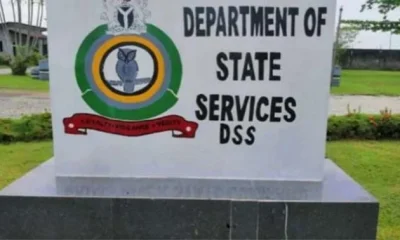
Gov Abiodun Commends Army, Police, DSS, Others For Intelligence-led Rescue Of Five Kidnapped Poly Students, Two Others