Vice President Yemi Osinbajo, have painted the deepening picture of corruption in Nigeria, observing that “People pay for jobs”, as corruption has become very pervasive.
Further, Osinbajo urged knowledgeable young Nigerians to strive to connect and build bridges with their colleagues in semi-urban and rural areas to enlighten them in order to promote and secure victory for the kind of leaders they deserve in elective positions.
Osinbajo explained that this will help in fixing the missing link in youth participation in Nigerian politics and enhance corrupt free nation.
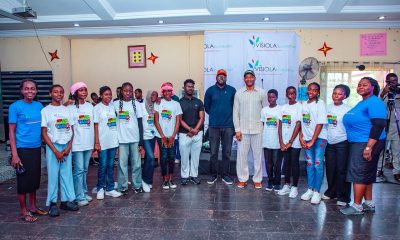
He spoke while interacting with young Nigerians under the auspices of the Global Shapers Community, Abuja Hub who were at the Presidential Villa on a courtesy visit.The Global Shapers Community is an initiative of the World Economic Forum with chapters spread across different countries and a membership of over 15,000 young people.
On corruption, the Vice President noted that corruption is the country’s greatest challenge, insisting that “we just have to deal with it, day by day, point by point.”
“So, the general concept for our administration in our ease of doing business policy, is in getting your international passport and driver’s license renewals, and all that, it is actually akin to ease of living in Nigeria.
“But all of these are hampered by corruption, even jobs, people pay for jobs. The issue of corruption is so pervasive. I am not talking about grand corruption, which in my view, is the easiest to solve. The solution is more in removing human discretion and promoting e-governance and automation.”
On politics, he said: “Our politics is still divided even among young people and the reason why they cannot find the critical mass that it takes to promote the kind of candidates that they want in public office is because even among the young people who are interested, their message is still restricted to themselves.
“To make a difference, they must cross that line and be speaking to the masses of young people in our society who don’t have the privilege of knowledge or exposure that this other group has, which really for me, is the next stage of politics in our country.”
“Today, if elections are run again and again, the traditional candidates will win because the people in the hinterlands, people outside of the major urban centres, are not aware of some of the individuals that you might like, and because some of them are not involved in politics centrally, it is very difficult, sometimes even just to gain recognition outside their own immediate spheres of influence.
“So, there is a need for that connection, understanding our society, understanding this country is very important, which is why building bridges is crucial, talking to people across the country is very important. Those are the realities of our politics.”