By Mohammed Abubakar Dutse
The Jigawa state Governor Umar Namadi has called for collective action from critical stakeholders to build a more transparent and accountable state free of corruption.
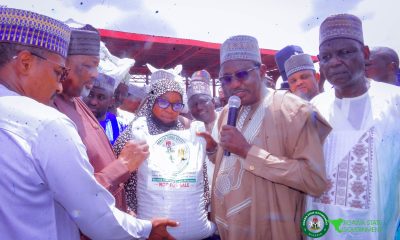
Declaring open a 3-day sensitization workshop organized by the Jigawa State Public Complaints and Anti-Corruption Commission (JSPCACC), in Dutse, the governor said such cooperation was needed for complete eradication of corruption in the state.
The event, attended by senior government officials, civil servants, and stakeholders, is a pointer to the current administration’s commitment to promoting good governance and eradicating corruption to pave the way for meaningful development in the state.
Namadi said he was delighted by this programne, which he said, was aimed at sensitizing senior government officials on the mandates of the Commission and other issues related thereto, saying,
“It is truthfully a very commendable initiative considering its perfect alignment with the commitment of our administration to always uphold and promote all the tenets of good governance.”
Namadi said that corruption is a widespread culture that tears society apart by destroying trust in government institutions and keeping inequality alive. He also said that good governance, which includes accountability and openness, is the only way to fight poverty, speed up socioeconomic development, and make positive changes in society.
“Our quest to build a more just and equitable society can be best achieved if we recognize the importance of combating corruption in all its forms and ramifications.
“As we all know, effective governance, characterized by accountability and transparency, is a guarantee for success in the fight against poverty, rapid socioeconomic development, and positive societal transformations.”
He highlighted the significant strides made by the JSPCACC since its establishment in 2022, revealing that the Commission has recovered over N300 million in public funds, resolved nearly half of the 200 complaints received, and is currently prosecuting 16 cases.
“These successes demonstrate the Commission’s alignment with our unwavering commitment to upholding the highest standards of integrity, fairness, and justice,” he said.
The governor urged all stakeholders to join hands in the fight against corruption, stating, “As senior government officials, we have a sacred responsibility to uphold the highest standards of integrity, transparency, and accountability. We must recognize that corruption should not be of concern only to government but for every citizen.”
The Executive Chairman of JSPCACC, Barr. Salisu Abdu, described the workshop as a “crucial step in our ongoing efforts to strengthen transparency and accountability in the public sector.”
He emphasized that “transparency, accountability, and integrity are the cornerstones of good governance” and called for collaboration between the Commission and government agencies to combat corruption effectively.
Abdu also highlighted the Commission’s mandate: “The JSPCACC operates independently with the powers to receive, investigate, and monitor any complaints or allegations of corrupt practices, enforce anti-corruption laws, and ensure compliance with government processes and procedures.”
The workshop brought together key stakeholders, including representatives from the Ministry of Justice, judiciary, ICPC, EFCC, and PCC, and focused on educating participants about the Commission’s mandate, legal framework, and areas of collaboration.
Discussions also centred on best practices, common pitfalls, and mechanisms to prevent financial mismanagement and corrupt practices.
















 News5 days ago
 News1 week ago
 For Records7 days ago