The National Human Rights Commission (NHRC) has called on Civic Education, Guidance and Counselling teachers in the Federal Capital Territory (FCT) to become frontline champions of human rights, urging them to inspire a new generation of Nigerians who understand their rights, respect diversity and stand against discrimination and violence.
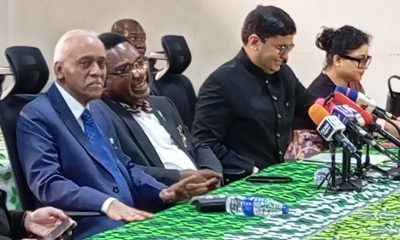
The charge was delivered on behalf of the Executive Secretary of the NHRC, Dr. Anthony Okechukwu Ojukwu, by Mrs. Rabi Anwar, Director of Legal Services and Enforcement, during a Human Rights Capacity-Building Workshop for Civic Education and Guidance and Counselling teachers in Abuja.
She stressed that schools are not only centres of academic learning but critical spaces where young people develop the values, attitudes and civic consciousness that shape society.
According to the Commission, teachers occupy a unique position in helping students understand their rights and responsibilities, appreciate diversity, reject prejudice and violence, and develop the confidence to speak out against human rights abuses.
She noted that human rights education remains essential to building a society founded on dignity, equality, justice, tolerance and respect for the rights of every individual.
Mrs. Anwar explained that the workshop was designed to strengthen participants’ understanding of human rights principles and enhance their ability to integrate rights-based approaches into teaching, counselling, classroom management and other school activities.
She urged participants to move beyond theory by applying the lessons learned to create learning environments that are safe, inclusive, peaceful and respectful of human dignity.
Reinforcing the Commission’s message, human rights education expert, Saka Azimazi, took participants through the foundations and evolution of human rights, tracing its journey from ancient legal codes and the Magna Carta to the Universal Declaration of Human Rights and modern international human rights law.
He emphasised that human rights are universal, inalienable and belong to all people regardless of nationality, religion, ethnicity or status. [citation]
Drawing from the presentation,
Azimazi highlighted key human rights principles including equality, non-discrimination, participation and inclusion, while also examining major international instruments such as the Universal Declaration of Human Rights, the African Charter on Human and Peoples’ Rights and the Convention on the Rights of the Child.
He stressed that human rights remain indispensable to human development, dignity and protection against oppression and arbitrariness.
Also speaking, human rights education specialist, Ifeoma Nwakanma, underscored the role of Civic Education teachers in promoting active participation among students.
She encouraged educators to foster classrooms where learners can freely express their views, engage in school activities and better understand both their rights and responsibilities.
She also advocated support for student councils and peer education initiatives as practical platforms for civic engagement.
In a separate session, guidance counsellor, Henrietta Okechukwu, highlighted the critical role of counsellors in protecting students’ rights and welfare.
She called for proactive measures in identifying and addressing cases of bullying, discrimination, abuse, violence, online harm and mental health challenges, while ensuring that appropriate child-protection mechanisms are activated when necessary.
Earlier in a welcome address delivered for the workshop, the NHRC Executive Secretary emphasised that the success of human rights education depends on collaboration among teachers, school administrators, government agencies, parents, civil society organisations and other stakeholders.
He urged participants to see themselves not merely as teachers, but as agents of positive change whose influence could shape future citizens and leaders.
The workshop forms part of the Commission’s broader efforts to strengthen civic responsibility, safeguard human dignity and entrench a culture of respect for human rights across schools and communities in the Federal Capital Territory.





















 Business News5 days ago

 News1 week ago

 News6 days ago