
For Records
Rising To The Challenges Of Floods In Nigeria

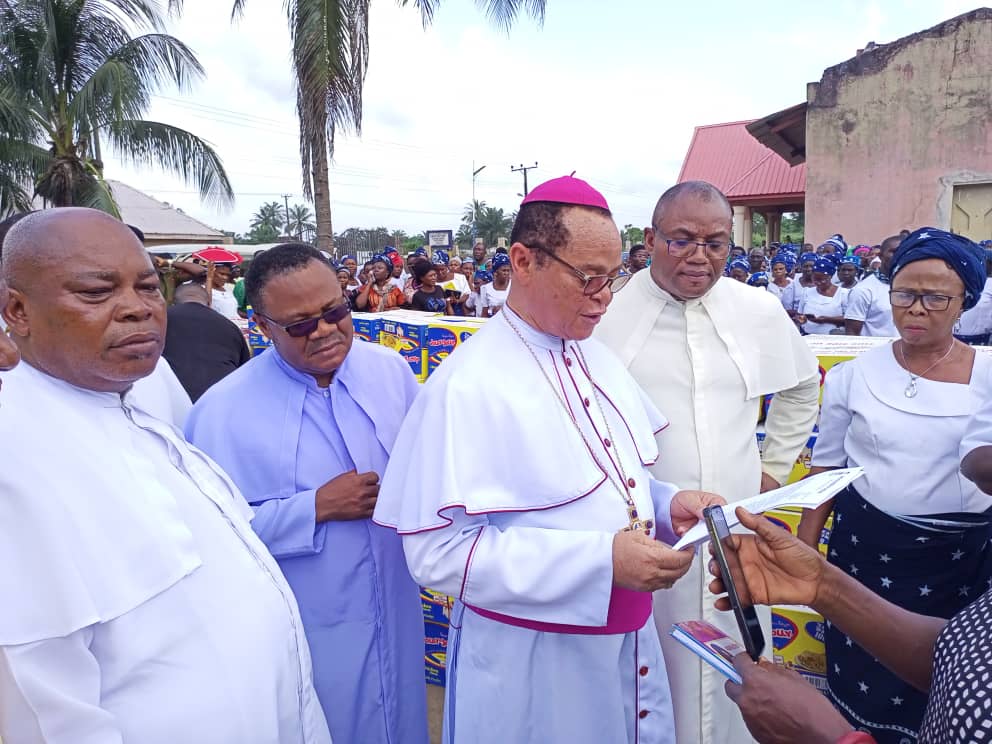
Being A Pastoral Statement by Most Rev. Lucius Iwejuru Ugorji, Archbishop of Owerri, and President of the Catholic Bishops’ Conference of Nigeria (CBCN) issued on 1 November 2022
Flood is a recurrent natural disaster, which occurs annually in some states of our country, especially during the rainy season. It would be recalled that in 2012 Nigeria experienced one of the most disastrous floods in her history. It affected about 7.7 million people in 32 states of the federation. Hundreds of lives were lost. The total material loss was valued at 60.9 billion dollars. The present flood in Nigeria is another tragic event, which has affected about 1.4 million people in 27 states of the federation, with thousands of homes destroyed and several communities totally submerged. There has been huge destruction of infrastructures, farmlands and businesses as well as forced dislocation of peoples, with the attendant emotional and psychological stress and trauma. In addition, many have lost their lives.
We commend the dead to God’s merciful love and commiserate with bereaved families and all who have lost their precious sources of livelihood as a result of the disaster. While we urge distressed and traumatized fellow citizens not to despair but keep hope alive, we call on government agencies, NGOS, financial institutions, dioceses and Church Organizations to come with open hands to assist these displaced and suffering fellow citizens in cash and kind. They urgently need help to survive. We cannot fail to commend religious bodies as well as private and government agencies involved in rescue efforts for their heroic interventions and magnanimity.

One of our drawbacks as a country is that when tragic events occur, we often lament, and soon thereafter move on as if nothing happened. We tend to wait for the next disaster to awaken us to another period of lamentation. We are not proactive as a nation in facing the challenges of flood disaster. Hence our fire-brigade approaches to issues that should normally require proper planning and preparation. We can learn good lessons from other countries prone to natural disasters on the need for investment, planning and efficiency in the management of natural disasters to reduce their negative fallouts on both the people and the general society.
This year’s extensive flood has been blamed on the release of excess water from Cameroun’s Lagdo Dam in the middle of September this year. The Dasin Hausa Dam in Adamawa State, which was supposed to be a buffer dam to contain excess overflow of water, has remained uncompleted forty years since it was started in 1982. We, therefore, call on the relevant authorities and agencies, state and federal to show more seriousness and commitment in tackling flood problems in Nigeria to save our people from more misery and sudden death. Government at all levels has to invest in flood control and prevention infrastructures.
Agencies like the Nigerian Meteorological Agency, the National Emergency Management Agency (NEMA) and the Nigeria Hydrological Service Agency are very important institutions for flood disaster management and control. There is the need to improve on their institutional capacity to do their work in areas such as early flood warnings and prediction, quick emergency response to flood and enforcement of environmental laws. To be able to carry out these important functions, these agencies require adequate funding, which should be released in time to enable them put necessary measures in place, procure appropriate equipment, engage in skills and manpower training and other operational requirements ahead of any disaster.
We also need policies and actions that will stop the allocation of lands and construction of projects and building on natural flood plains or storm water paths. This also implies that the citizens must be discouraged from living in serious flood prone areas. There is no doubt that many citizens contribute in exacerbating flood problems by their undisciplined attitude to waste management such as using the drainage system as dumpsites and consequently blocking the flow of water. It has been noted that some people ignore official orders to evacuate from homes for safety, until it is very late. Some even bribe their way to build at forbidden areas or waterways which unfortunately increase the flood problems when they occur. These attitudes are condemnable and should stop. Citizens themselves have their role to play with regard to flood prevention and rescue matters. All hands must be on deck for the control, prevention and mitigation of flood in the country.
Finally, flood disasters should awaken our consciousness to the challenges of global warming and climate change, partially caused by our human actions, namely by man’s violent and callous misuse of nature. There is need for ecological conversion and proper ecological education among our people in order to control future natural disasters. Let us contribute in the protection and preservation of the earth which is our common home.
Lucius Iwejuru Ugorji
Archbishop of Owerri,
President, CBCN.





Click to read full text









Agudah X-Rays Post-Recapitalisation Realities for Pension Fund Operators

Two Firms Petition EFCC Over Alleged $2.1 Million Land Deal Involving Wike’s Son

“A National Disgrace”, Northern Group Slams Sowore Over Harassment of Lawyer in Court

Swift Telephone Network Recieves NCC’s Unified Access Service License, Ventures Into Full Telcom Services

NAF Commences Comprehensive Probe Over 931 Aircraft Accident, Releases Names Of 25 Deceased Persons

Grid Stability, Reliability: FG Kickstarts Construction of Modern National Control Centre As Existing One Becomes Substandard


-

 Business News1 week ago
Customer Service Week: NCRIB Allays Fears over Unpaid Insurance Claims
-
 Business News1 week ago
WAPP Board Renews Chairman’s Tenure For Second Term As Engr Abdulaziz Advocates Cooperation
-

 News4 days ago
Ignored Warnings, Fiery Consequences: Gas Pipeline Explosion Tears Through Rivers Community, Leaves Scores Injured