A major power sector operator and Managing Director of Azura Power West Africa, Edu Okeke, has advocated for mandatory recapitalisation of each electricity Distribution Companies (DisCos) up to the sum of $500 million.
He explained that this will apart from attracting serious minded investors into the power sector, it will generate competitiveness and boost the financial capacity of the DisCos for efficient service delivery as the case is in the banking sector.
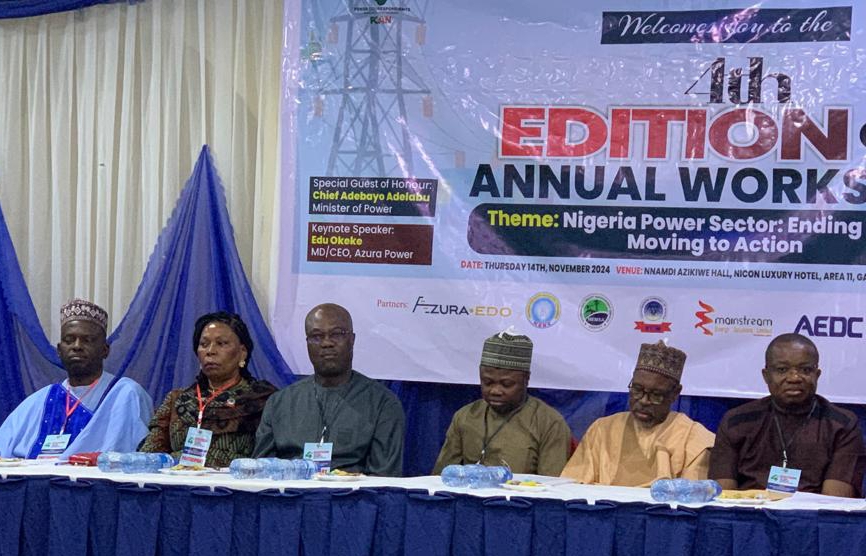
Okeke spoke while delivering a keynote address at the 4th annual workshop of the Power Correspondents Association of Nigeria (PCAN) with the theme: “Ending the talk, moving to action”, held on Thursday in Abuja.
He said that the government policies aimed at guaranteeing returns on investment for power sector investors, promising security and an avenue to recoup their costs is no longer sustainable as the government is grappling with lots of challenges.
Okeke further noted that the DisCos which constitute the weakest link in the power sector value chain is faced with the difficulty of breaking even due to lack of capacity to invest and recover costs effectively, despite the introduction of band A and B tariff which facilitates consumers to pay for power supplied.
According to the Managing Director of Azura Power West Africa, “To enable meaningful progress, DISCOs must be adequately capitalized. Unfortunately, most DISCOs have negative equity, leaving them with little to no financial stake. This situation must change.
“Ideally, no DISCO should operate without at least USD 250m in shareholder funds. Just as the Central Bank of Nigeria has raised capital requirements for banks to ensure their stability and capacity to serve, the Nigerian Electricity Regulatory Commission (NERC) should mandate similar capitalization standards for DISCOS.
“Many DISCOs also carry a heavy burden of debt, accumulated over time through a mix of operational challenges and systemic issues. To truly address this problem, the Government needs to come clean and take a decisive step.
“My recommendation is a two-pronged approach: to consider removing these debts from the DISCOs’ books and mandating them to increase their capital by at least USD 500 million each.
“This will require existing shareholders to dilute their holdings to attract new investors with real capital to invest in infrastructure not just on paper, but in transformers, cables, and equipment to serve customers reliably.”
On his part in a goodwill message, the Managing Director/CEO of Nigerian Electricity Management Services Agency (NEMSA), Engr. Aliyu Tukur Tahir, reiterated the commitment to ensuring the efficient production of safe, reliable and sustainable Electricity supply.
He noted that this year had seen various challenges and milestones in the sector, from the rapid expansion of infrastructure to the modernization efforts aimed at enhancing operational efficiency and safety across the country.
According to him, “NEMSA has been proactive in addressing these challenges, and we have made significant strides in electrical Safety and quality management to support the stability and reliability of our power systems.
“Our mandate is clear: to ensure that every Nigerian has access to safe electricity, and to protect lives and property by upholding quality standards in the sector.
We are also keen on strengthening partnerships with other stakeholders. Together we believe we can make further strides in promoting a culture of excellence, innovation, and responsibility.”
Engr. Tukur Tahir commended PCAN, observing that the gathering presents an invaluable opportunity for reflection, learning, and collaboration among the key players who shape Nigeria‘s Power sector, particularly in shared mission to provide safe, reliable, and sustainable power to all Nigerians.
Earlier in a welcome address, the Chairman of PCAN, Obas Esiedesa, noted that the state of the power sector has been disheartening.
“Today’s workshop is a call to action. We are here to discuss meaningful ways to move forward, and I am glad to see so many industry leaders in attendance. It’s time to move beyond talk and toward actionable solutions”, he said.


















 Business News1 week ago
 Business News5 days ago