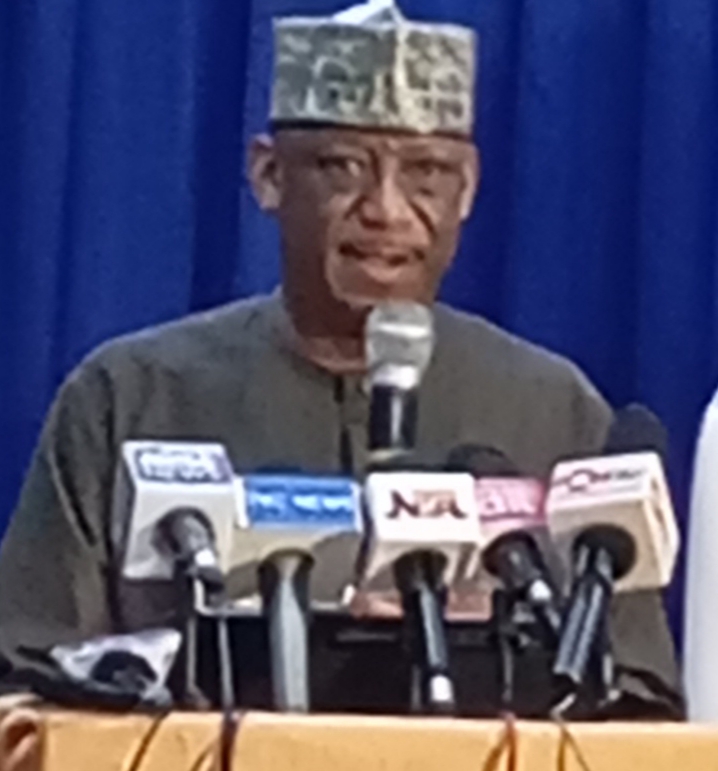
The Managing Director and Chief Executive Officer of the Nigeria Independent System Operator (NISO), Engr. Abdu Bello Mohammed, has proffered an implementation of targeted subsidy mechanisms, among others as recipes towards minimizing energy poverty nationwide.
He spoke while delivering a key note address at the 5th annual conference of the Power Correspondents Association of Nigeria (PCAN). The theme of the conference held in Abuja is “Cost-reflective Tarif Versus Energy Poverty: Finding a pricing balance in Nigeria’s power sector.
Engr. Mohammed, who represented member of Board of Directors of NISO, Engr. Lamu Audu who doubles as the Managing Director of the Mainstream Energy Solutions Limited, noted that finding cost-reflective tariffs in the Nigeria Electricity Supply Industry (NESI) has remained a challenge resulting to the prevailing energy poverty.
However, the NISO Managing Director canvassed some remedies towards mitigating energy poverty in Nigeria which he said should be adopted in stages.
According to him, finding cost-reflective balance requires thoughtful, multidimensional strategies.
He said: “First, we must embrace targeted subsidy mechanisms that reach the truly vulnerable, rather than blanket subsidies that distort market signals and sustain inefficiency. Properly designed lifeline tariffs and data-driven welfare-linked rebates can provide real protection for low-income consumers while allowing the market to function efficiently.
“Second, we must confront inefficiency head-on. Reducing technical, commercial, and collection losses is one of the fastest ways to relieve pressure on tariffs. Every percentage point of loss recovered translates directly to lower costs for consumers. This requires renewed focus on metering, automation, data accuracy, and operational discipline across all segments of the industry.
“Third, transparency must be non-negotiable. The Nigerian Independent System Operator, in its current structure, plays a central role in ensuring that energy is dispatched efficiently, market settlements are transparent, and imbalances are minimized. By improving transparency and operational efficiency, we strengthen investor confidence and ensure that tariff adjustments are grounded on verifiable performance data.
“Furthermore, as the new Electricity Act empowers states to establish sub-national electricity markets, we must embrace embedded and decentralized energy solutions. Encouraging micro-grids, off-grid systems, and embedded generation can reduce transmission losses, improve reliability, and lower the average cost of supply for consumers.”
He lamented that despite efforts to achieve cost-reflective tariffs, key variables such as exchange rate, inflation, and gas price, political and social considerations had often led to tariffs that remain below actual cost levels resulting to struggles to attract investment, sustain operations, and deliver the level of service that Nigerians rightly expect.
Engr. Mohammed further maintained that it is undeniable fact that rising inflation, unemployment, and declining purchasing power have eroded the capacity of many Nigerians to pay higher tariffs, even when supply improves.
The NISO Managing Director further spoke on the essence of having a cost- reflective tariff, saying “without cost-reflective tariffs, our utilities cannot recover costs, investors cannot commit capital, and our electricity infrastructure will continue to deteriorate.”
He advised on the need for cost-reflective tariffs not to be implemented abruptly but gradually, deliberate, and linked to visible service improvement.
On NISO, he assured enhancing transparency, efficiency, and coordination in ways that directly impact market sustainability.
“We are deploying digital platforms that improve visibility of energy flow, generation availability, and settlements. We are upgrading our grid management tools through SCADA and Energy Management Systems to strengthen reliability.
“And as the electricity landscape evolves toward decentralization, NISO is ensuring that state and regional markets remain interoperable, fair, and aligned with national grid objectives. We believe that tariff reform and market efficiency are two sides of the same coin”, he stated.
Earlier in a welcome remarks, the Chairman of PCAN, Obas Esiedesa noted that more than a decade after the privatization of the power sector, achieving balance through cost-reflective tariffs remain a formidable challenge.
According to him, “The industry is still weighed down by an estimated ₦6 trillion debt owed by the Federal Government to power generation companies, a massive liquidity gap across the value chain, gas supply shortages, aging and weak transmission infrastructure, and rising foreign exchange costs that threaten investments and operations.
“While operators demand cost-reflective tariffs as a condition for viability, millions of Nigerians continue to live in darkness or rely on expensive self-generation.”


















 Business News1 week ago