Connect with us

News

NBET Effects PPAs Administration For Electricity Payments Worth N5 Trillion, Statistics Reveals

Published

on

The Managing Director/CEO NBET, Dr. Nnaemeka Ewelukwa

Over the past 10 years, the Nigeria Bulk Electricity Trading (NBET) Plc has effected administration of Power Purchase Agreements (PPAs) and Vesting Contracts resulting in electricity payments worth N5 trillion.

This is according to statistics from the NBET office and achieved under electricity payments facilitated through contract administrations within the periods February 2015 till date.

The statistics were released at the just concluded engagement with power sector media stakeholders in Lagos.

Further, statistics showed the NBET facilitation of Privatization of
Generation Companies through
PPAs with core investors yielded to:
$2.5 billion dollar privatization of
GenCos and DisCos (2013); and Afam Power Plc and Afam Three Fast Power Limited (N105.3 billion; $343.6 million dollars)

It also revealed that the successful and transparent management of the N1.3 trillion Payment Assurance Facility (aided a 30% increase in the highest peak generation ever
attained, from 4500Mw (Feb. 2015)
to 5,800Mw (March 2021), due to
capacity recovery by generation companies.

Over the past 10 years, NBET has also made strides in the electricity sector, creating value for all market participants resulting to finalization of the first Project Financed Power Project, Azura (450Mw), which herald an investment of close to $1 Billion
(gas IPP); executed PPAs with 14
Solar IPPs for 1GW; acting as the anchor for the FGN-World Bank PSRP
Implementation Channel for the application of the $750 million dollars PSRO loan proceeds.

However, NBET identified some imperatives for electricity market growth such as
Rapid development of a self-sustaining, electricity market devoid of financial and infrastructural challenges;

Need to stimulate effective demand for energy by those who need it, including timely and complete payments to IPPs and provision of payment security instruments as may be required.

Others include
transformation of the electricity market to a customer-centered market, where commercial and industrial customers drive network investments for enhanced electricity supply.

It noted that the current regulatory framework already permits this transformation, including the following NERC Regulations: Regulations for Investments in Electricity Networks in Nigeria 2015; Eligible Customer Regulations 2017; Guidelines on Distribution Franchising in the NESI 2020.

However, NBET identified some electricity challenges including National peak demand forecast: 19.8GW (Transmission Company of Nigeria);

Highest peak generation: 5.8GW;

Self-Generation by Commercial/Industrial Customers (Petrol/Diesel): 8GW – 13GW); (National Development Plan 2021-2025);
80% of operational energy capacity is from off-grid diesel/petrol generators (Energy Transition Plan 2022).

Further challenges include growing energy deficit as the population continues to grow (With an annual growth rate of 3.2%, the country’s population of over 200million is projected to be about 402 million by 2050);

Electricity Market Liquidity and Payment Challenges;
Infrastructure Challenges and Misalignment along the electricity value chain (electricity and gas);

Power sector emissions in 2020: 48MtCO2e (Energy Transition Plan 2022) and
up to 90 million people lack grid electricity, the highest access deficit in the world (12 percent of the global access deficit).

Advertisement
Click to comment

Leave a Reply

Your email address will not be published. Required fields are marked *

FIRS – Dial *829#

Our Naira Our Pride

NNPC: WE ARE HIRING

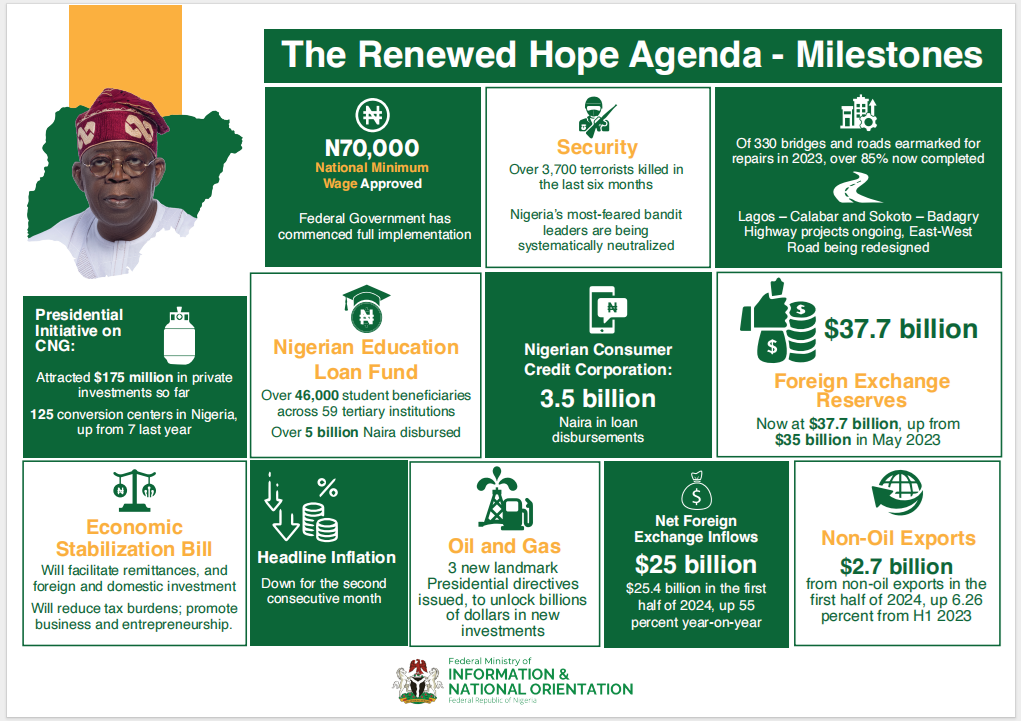
THE RENEWED HOPE AGENDA

ADVERTISEMENT

PRESS RELEASE

Click to read full text


CAVEAT EMPTOR

Advertisement

CBN Advert

Click the link to visit
Advertisement
Advertisement
Advertisement

Happy New Year

Facebook

Advertisement
Advertisement

Breaking News...