
Education
How Jigawa Government, UNICEF Collaborate To Digitalize Teaching And Learning

By Mohammed Abubakar, Dutse
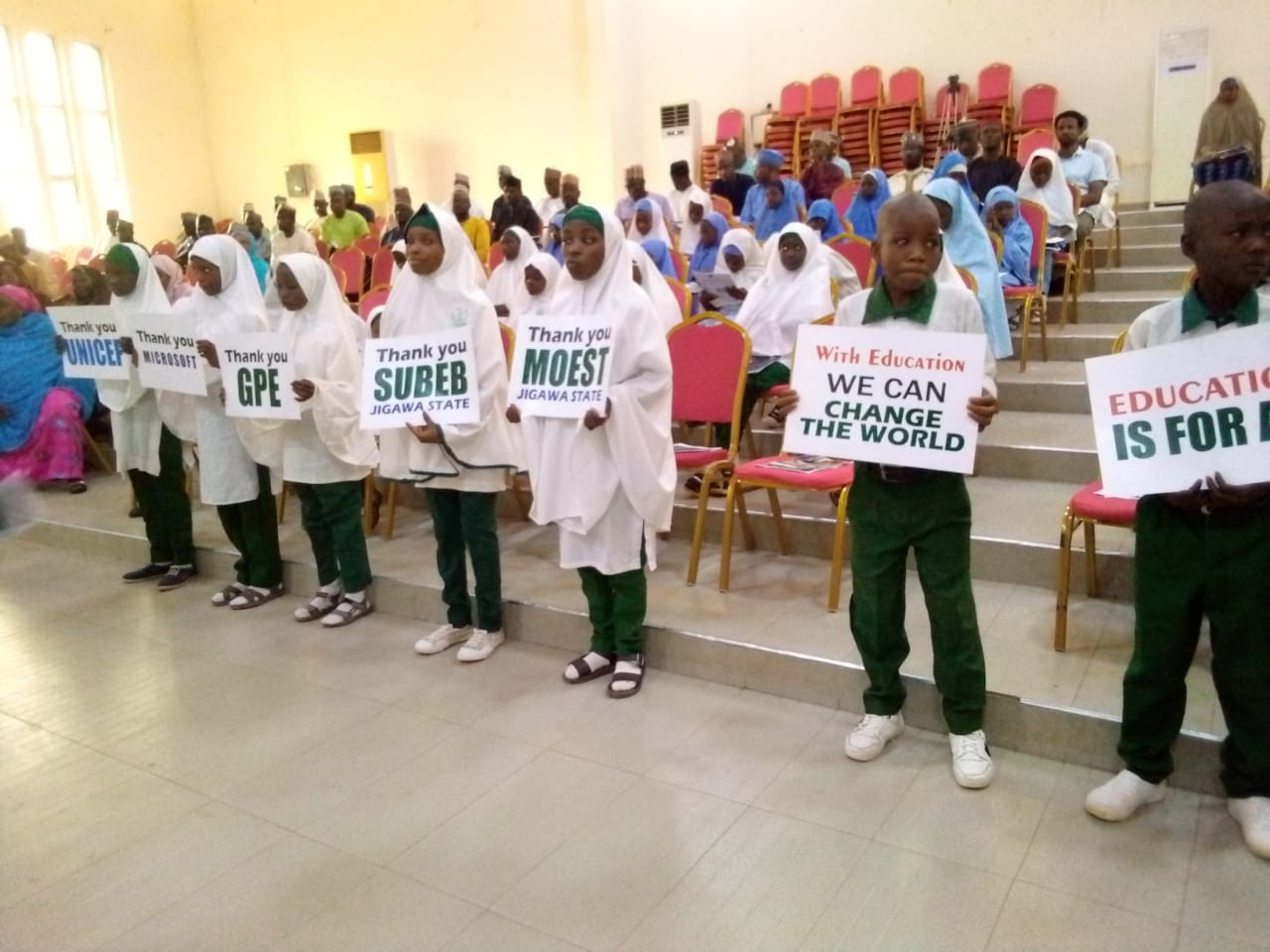
The Jigawa state Government has stepped up programmes towards digitalizing teaching and learning processes in its primary and secondary schools. Tagged the Nigeria Learning Passport (NLP), the programme has the main objective of strengthening the learning processes among students in the state’s educational systems, especially at the basic level.
It is being powered by Microsoft and it is collaboratively implemented with the United Nations Children’s Fund (UNICEF) and Global Partnership for Education (GPE) as well as the Partnership for Learning for All in Nigeria (PLANE).
In his address at the flag off of the programme in Dutse, the Commissioner for Education, Science and Technology, Lawan Yunusa Danzomo said the innovation would create an enabling environment for the expansion of educational opportunities for Jigawa youths.

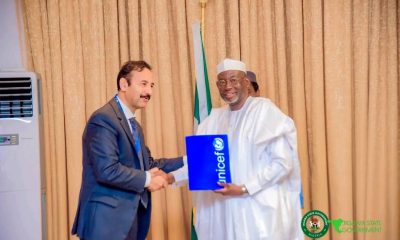
The UNICEF Education Officer, Field Office, Kano, Malam Saka Adebayo Ibraheem, in his remark said the platform would provide children, teachers and parents with resources for learning at home and in school.
Adebayo added that the NLP is an online, offline and mobile learning platform designed to enhance access to digital learning skills for students, especially during the COVID -19 pandemic.
“I congratulate Jigawa state government and particularly the ministry of education on this creative and timely digital solution that will increase access to excellent learning for all students.
“This is a partnership with UNICEF, Microsoft and the Global Partnership for Education,” Adebayo said.
He added that the COVID-19 pandemic interrupted education, assuring that the learning passport would provide solution to children’s education.
“As we all know, education has faced enormous issues across the World. Even before COVID-19, the globe was falling off track in realising SGD4,” he said.
The official further stated that at the height of the COVID-19 pandemic, sporadic school closures hindered the learning of 50 million students in Nigeria alone and more than two million in Jigawa state.
According to him, frequent attacks on schools, including abduction of children, had also complicated the fear of the unknown.
“But together, we’re finding solutions and while nothing will replace the students’ face-to-face interaction with their teachers and peers in classrooms, the learning passport will provide learning opportunities when face-to-face interaction is not feasible or when children need to revise what they’ve learnt in school to bridge the learning poverty gap,” Adebayo added.
With about 65.6 million people aged between 10-24 years, Ibraheem described Nigeria as one of the countries with the largest young population in the world, representing an extraordinary opportunity for development and growth.
Besides, the UNICEF official identified rising unemployment among the Nigerian youths to the yawning ga in the digital technology.
According to him, over 90% of jobs worldwide have a digital, but lamented that currently, in Nigeria, about 89% of learners do not have access to computers at home. Similarly, he said 82% of learners do not have access to internet, with girls more likely to be cut off.
He reiterated commitment of the UN agency towards creating initiative to strengthen collaboration and with government, development partners and CSOs to ensure that children acquire the right skills to thrive and become nation builders.
In his remarks, Gov Badaru Abubakar lauded the strategic partnership for the initiative, and stressed the readiness of the state government to key into the scheme.
Represented by Commissioner for Education, Dr Lawan Yunusa Danzomo, Badaru said UNICEF has been partnering and assisting the state on viable programmes.
He assured that the state would adopt the NLS as a solution to improve learning outcomes in the state.
The governor also states that the state government had embraced technology to run education sector.
In his remarks Director of Training, Malam Babangida Haruna said the objectives of the training were to inculcate learning skills and adopt a simple method in teaching practice.
He explained that the PLANE project supported the training at the National, State, and Local Government levels and provide working materials.the largest young population in the world, representing an extraordinary opportunity for development in and growth.





Click to read full text









DSS Directs Counsel To Seek Adjournment In Sowore’s Alleged Cybercrime Case Until After 2027 Presidential Election

Power Minister Decries Yearly Energy Loss Worth N120 Billion Along 132kV Ikorodu–Sagamu corridor, Threatens Stiff Measures Against Culprits

Arrest Kuje Council Chairman Now For Breaching Constitution, Inciting Disturbance Of Public Peace With “Leave Kuje If Not APC” Comment

NERC Gives PHED 60-Days To Incorporate PHED SubCo To Oversee Interstate Power Supply As AKSERC Assumes Electricity Oversight

Electricity For Underserved Communities: REA, Alpha Morgan Bank Collaborate On ₦50 Billion Financing Facility To Accelerate Access

Asset Integrity, Life Extension, Fixing Obsolescence Key To Sustaining Value For Independents – Seplat CEO


-
 News1 week ago
Electricity For Underserved Communities: REA, Alpha Morgan Bank Collaborate On ₦50 Billion Financing Facility To Accelerate Access
-

 Business News3 days ago
AECAF Congratulates Abdulrazaq Isa, Bala Wunti, On Respective Emergence As Chairman, CEO World Energy Council Nigeria
-

 News4 days ago
Community Leaders Commend DSS Over Arrest of Arms Supply Kingpin, Dismantling of Terrorists’ Networks In Katsina, Nasarawa States