
News
ECOWAS Health Security: FG Canvasses Commitment Of Member States Towards Achieving Resilience Health Architecture

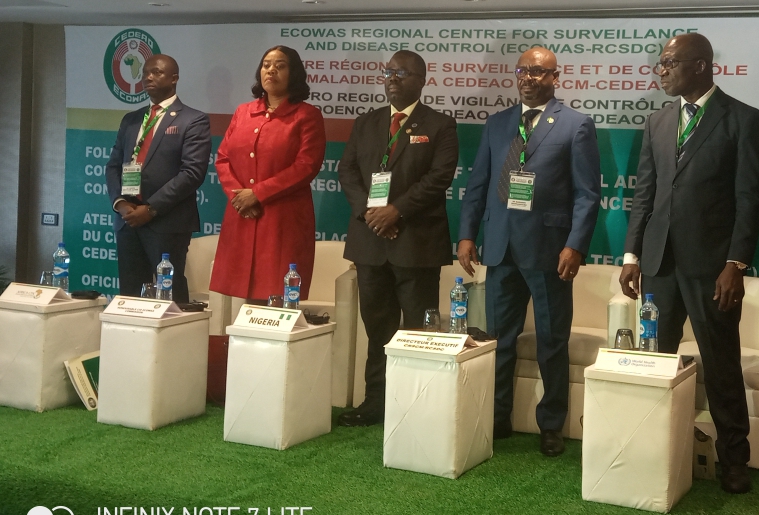
The Federal Government has charged members of ECOWAS region to be committed and contribute towards achieving more resilience health architecture and building regional institutions necessary to prevent, detect and respond to emerging health threats with confidence and coordination.
The Coordinating Minister of health and Social Welfare, Prof. Muhammad Ali Pate gave the charge while declaring open a followup workshop on the establishment of the Technical Advisory Council (TAC) of the ECOWAS Regional Centre for Surveillance and Disease Control (RCSDC), held in Abuja.
He said it marked another important step in consolidating the governance structure and operating capacity of the regional centre through the Technical Advisory Council (TAC) which is an essential advisory body that would support the regional centre in fulfilling its mandate of coordinating regional surveillance, preparedness and response to public health threats in the ECOWAS subregion.
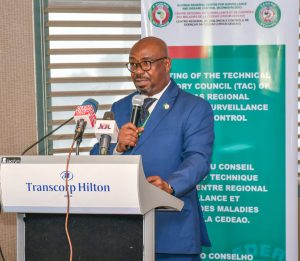
Executive Director, ECOWAS Regional Centre for Surveillance and Disease Control (RCSDC), Dr. mamadou Diarrassouba while delivering a welcome address at the workshop.
The Minister who was represented by Dr Kamil Shoretire, Director Health Planning Research and Statistics of the Ministry of Health and Social Welfare, said this while advising the participants at the workshop drawn from the ECOWAS region.
He said: “I urge you therefore to engage constructively, be firm and committed to the RSC-TAC’s vision and contribute to stronger and more resilience health architecture for ECOWAS.
“Together, we can build the regional systems and institutions necessary to prevent, detect and respond to emerging health threats with confidence and coordination.
He recalled that the lessons from the recent epidemics and pandemics including Ebola and Covid-19, Lassa fever and cholera have emphasized the need for coordinated and multi-sectoral action among the member states.
Prof. Pate emphasized that the TAC serves as a platform to ensure expert guidance, knowledge exchange and strategic awareness of efforts in safeguarding the health of region’s population.
He disclosed that the current administration in Nigeria is implementing the health sector renewal investment initiative using the sector wide approach.
Prof. Pate noted that one of the four pillars of health renewal initiative is health security, adding that the administration sees the inauguration and the continuing functionality of TAC as also being in alliance with the aspirations of the government and people of Nigeria.
“This meeting is particularly important as it seeks to finalizing the council’s terms of reference, internal regulations and governance mechanisms. These fundamental steps will ensure that the TAC operates with legitimacy, coherence and technical integrity guided by evolving ethnological realities of our region”, he stated.
On his part, Representative of the Director of the WHO Regional Office for Africa, Dr Etien KOUA, pledged the support of WHO to TAC.
He assured that WHO would support TAC operationalization, strengthen synergies by ensuring TAC’s work aligns with regional and global health security architectures and to mobilize resources.
According to Dr. Koua, “The goal is a strong, autonomous, and authoritative ECOWAS-RCSDC, where the TAC’s voice is central to
decision-making.”
He explained that the establishment of the TAC is more than forming a committee, stressing that it is about harnessing the region’s collective intelligence for collective preparedness.
He canvassed for building a TAC that is credible rooted in scientific excellence and impartiality, relevant focusing on the most pressing threats to the people; impactful driving measurable improvements in prevention, detection, and response as well as sustainable.
“By empowering the ECOWAS-RCSDC with a robust Technical Advisory Council, you send a powerful
message: West Africa is coordinated, prepared, and determined to protect the health of its people”, he added
Also speaking, the Executive Director, ECOWAS Regional Centre for Surveillance and Disease Control (RCSDC), Dr. mamadou Diarrassouba, reminded ECOWAS member states that the TAC is in the process of setting up a cornerstone of regional preparedness and response to epidemics and health emergencies in ECOWAS.
He said TAC would ensure that all interventions are guided by scientific excellence, technical rigour and global best practices in public health.
He cited that ECOWAS region continues to face unprecedented health challenges such as fragile health systems, political and social tensions, persistent humanitarian crises, and the devastating effects of climate change, which together amplify the risk of epidemics and pandemics.
However, he noted that these challenges require the ECOWAS region to take coordinated, resolute and innovative action.
“The ECOWAS Regional Centre for Disease Surveillance and Control (RCSDC) is making progress in coordination with Member States and all stakeholders. It improves the flow of health information, strengthens the technical capacities of our professionals, provides support to Member States during health crises, etc. And this list is not exhaustive”, Dr. Diarrassouba recounted.
Further, the ECOWAS early warning Directorate represented by Dr Onyinye Onwuka, reminded them that the Directorate has core mandates of monitoring human security threats.
She noted that this has three thermatic focus areas including health, environment, security, crime and criminality, governance and Human rights.
He pointed out that human health security occupies priority area, citing that outbreak COVID-19 targeted all regions and killed more people than has ever been witnessed in the last years.
Dr. Onwuka maintained that TAC creation is therefore timely, vital and reflects ECOWAS growing maturity in institutionalizing health security as a pilar of regional stability and human security representing the well-being of community of citizens.









Click to read full text









Court Admits Alleged Fake JAMB Registrar To N50 Million Bail, Two Surtees

CJN Warns Judges Against Inadequate Attention To Cases
“You Can’t Tie Judge’s Hands Through Frivolous Appeal,” Appeal Court Slams Lawyer In Abuja Property Right-of-Occupancy Case

Learning In UniAbuja Gets Boost As FG Commissions 3MW Solar Hybrid Power Plant, Delivers Reliable Electricity To Over 58,000 Students

PTDF Inaugurates Experts Committee To Overhaul CSDT Operational Policy, Curriculum Development, Others.

Post-Recapitalisation: Omosehin Tasks Underwriters on Capacity, Warns Capital Without Delivery is Meaningless


-

 Business News5 days ago
Swift Telephone Network Recieves NCC’s Unified Access Service License, Ventures Into Full Telcom Services
-

 News6 days ago
Grid Stability, Reliability: FG Kickstarts Construction of Modern National Control Centre As Existing One Becomes Substandard
-

 News1 week ago
Alleged Cyber-bullying: Sowore To Continue His Defence As DSS Counsel Did Not Seek Much-speculated Long Adjournment