
News
Cyber Crimes Pushing The World To Another Global Financial Crisis, Says Dr. Aina

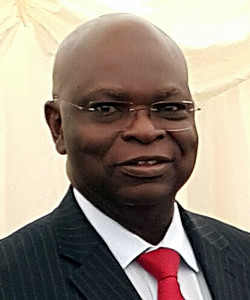
Dr. Segun Aina
By BLESSING OKEZIE, Lagos
The President of Fintech Association of Nigeria, Dr. Segun Aina, has raised alarm over increasing wave of cyber crime, predicting that if not curbed would plunge the world into another round of painful global financial crisis.
Speaking at the 2019 Chartered Institute of Bankers of Nigeria (CIBN) Lagos State Branch, Bankers and Stakeholders Night in Lagos, Dr. Anna observed that banks are most hit by cyber crimes.
Aina who doubles as the Chairman, Global Banking Education Standards Board, further observed that in the event of another global financial crisis, most regulators and operators may not be prepared for the financial downturn.
He maintained that even governments of different countries may not be able to provide bailouts to banks as was done in 2008.
He cited that banks’ losses to fraud in Nigeria jumped to N15.15bn in 2018, an increase of 539 per cent compared to N2.37bn in 2017, maintaining that internet & technology based sources of fraud accounted for 59 per cent of fraud cases and 43 per cent of actual loss.
To buttress his fears about imminent threat of cyber crime, Dr. Aina made reference to NDIC records: “According to NDIC, cybercrime will cost the world $6 trillion annually by 2021, which he said rose upward from $3 trillion in 2015. Global spending on security awareness training for employees is predicted to reach $10 billion by 2027, up from around $1 billion in 2014. Training employees how to recognize and defend against cyber attacks is the most under spent sector of the cybersecurity industry.”
He noted that the UN E-Government Survey 2018 showed Denmark coming first place while Nigeria ranked 143 out of the193 member countries surveyed.
He said Nigeria require an integrated all inclusive (private-public) approach to fast tracking implementation of the Digital Governnment Initiatives and Programs to be able to harness the potentials of the digital revolution.
“The practice and business of banking have been totally transformed in the last two decades as a result of adoption of digital to meet the unique needs of customers and the public; comprised of a large population of youths and young adults. In today’s environment, embracing digital is no longer something good to do – It’s a mandate for survival. Banks must take actions today to guarantee survival and competitiveness tomorrow,” he said
Earlier, the president and Chairman of Council, CIBN, Uche Olowu, said the golden era of digital banking has gained so much significance that according to the 2018 report from Global Market Insight, the Digital Banking Market would cross the $9 trillion mark by 2024.
He said in view of these developments, banks who wish to survive would need to rethink their business models in order to stay relevant.
“As we all may already know, the Central Bank of Nigeria as part of its National Financial Inclusion Strategy aims to significantly increase financial inclusion rates from 58.4 per cent recorded in 2016 to 80 per cent in 2020. Banks who choose to operate under the current banking model would hinder the advancement of this policy. On the other hand, banks who choose to stay ahead of the curve can leverage on digital banking to further facilitate the efforts of the Apex bank.”
He stated that the benefits of this proactivity are significant not only for survival in the changing banking terrain but for economic growth and development as well.
In rethinking their banking models, the banking industry should consider further adoption of technological advancements such as Robotics and Artificial Intelligence, Machine Learning and collaboration with Fintech Firms in increasing coverage and access points.
He advised that banks must remember its core services and consider more innovative ways to offer such services outside of the traditional avenues
He reaffirmed the Institute’s commitment towards building the capacity of professionals and would be professionals in the banking industry.




Click to read full text









Tinubu, Obi, Sowore, Others Sign Peace Accord Ahead Of 2027 Elections

Three Tiers Of Govt Harvest Bumper Revenue As FAAC Shares ₦3.007 Trillion

FG Commends TCN Over Transmission Infrastructure Upgrade, Says It Reflects Administration’s Policy Targets

FG flags Off Smart Meters Installers Training programme, Targets Installing Seven Million Meters Nationwide

MPC Meeting: Nigeria’s Economy Remains Resilient To External Shocks, Cardoso Assures As Members Commit To Sustain Financial Stability

NHRC Tasks FG, State Govts, People Of Means To Make Practical Interventions Towards Combating Poverty, Inequity


-

 News1 week ago
Police Arrest Clergyman, Air Force, Navy Personnel Over Alleged Plot To Kidnap Bishops’ Wives In Plateau
-

 News1 week ago
NISO Pledges Collaboration With State Regulators To Deepen Electricity Supply As GOSERC Reveals Upcoming 30 Mini-grids
-

 Business News5 days ago
TCN Boosts Power Transmission In Rivers State, Commissions 150MVA Power Transformer at Afam Substation