By LOVETH-AZODO CHIJIOKE, Lagos
In a decisive move to protect the continent’s hydrocarbon sovereignty and bridge a widening investment gap, the African Export-Import Bank (Afreximbank) and the African Petroleum Producers’ Organisation (APPO) have formally inaugurated the Africa Energy Bank (AEB) with an authorised capital base of $5 billion.
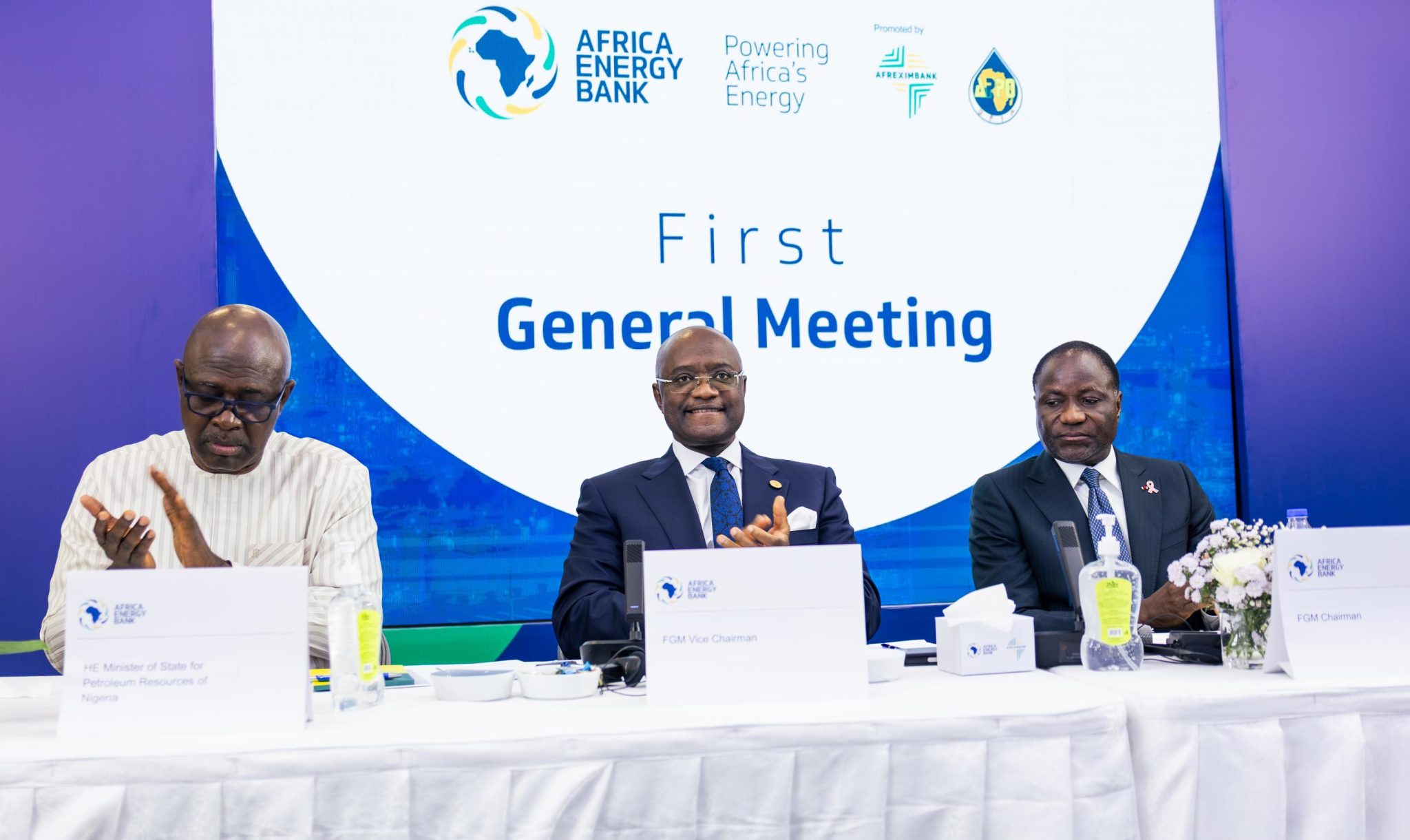
The institutional takeoff was formalised during the bank’s inaugural General Meeting held in Abuja, positioning the supranational lender as Africa’s primary counterweight to the systematic withdrawal of fossil-fuel project financing by Western and traditional multilateral lenders.
The establishment of the multilateral institution comes against the backdrop of estimates indicating that Africa requires roughly $200 billion in annual energy-related capital expenditures to achieve industrial parity, expand domestic grid connectivity, and power emerging digital technologies, particularly high-compute artificial intelligence (AI) infrastructure.
Operating as an independent, supranational pan-African financial institution, the AEB has been structured to de-risk and bankroll operations across the entire energy value chain. Its intervention mandate spans upstream exploration and production, pipeline and marine transportation, crude processing, modular and commercial refining, and retail distribution networks.
Market observers note that by channelling patient, long-term capital into indigenous processing and transmission infrastructure, the bank seeks to aggressively reverse Africa’s historic vulnerability: exporting unrefined hydrocarbons while spending billions of dollars annually to import refined petroleum products.
Beyond oil and gas exploration, the institution is tasked with orchestrating a balanced, “just energy transition” that aligns decarbonisation objectives with the urgent imperative of ending energy poverty across member states.
A major milestone at the Abuja assembly was the ratification of executive governance structures, which saw the formal appointment of Mr. Helmy Ghazi as the inaugural President of the Africa Energy Bank.
Delegates also constituted the bank’s first Board of Directors, drawing seasoned professionals from sovereign public entities, private equity syndicates, and leading continental economic policy institutions.
The bank is designed to pool equity subscriptions and debt capital from African governments, national oil companies (NOCs), continental institutional investors, and global private asset managers who are seeking exposure to Africa’s real energy assets.
By establishing an indigenous funding architecture headquartered in Nigeria, the promoters maintained that the bank will ensure decisions governing Africa’s natural endowments and long-term industrialization pathways remain anchored by African priorities.