Trading on a cautious but optimistic path, the Central Bank of Nigeria (CBN) at the of end of its two-day 306th Monetary Policy Committee (MPC) meeting, retained all monetary policy parameters for the second consecutive times. This was after a thorough review and consideration of domestic and global economic developments which dictated the appropriateness and expediency to retain all the monetary policy parameters. Thus, the MPC resolved to retain Monetary Policy Rate at 26.5 per cent, retain the Standing Facilities Corridor around the MPR at +50/-450 basis points, and retain the Cash Reserve Requirement (CRR) for Deposit Money Banks at 45.00 per cent, Merchant Banks at 16.00 per cent, and non-TSA public sector deposits at 75.00 per cent.
The decision of the 11-members of the committee present at the meeting to retain all the monetary policy parameters parameters after the two-days of intensive deliberations between July 20 and 21, 2026, is not out of the ordinary but was informed by deliberate intention to sustain the nation’s emerging economic recovery. Topmost consideration is the spillover global economic risks associated with the Middle East crisis, the outlook, and the potential retrogressive implications of doing otherwise, the nation may suffer. This is in consideration of frequent escalation of tensions in Middle East over control of the Straits of Hormuz and its unpredictable spillover economic consequences arising from volatility in crude oil international prices.
Only two days ago 28-29th July, the US Federal Reserve after its two-day Federal Open Market Committee (FOMC) meeting voted to keep its target range (interest rates) for the federal funds rate unchanged at 3.50% to 3.75% (3-1/2 to 3-3/4 percent), citing inflationary pressures and circumstances at the Straits of Hormuz. With this, the US Federal Reserve had toed the same line of action earlier taken by CBN MPC, thereby justifying the Nigeria’s apex bank’s proactive monetary policy stance.
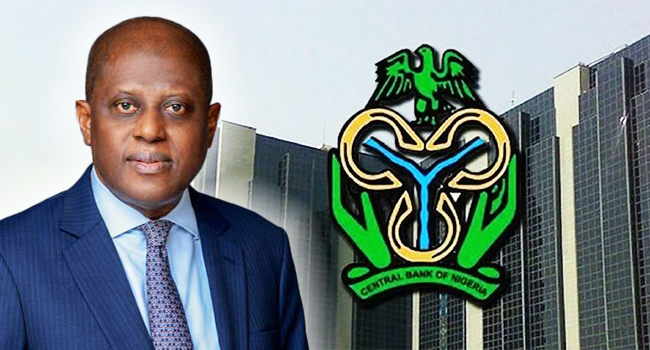
The CBN Governor, Olayemi Cardoso had disclosed at the end of the MPC meeting that the Committee reviewed recent developments in the global and domestic economies, assessed emerging risks to the outlook and considered their implications for the nation’s monetary policy. According to the Governor, “The Committee’s decision to maintain the current policy stance followed a thorough assessment of the balance of risks. Although the headline inflation moderated marginally in June 2026, global uncertainties have heightened due mainly to the renewed hostilities in the Middle East. In view of the evolving developments, maintaining a cautious monetary policy stance remains appropriate.”
He explained that the Committee’s decision was informed by the recent resurgence of hostilities in the Middle East with particular attention to its spillover effects on global energy prices and the potential pass-through to domestic inflation. The Governor who read a communique on the outcome of the MPC meeting, observed that notwithstanding the developments, available evidence suggests that the Nigerian economy has remained largely resilient to the external shocks. He said this reflects the gains from prior reforms implemented by the fiscal and monetary authorities. The CBN Governor however conceded that maintaining the current monetary policy stance will provide an opportunity to closely monitor incoming data and assess the trajectory of inflation to guide future policy decisions.
“The MPC acknowledged the Federal Government’s renewed commitment to strengthening policy coordination, with particular emphasis on the ongoing collaboration with the monetary authority which has helped to moderate the impact of the Middle East crisis on the domestic economy. Members thus, noted that greater alignment between fiscal and monetary policies would enhance policy effectiveness and support the achievement of overall macroeconomic objectives”, he added.
While canvassing for further strengthening of macroeconomic fundamentals, Cardoso said the Committee underscored the potential benefits of Executive Order 9 as the members commended Government’s renewed efforts in improving crude oil production and encouraged relevant agencies to strengthen the implementation of reforms to maximize the potentials in other sectors, such as solid minerals, to complement Government earnings.
On the financial sub-sector of the economy, MPC applauded the positive outcome of the banking sector recapitalisation exercise, and noted the improvement in the resilience of the banking system as reflected in key prudential and financial soundness indicators. As it anticipates more improvements in the sector, MPC urged the apex Bank to sustain effective surveillance to preserve financial sector soundness and mitigate potential risks to financial stability.
MPC’s overall review of price and other domestic developments, showed that the headline inflation (year-on-year) eased marginally to 15.91 per cent in June 2026, from 15.93 per cent in May 2026, ending the three consecutive months of uptick in price levels. The decline resulted from a decrease in the non-food component which offset the increase in food inflation. The food inflation rose to 17.52 per cent in June 2026, from 16.96 per cent in May 2026, reflecting supply constraints. The Committee however observed that core inflation moderated to 15.92 per cent in June 2026, from 16.82 per cent in May 2026, largely on the back of exchange rate stability. Further, MPC noted that the 12-month average inflation rate sustained its decline to 17.63 per cent in June 2026 from 18.36 per cent in May 2026, marking the sixth month of consecutive moderation and reflecting a slower pace of price increases over the medium term. Also, on a month-on-month basis, headline inflation declined to 1.66 per cent in June 2026 from 1.75 per cent in May 2026, driven by a slowdown in core inflation.
On the real GDP, the Committee observed that it expanded by 3.89 per cent in the first quarter of 2026, compared with 4.07 per cent in the preceding period. It noted that it was largely driven by the resilience of the non-oil sector, which grew by 3.94 per cent, supported by improvements in telecommunications, financial services, trade, transportation, and other services sub-sectors. It stated that although oil sector GDP growth rate declined to 2.57 per cent in the first quarter of 2026 from 6.79 per cent in the fourth quarter of 2025, due to the maintenance of oil facilities and installations, but recent data showed improvement in economic activities as composite Purchasing Managers Index (PMI) rose to 50.1 index points in June 2026 from 49.6 index points in May 2026.
Most remarkable and cheering data released by the MPC include that the nation’s Gross external reserves rose to US$52.52 billion as of July 17, 2026, from US$50.47 billion as at end-May 2026. According to the MPC, this was mainly as a result of receipts from crude oil-related taxes and third-party inflows and this is sufficient to finance approximately 11 months of imports of goods and services, surpassing the international benchmark of three months cover.
On review of global developments, the MPC noted that recent estimates indicate that global growth is anticipated to slow to 3.0 per cent in 2026 compared to 3.5 per cent in 2025, reflecting the impact of heightened geo-political tensions in the Middle East, trade policy uncertainties and tight fiscal conditions. It cautioned that risks to global inflation remain on the upside, driven mainly by the increasing prices of crude oil and other commodities. In the same vein, it stated that inflationary pressures are likely to be further amplified by supply chain disruptions and climate-related shocks inhibiting food production. It added that the exchange rate volatility and fiscal constraints pose upside risks to inflation in most Emerging and Developing Economies.
Despite the uncertainties that becloud the current global economy due to the Middle East crisis, MPC expressed optimism that the output growth is projected to remain resilient in 2026. It anchored this stance on the recent improvement in crude oil production, expansionary Purchasing Managers Index and the positive impact of timely policy reforms. According to MPC, “Inflation is projected to moderate further in the medium term on the back of continued stability in the foreign exchange market, lagged effect of previous monetary policy tightening and improved food supply conditions as the harvest season approaches.
Taking into consideration of the key risk to the outlook which remains the severe and prolonged escalation of the Middle East conflict, the Committee reaffirmed its commitment to preserve price and financial system stability and expressed its preparedness to take precautionary appropriate policy measures, to mitigate the resulting consequences.



















 Business News1 week ago

 Business News5 days ago