
Business News
NAICOM Tightens Grip on Industry As Recapitalisation Countdown Exposes Deep Structural Gaps

By LOVETH AZODO, Lagos
Nigeria’s insurance industry is entering a decisive phase as the countdown to the July 31 recapitalisation deadline intensifies pressure on operators, exposes longstanding market imbalances, and forces regulators and underwriters into urgent conversations over the future structure of the sector.

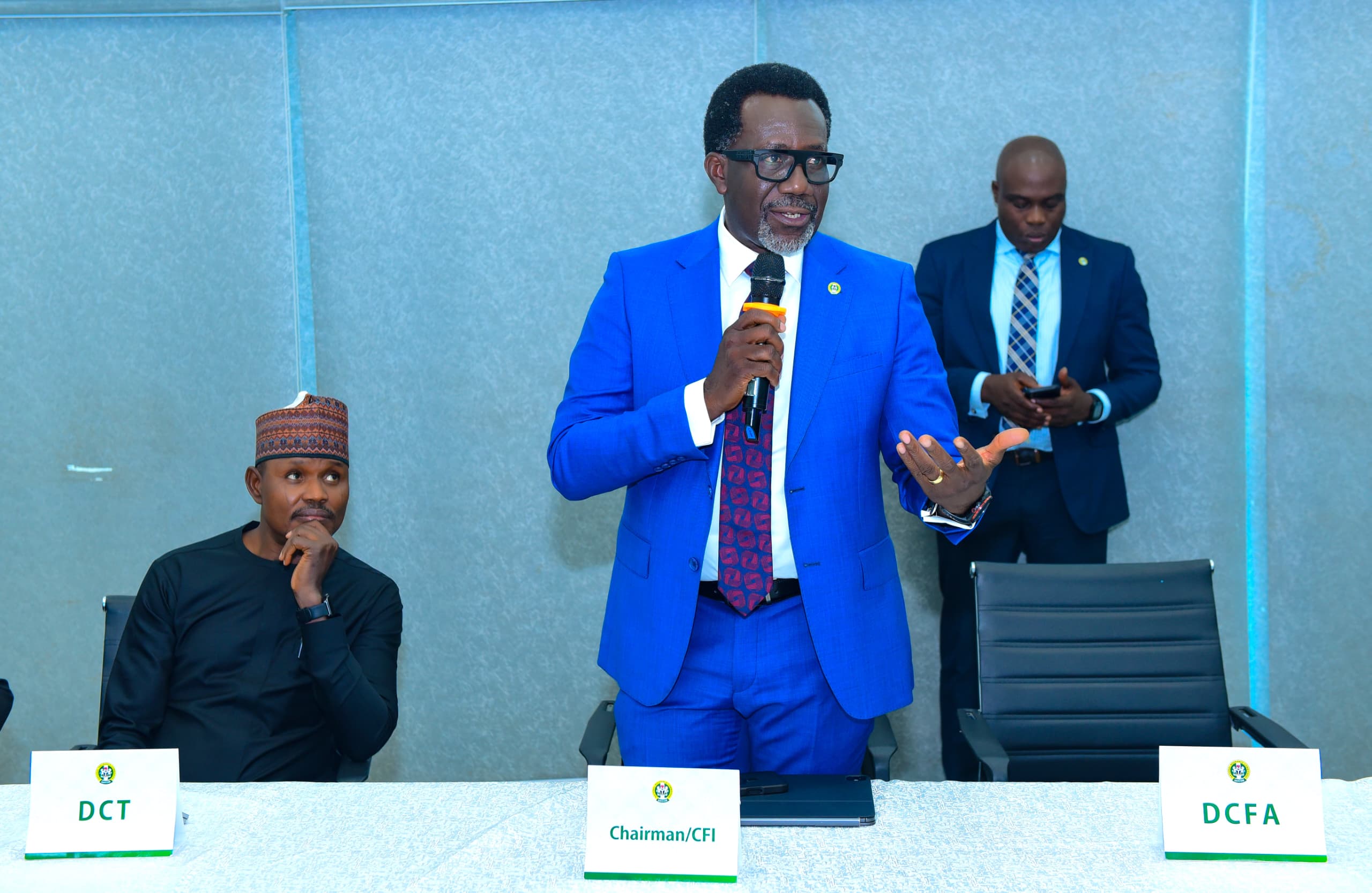
L-R: Pastor Ikechukwu Udobi, President, ILAN; Mrs. Ekeoma Ezeibe, President, NCRIB; Dr. Usman Jankara, Deputy Commissioner Technical, NAICOM; Mr. Bonaventure Okhaimo, MD/CEO, NCGG; Mr. Olusegun Ayo Omosehin, Commissioner for Insurance, NAICOM; Mrs. Ebelechukwu Nwachukwu, Deputy Chairman, NIA; and Mr. Ekerete Ola Gam-Ikon, Deputy Commissioner Finance and Administration, NAICOM.
These concerns came to the fore at the 21st Insurers’ Committee Meeting held in Lagos, where executives of insurance firms, regulators, credit institutions, and other stakeholders engaged in far-reaching deliberations on recapitalisation, market expansion, fake insurance operations, data integration, and the widening distribution gap across Northern Nigeria.
Although the meeting reviewed progress in the industry’s ongoing transformation agenda, anxiety over the capital verification process dominated discussions as several operators privately expressed fears that the pace of the exercise may complicate compliance efforts ahead of the regulatory deadline.
The recapitalisation programme, driven by the implementation of the Nigerian Insurance Industry Reform Act (NIIRA) 2025, requires operators to significantly strengthen their capital base as part of broader reforms aimed at improving solvency, underwriting capacity, consumer confidence, and market stability.
Industry sources disclosed that while some firms have already undergone capital verification by the external audit firms appointed by the National Insurance Commission (NAICOM), many others are still awaiting engagement, heightening uncertainty across the market.
The commission had appointed four global audit firms; PricewaterhouseCoopers, KPMG, Deloitte, and Ernst & Young to independently assess the financial positions of insurance and reinsurance companies participating in the exercise.
Under the new capital regime, life insurance companies are expected to raise their minimum capital to N10 billion, general insurers to N15 billion, composite firms to N25 billion, while reinsurance companies are required to meet a threshold of N35 billion.
Speaking after the meeting, Chairperson of the Communication and Stakeholders Engagement Sub-Committee of the Insurers’ Committee, Ebelechukwu Nwachukwu, said the Commissioner for Insurance and Chief Executive Officer of NAICOM, Olusegun Omosehin, urged operators to remain focused and proactive as the industry approaches a critical transition point.
According to her, the regulator acknowledged the level of compliance achieved so far but emphasized that operators must conclude all necessary engagements within the stipulated timelines.
Beyond recapitalisation, the meeting exposed deeper structural concerns surrounding insurance penetration, particularly in Northern Nigeria, where stakeholders admitted that the industry’s operational footprint remains alarmingly weak despite the region’s enormous commercial potential.
President of the Association of Registered Insurance Agents of Nigeria (ARIAN), Mayowa Olatubosun, challenged insurers to confront what he described as decades of market neglect across several northern states.
According to him, many parts of the region still lack visible branch networks, retail structures, and certified insurance agents, leaving major agricultural assets, transport businesses, traders, and small enterprises without formal risk protection.
He warned that the vacuum has also enabled the proliferation of fake insurance operators who exploit unsuspecting members of the public in underserved markets.
The issue generated strong reactions among stakeholders, with the committee reportedly agreeing on the need for more deliberate expansion strategies targeting grassroots distribution, microinsurance penetration, and wider deployment of Takaful products tailored to the socio-economic realities of northern communities.
The discussions came as NAICOM intensified its crackdown on fake insurance syndicates operating across the country.
Industry sources said the commission briefed stakeholders on recent enforcement operations carried out in collaboration with the Nigeria Police Force, particularly in Abuja, where several suspects linked to fake insurance documentation were arrested.
The operation reportedly led to the seizure of counterfeit Nigerian Insurance Industry Database (NIID) papers and other fraudulent documents used by illegal operators.
Stakeholders were informed that the commission is determined to pursue full prosecution of offenders as part of broader efforts to restore credibility and public trust within the sector.
The commissioner was also said to have reinforced the industry’s position on identity verification, insisting that claims payments would remain tied to compliance with National Identification Number (NIN) and Business Registration Number (BRN) requirements once implementation directives are fully activated.
Another major highlight of the meeting was the industry’s renewed push toward stronger collaboration with credit institutions and financial data providers to improve underwriting decisions and strengthen risk management architecture.
Managing Director of Credit Bureau Limited, Tunde Popoola, disclosed that insurance participation within the national credit reporting ecosystem remains significantly low, with only a handful of insurers actively contributing customer data.
He argued that stronger integration would help insurers identify chronic premium defaulters, track suspicious claims patterns, and improve overall market discipline.
Similarly, Managing Director of National Credit Guarantee Company Limited, Bonaventure Okhaimo, called for deeper collaboration between insurers and credit institutions to strengthen access to financing for businesses and individuals.
The committee also reviewed progress on the development of a Nigerian mortality table expected to provide the industry with locally generated actuarial experience data capable of improving pricing accuracy and long-term product sustainability.
Stakeholders expressed optimism that the initiative would strengthen actuarial modelling and reduce dependence on foreign demographic assumptions.
Despite the concerns raised at the meeting, stakeholders acknowledged signs of progress within the regulatory environment, particularly NAICOM’s improved performance on the Presidential Enabling Business Environment Council (PEBEC) Reform Tracker, where the commission emerged first in the Business Finance and Risk Optimisation Cluster.
Industry leaders described the ranking as evidence of ongoing reforms aimed at repositioning the insurance sector as a more transparent, technology-driven, and investor-friendly component of Nigeria’s financial system.
In his remarks, Omosehin reiterated that the future of the insurance industry would depend on stronger collaboration across the financial ecosystem, innovation-driven regulation, and sustained efforts to deepen public confidence in insurance products and institutions.





Click to read full text









Tinubu Retains Shettima As Running Mate For 2027 Presidential Election

President Tinubu Regrets Anguish Rescued School Children, Teachers Were Subjected By Abductors

States’ A-Gs Wade Into NBA Leadership Crisis

PenCom, NURTW Collaborate, Target Enrolment Of Over 9 Million Transport Workers In Personal Pension Plan

Bayo Onanuga: I Don’t See The Level Of Hunger In Nigeria People Are Talking About

2027: Abia PDP Governorship Candidate, Anosike, Plans To Unseat Gov. Oti, Pledges Welfarist Programmes


-

 News2 days ago
US, UK, Others Receive Notification Of IPOB Transition Issued By Nnamdi Kanu From Sokoto Prison
-

 Business News1 week ago
Identical Registration: Court Dismisses CAC, Others’ Objection To Artco Industries Ltd’s ₦100 Million Suit
-
 Business News3 days ago
NNPC Outlines Strategic Vision for Nigeria’s Energy Future As Ojulari Calls For Stronger Energy Ecosystem Collaboration