
News
$500M World Bank Grant: Nigeria, Other African Nations Brainstorm On Actionable Health Control Measures


Health experts from Nigeria and other African countries are currently being hosted in Abuja to brainstorm on finding actionable measures aimed at controlling and preventing public health threats across the nations.
The event being hosted under the auspices of the West Africa Health Organization (WAHO) from June 17-20, 2025, brought together experts from Cabo Verde, Cameroon, Central African Republic, Chad, Gabon, Guinea, Liberia, Mali, Nigeria, and Republic of Congo—as well as the Economic and Monetary Community of Central Africa (CEMAC).
The main objective involves sharing knowledge and developing actionable plans under the World Bank-funded HeSP, to enhance regional collaboration and build capacity to prevent, detect, and respond to health emergencies.
Representing Nigeria’s Coordinating Minister of Health and Social Welfare, Dr. Idris highlighted the critical role of a $500 million World Bank grant in building capacity to address cross-border diseases like Ebola, Lassa fever, mpox, and COVID-19.
“This learning event is about building regional capacity to prepare for emergencies. We can’t rest because diseases can emerge anytime ,” Dr. Idris said. “We’ve seen Ebola, Lassa fever, and meningitis devastate our region. Diseases don’t respect borders, so we must work together to strengthen surveillance, response, laboratory diagnostics, Antimicrobial Resistance (AMR), and infection prevention and control.”
He stressed that cooperative efforts yield greater results than isolated national responses, noting, “We achieve more when we train participants from across the subregion to address health security challenges jointly.”
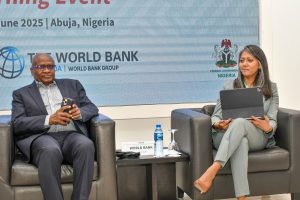
Director General of the Nigeria Centre for Disease Control (NCDC), Dr. Jide Idris, and the World Bank Practice Manager for Western and Central Africa, Rifat Hasan, during the Health Security Program (HeSP) Learning Event on Tuesday in Abuja.
Dr. Idris expressed gratitude to the World Bank and other donors, saying, “Their support is vital for building the capacities we need to protect our people.”
On her part, the World Bank Practice Manager for Western and Central Africa, Rifat Hasan, underscored the grant’s transformative potential.
“This $500 million regional operation aims to prevent, detect, and manage outbreaks through cross-border surveillance and coordination,” she said in a sideline interview.
“We expect improved surveillance across countries, strengthened border points of entry, enhanced laboratory systems, and the continued delivery of essential health services during emergencies.” she added.
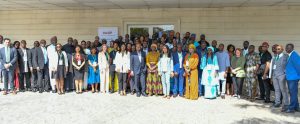
Participants at the Health Security Program (HeSP) Learning Event on Tuesday in Abuja.
According to her, the programme currently involving three countries and WAHO, with more from Central Africa and the Sahel expected to join within a year, the seven-year program will enhance laboratory systems, border surveillance, and essential health services during emergencies.
“We’re building resilient systems to ensure health security becomes a regional public good,” Hasan added in her opening remarks.
Hasan noted that the program’s Learning Agenda prioritizes knowledge generation, best practices, and peer-to-peer learning, ensuring that interventions become “regional public goods.”
She expressed gratitude to partners like Resolve to Save Lives, the World Organization of Animal Health, the Institute Pasteur of Dakar, and WHO’s Emergency Hub of Dakar for supporting the event, and lauded Nigeria’s leadership in hosting.
Major highlights of the event include: photographs, interactive sessions, featuring case-based learning and peer-to-peer exchanges, which focused on six priority areas: One Health approaches integrating human, animal, and environmental health; antimicrobial resistance; emergency-ready primary health care; surveillance and early warning systems; laboratory quality and capacity; and health emergency management.
Delegates were equipped to translate national assessments into actionable workplans, prioritizing investments and multisectoral collaboration to ensure effective emergency responses.




Click to read full text









FG Commends TCN Over Transmission Infrastructure Upgrade, Says It Reflects Administration’s Policy Targets

National Ranching Policy: Whose Land, Whose Ranches, Whose Future?

Efficient Electricity Market: NISO NBET Strengthen Collaboration, Targets Investor-Friendly Market

FG flags Off Smart Meters Installers Training programme, Targets Installing Seven Million Meters Nationwide

MPC Meeting: Nigeria’s Economy Remains Resilient To External Shocks, Cardoso Assures As Members Commit To Sustain Financial Stability

NHRC Tasks FG, State Govts, People Of Means To Make Practical Interventions Towards Combating Poverty, Inequity


-

 News1 week ago
Police Arrest Clergyman, Air Force, Navy Personnel Over Alleged Plot To Kidnap Bishops’ Wives In Plateau
-

 News1 week ago
NISO Pledges Collaboration With State Regulators To Deepen Electricity Supply As GOSERC Reveals Upcoming 30 Mini-grids
-
 Business News5 days ago
TCN Boosts Power Transmission In Rivers State, Commissions 150MVA Power Transformer at Afam Substation