…Reserves Hit $54bn as Monetary Policy Committee Opts for Caution
The Central Bank of Nigeria (CBN) has left its benchmark interest rate unchanged at 23 per cent, signalling confidence in the country’s declining inflation trend while warning that election-related spending and global geopolitical tensions could still derail recent economic gains.
The decision was announced after the 308th meeting of the Monetary Policy Committee (MPC), chaired by CBN Governor Olayemi Cardoso, where members unanimously opted to maintain the current tight monetary policy stance despite growing calls for lower borrowing costs.
The MPC said keeping rates unchanged was necessary to consolidate progress in reducing inflation, which has now declined for five consecutive months.
Headline inflation eased to 14.06 per cent in October 2026, down from 14.63 per cent in September, while core inflation dropped sharply to 10.78 per cent from 12.95 per cent.
The committee attributed the moderation in price pressures to sustained stability in the foreign exchange market, improved monetary policy transmission and increased food supplies following the harvest season.
However, policymakers warned that significant risks remain on the horizon.
Among the major concerns identified by the MPC were the ongoing conflict in the Middle East, which could trigger fresh increases in global energy prices, and heightened domestic spending linked to the festive season and preparations for the 2027 elections.
The committee cautioned that both factors could fuel aggregate demand and place renewed pressure on consumer prices, potentially slowing Nigeria’s disinflation journey.
Despite those concerns, the CBN painted an increasingly optimistic picture of the economy.
The committee highlighted the expansion of business activities across key sectors, with the Composite Purchasing Managers’ Index (PMI) rising to 53.2 points in October, indicating continued growth in manufacturing, agriculture and services.
Nigeria’s external position also strengthened, with gross foreign reserves reaching $54.02 billion as of November 17, enough to cover more than ten months of imports.
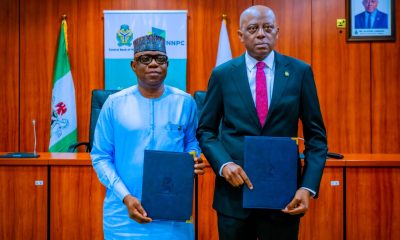
In a notable development, the MPC welcomed the newly signed Memorandum of Understanding between the CBN and the Nigerian National Petroleum Company Limited (NNPC), describing it as a potential game changer for foreign exchange inflows, energy-sector financing and macroeconomic stability.
According to the committee, successful implementation of the agreement could deepen foreign exchange liquidity, boost external reserves and improve investor confidence in Africa’s largest economy.
The banking sector was also assessed as stable and resilient, supported by stronger capital buffers and improved risk management practices, although the MPC urged regulators to maintain close surveillance of financial institutions.
Looking ahead, the central bank said Nigeria’s economic outlook remains positive through the end of 2026 and into 2027, driven by stronger crude oil production and expanding activity in agriculture, industry and services.
While warning that global energy disruptions and adverse weather conditions remain threats, the MPC expressed confidence that stable exchange rates, stronger external buffers and improving food supplies would help sustain the downward trend in inflation.
For now, Cardoso and his colleagues are choosing prudence over bold action, preferring to keep monetary conditions tight until they are convinced inflation has been firmly tamed.
The next meeting of the Monetary Policy Committee is scheduled for 22-23 February 2027.