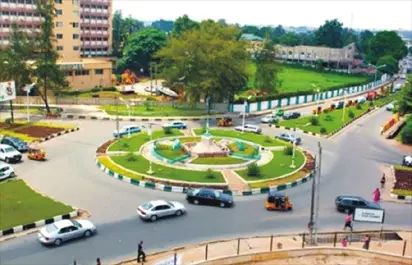
*Owerri, capital of Imo state
By EMEKA UGBOGU
For Imo State, the retention of power in 2023 by the All Progressives Congress (APC)-led Federal Government under President Bola Ahmed Tinubu has created a new opportunity for closer collaboration between the centre and the state.
While political differences may always exist in a democracy, development ultimately depends on the ability of governments at different levels to work together in the interest of citizens.
In Imo, that partnership is increasingly visible in infrastructure, transportation, education, healthcare, aviation and power.
Transportation Infrastructure
One of the benefits is the renewed attention to road infrastructure. The Federal Government and the Imo State Government have worked together on major road projects, including the Owerri–Okigwe and Owerri–Obowo–Umuahia corridors.
The 56-kilometre Okigwe–Owerri Road and 36-kilometre Owerri–Obowo–Umuahia Road were among the projects inspected during the Presidential Media Tour of Imo State in July 2026.
These roads are more than concrete and asphalt. For a largely commercial and agrarian state such as Imo, better roads mean easier movement of people, agricultural produce and manufactured goods. They also reduce travel time and improve the connection between communities and markets.
Interestingly, the partnership has also allowed the state government to undertake some federal-road interventions under reimbursement arrangements. The Federal Ministry of Information reported that the improved fiscal position of the state, following reforms by the Tinubu administration, has helped Imo finance major infrastructure projects without relying heavily on borrowing.
Another major area of potential transformation is the Sam Mbakwe International Airport. The airport is undergoing an upgrade, including an extension of its runway from 2,700 metres to 3,200 metres, with plans for cargo facilities and warehouses. The project is designed to strengthen Imo’s position as a logistics and export hub for the South-East.
This could be particularly significant for farmers, exporters and businesses. If properly completed and operated, a stronger cargo airport could reduce logistics costs, open new markets for agricultural products and attract investment into Imo and the wider South-East.
Improved Education Facilities
Education is another area where the state is gaining from federal initiatives. Alvan Ikoku Federal University of Education in Owerri has been upgraded, while the Federal Government has also supported the establishment and strengthening of higher-level educational and healthcare institutions in the state. The Presidential Media Team specifically highlighted the upgraded institution during its July 2026 inspection.
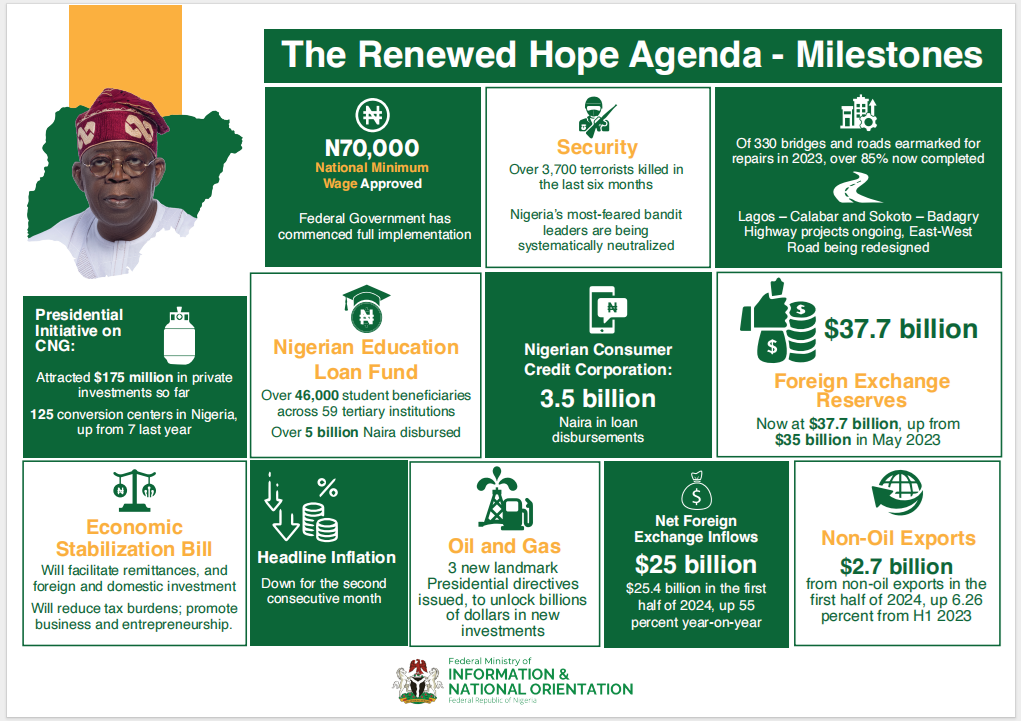
The Nigerian Education Loan Fund (NELFUND), another major initiative of the Tinubu administration, also has implications for Imo students. By providing financing to eligible students, the scheme can reduce the financial pressure that forces some young Nigerians to abandon higher education.
Healthcare is equally important. The Federal Medical Centre, Owerri, has been upgraded to a teaching hospital, strengthening the state’s capacity for specialist healthcare, medical training and research. This has the potential to reduce the need for residents to travel outside the state for certain forms of advanced medical treatment.
Power infrastructure is another important piece of the emerging picture. The Federal Government, with African Development Bank support, commenced reconstruction of the Alaoji–Owerri–Onitsha transmission line in 2026. The project is expected to improve electricity transmission to Imo, Abia, Port Harcourt and other parts of the South-East while reducing transmission losses and improving grid reliability.
Beyond individual projects, however, the biggest benefit may be the political and economic relationship between the Federal Government and the state administration led by Governor Hope Uzodimma.
Alignment with FG
Development requires cooperation. A state government that can work constructively with the Federal Government is better positioned to attract federal interventions, secure partnerships and maximise opportunities created by national policies.
This does not mean that every challenge facing Imo has disappeared. Roads still require maintenance, electricity supply remains a national challenge, unemployment and poverty require sustained attention, and infrastructure projects must be completed to the highest standards. Government must also ensure transparency, accountability and value for money.
But it would be difficult to ignore the scale of the infrastructure activity currently taking place.
The important lesson from Imo is that federalism should not be reduced to political rivalry. The real test of governance is whether cooperation between Abuja and the states translates into better roads, stronger institutions, more jobs, improved healthcare, easier movement of goods and greater economic opportunities for citizens.
For Imo State, the APC-led Federal Government has provided a platform for that kind of collaboration. The responsibility now rests on both governments to sustain the partnership, complete ongoing projects and ensure that the benefits reach ordinary Imolites.
Ultimately, the strongest argument for any government is not its political rhetoric but what citizens can see, use and feel in their daily lives. In Imo State, the growing federal-state partnership is beginning to provide precisely that evidence.
*UGBOGU (SoJ), soj.spv1@gmail.com
















 News1 week ago