
For Records
2024 WCD: How We’re Changing Negative Narrative Against Family Planning In Jigawa

By Mohammed Abubakar Dutse
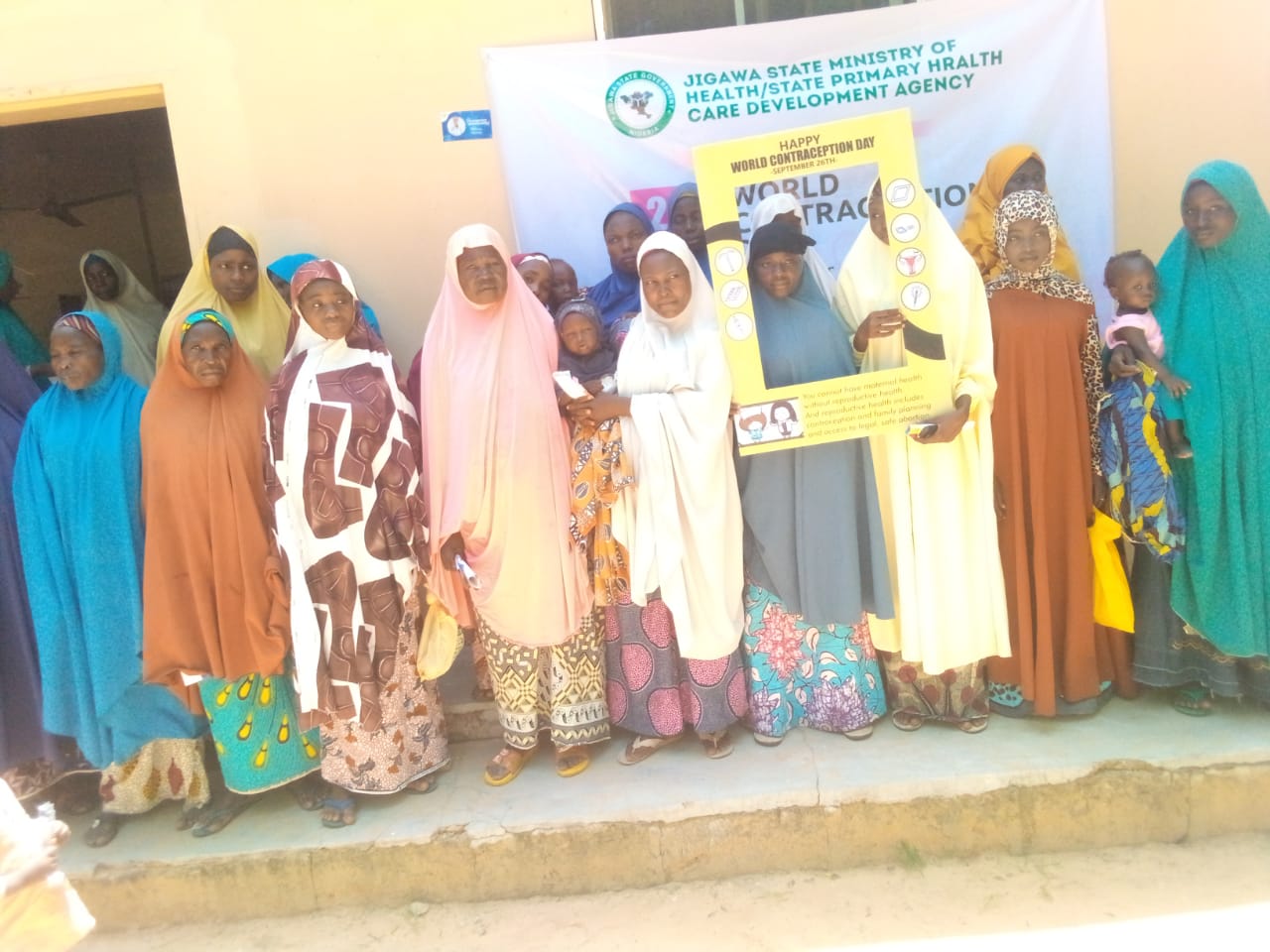
As Nigeria joined the rest of the world in commemorating the 2024 World Contraceptive Day (WCD), stakeholders in the health sector have applauded the renewed level of awareness and the accessing of the Family Planning Services (FPS) by the targets in Jigawa state.
At sensitization sessions held in some selected locations to mark the day in the state, put together by the State Ministry of Health, in collaboration with some Development Partners, stakeholders were, however, united in soliciting for more FPS facilities, taking into account the renewed awareness by the targeted end users.
During the sensitization sessions organized in some parts of Dutse, the state capital and the Primary Health Care Facility in the nearby Kiyawa local government area, officials from some Development partners, notably, the Society for Family Health, (SFH)/A360, The Challenge Initiative (TCI) and Marie Stopes among others, were on hand to enlighten women of child- bearing age on the importance of child-spacing, while also offering free counseling services to them.
Reputed as one of the few states with strong resistance to the family planning services, analysts attributed the recent hike in awareness in the state to increased awareness creation spearheaded by the State Primary Health care Development Agency, (PHCDA,) and the partners, leading to the spike in demands for family planning services by the indigenes and residents.
The theme of the 2024 WCD was “A Choice For: Freedom to Plan, Power to Choose”.
Ms Stacy Louis, the Youtbs Innovation Officer, (YIO), of A360, who led other partners to Kiyawa PHC disclosed that the awareness and provision of free family planning services (FPS) to women of productive age was part of their desires to ensure that they completely change the narrative and reinforce positive side of child-spacing away from the wrongly held notion as an attempt to control the population.
Given the initial poor wrong perception of the FPS her organization, in collaboration with their counterparts.chose the two councils simultaneously for this year’s advocacy given the premium placed on the subject matter.
Speaking at the programme venue that had more than 1000 people in attendance, Ms Louis observed that the essence of the programme was not only to celebrate the day and enlighten and creation of awareness among the people but also to underscore the importance of family planning in their marriages.
She, however, described the significant increase in acceptance the ptogramme and turn out of women to access contraceptive services, reflecting a growing awareness and acceptance within the communities across the state.
Her words, “Before now, there have been poor rerception of the programme by communities across the state, but as a result of the extensive engagements and sensitization we had with critical stakeholders such as the traditional, religious and community leaders, we are beginning to notice alot of attitude change.
“We had situation in the past, where we see husbands not allowing their wives to use contraception, where we see stakeholders saying talking about contraception in their areas as taboo that people might not want to talk about it, but now, if you go into communities you will discover that, it is something they don’t feel shy about anymore because there has been awareness creation, there is an environment where nobody is scared to speak about family planning.”
She noted that since 2022, when the implementation of the programme commenced in the state to date, 26 of the 27 LGAs have so far been covered, with the remaining one LGA being used as a control site, ‘So that at end of the implementation, we can compare and see the impact we’re making and the challenges therein.”
Also corroborating Louis, Malama Hauwa Musa who represented Marie Stopes, corroborated Lois assertion, noted that not only were they focussing on the women in the sensitization exercise, but also the men because of the critical role they play in child production.
“In this exercise, we also try to enlighten men most especially to allow their wives to access FPS, that family planning is not the samething as child birth control but to give some space for the health of both the baby and his mother. Therefore, my message to my fellow women and their husbands,is that they should embrace child spacing and men should release their wives”.
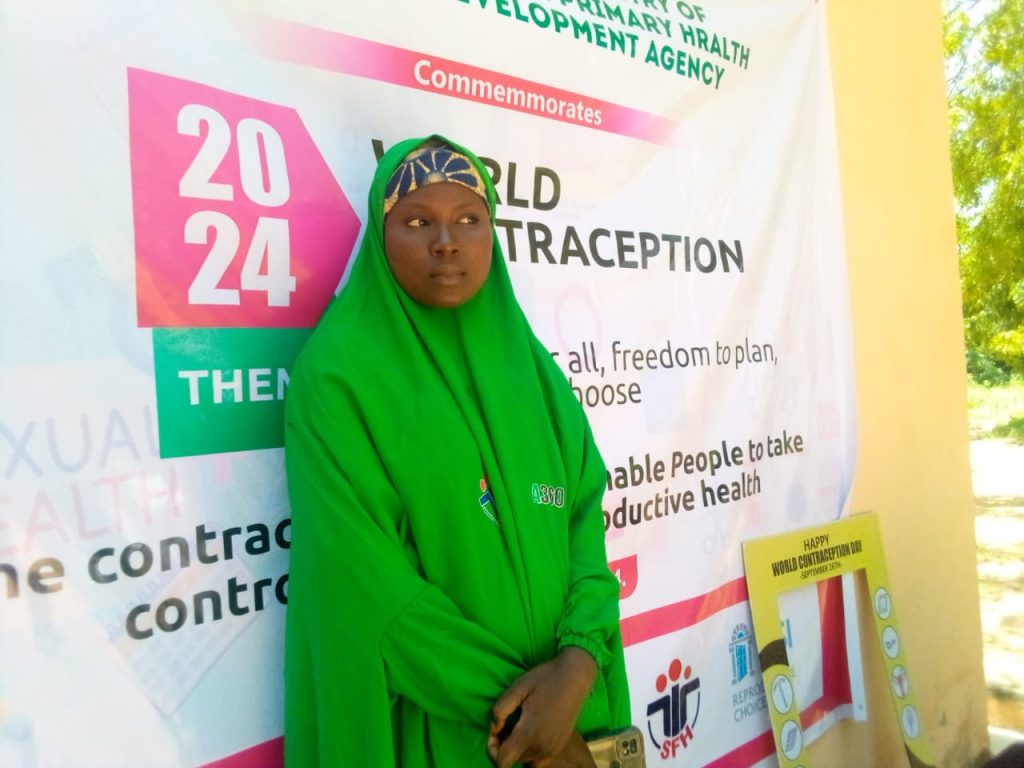
Hauwa Gimba, who plays the role of a mentor, to the PHC in Kiyawa said, “My job here as a mentor is to mobilize women and enlighten them to come and embrace family planning. We also enlighten them to come and test themselves in the hospitals to enable them cater for their health and their newly born babies.
“Initially, we had challenges in convincing them to embrace family planning, since they assumed it was aimed at birth control. But we had to educate them following intensive training we received ourselves. As a result of the effectiveness of our campaigns, they have not only embrace the exercise, they even come to us at home to seek for the referral cards to enable them to access the services at the hospitals.”
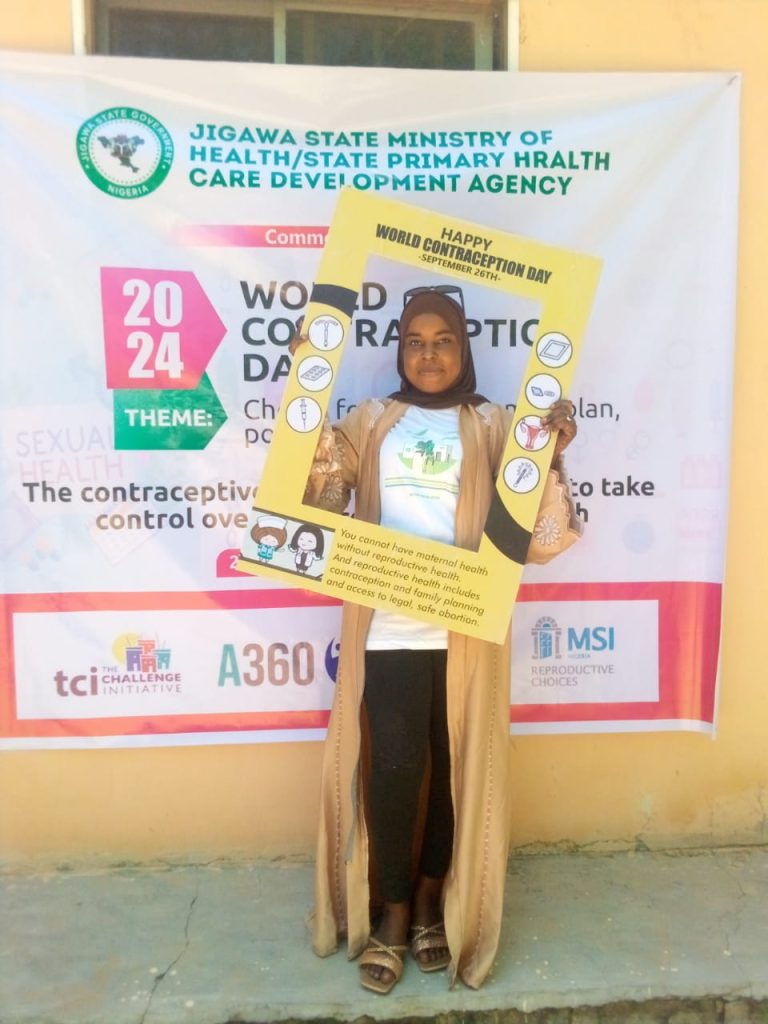
Zainab Ibrahim Bukar, one of the Youths Champion for A360 described the occasion as a powerful campaign, adding, “It is good for the youths of child-bearing age, it is something that people should come out and support.”
The officer in charge of Kiyawa Primary Health Care facility, Auwalu Musa Garba commended Jigawa State Ministry of Health and Primary Health Care Development Agency and non-Government Organisations for their commitment to the issues of family planning.
In their responses some of the beneficiaries expressed satisfaction with the impacts bthe programme is making on their lives
.
Muhammad Ahmed and Nafisa Ibrahim, expressed the satisfaction for the programe and commended the NGOs for the gesture
A tea vendor in Dutse Malam Habibu Yakubu said he has four children and also practice child spacing which has proved to him that family planing is good for family health.
Another Tea vendor Auwal Muhammad Maishayi revealed that, Initially he was against family planing but after an engagement with some group of advocate he understands the rational behind child spacing.
” I practice child spacing, I appreciated it’s significance to my children and wife health and above all it is not in complict with our cultural and spiritual belief”
A Fura da Nono vendor, Fatima Jauro said she is aware of family planing but she never thinks of practicing it because she didn’t see any logic in it.
“Me I don’t believe in family planing, I am against it, it is taboo, ungodly, in fact me I never go to hospital for antenatal or post metal, I don’t know which of my child will help me, please leave me alone”RS Jauro stated”
To Malama Rabi a food seller in Kudai village stated that, base on her understanding practicing child spacing does not mean you shall give birth to only two children, but it is kind of medical advice which proved to be good for social, economic and healthy growth of the child and family in general.
Talatu Musa a house wife in Madobi village said, the current socio-economic challenges are so critical, therefore practicing child spacing woulf help to enhance the wellbeing of the family and she advised women to use it.
For Hafsat Musa of Kiyawa local government of the state she described Family Planing as one of the strategic measures to reduce the high rate of child and maternal death, tackling malnutrition and stunting rate, as well as enhancing reproductive health .
” I practice child spacing, and to me it is not an issue of economy but the health and survival of the child and mother in a good condition, I testified it’s important to family life,so I am advising family to adopt it”.
However other women and households interviewed across the state have called on Jigawa state government and partners to strengthen the supply of the contraceptives drugs and services for making it more accessible to people as public be am more enlightened on it.










Click to read full text









NAICOM Clears Seven More Insurers, Closes Recapitalisation Exercise At 50 Operators

Kari Opposes Regulatory Concessions For Insurance Recapitalization Defaulters

Vom: Plateau People Cannot Have It Both Ways

FG flags Off Smart Meters Installers Training programme, Targets Installing Seven Million Meters Nationwide

MPC Meeting: Nigeria’s Economy Remains Resilient To External Shocks, Cardoso Assures As Members Commit To Sustain Financial Stability

NHRC Tasks FG, State Govts, People Of Means To Make Practical Interventions Towards Combating Poverty, Inequity


-

 News4 days ago
Police Arrest Clergyman, Air Force, Navy Personnel Over Alleged Plot To Kidnap Bishops’ Wives In Plateau
-

 Business News1 week ago
Asset Integrity, Life Extension, Fixing Obsolescence Key To Sustaining Value For Independents – Seplat CEO
-

 News6 days ago
Gov Abiodun Commends Army, Police, DSS, Others For Intelligence-led Rescue Of Five Kidnapped Poly Students, Two Others