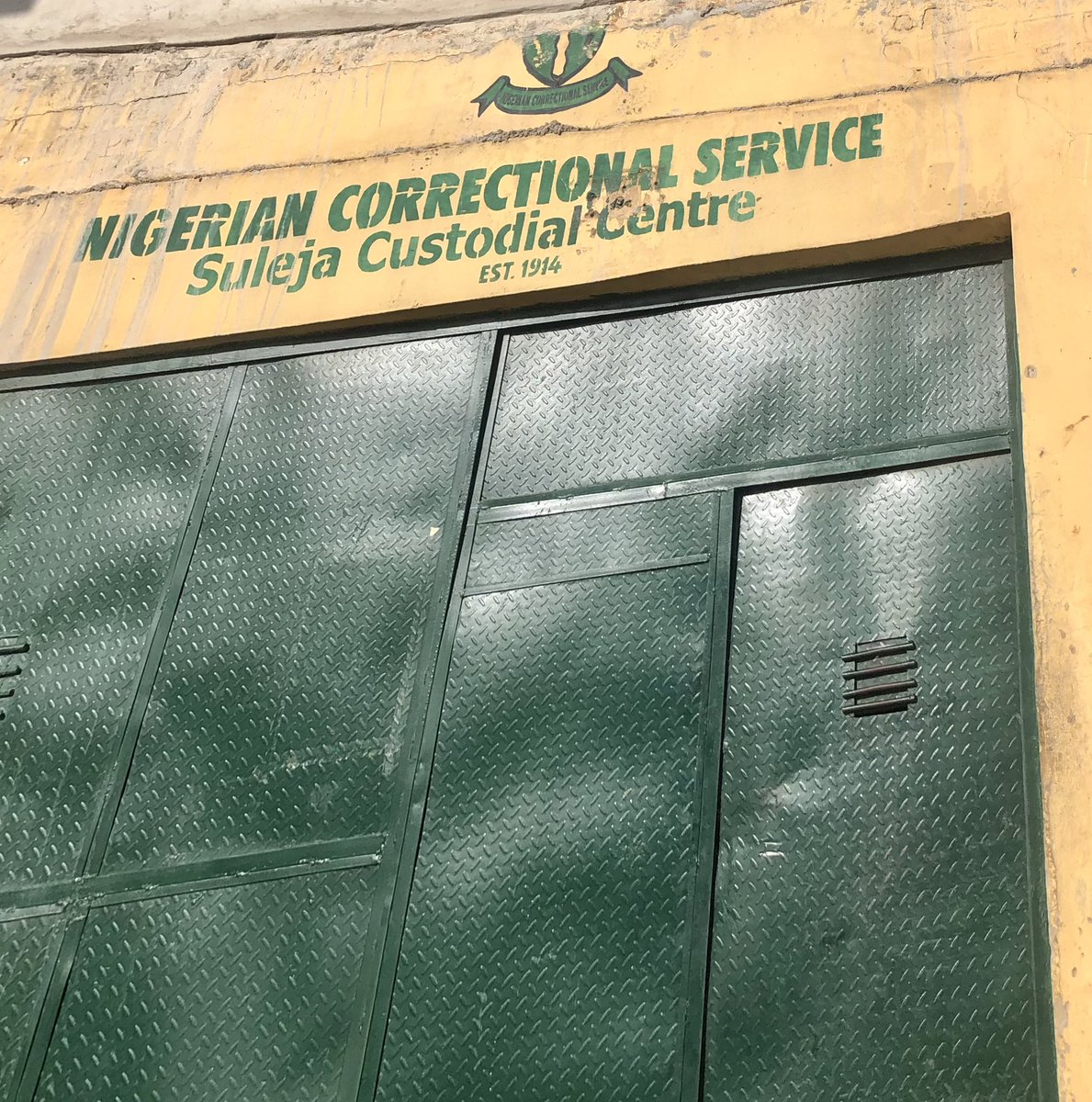
….Observes Mandela Day at Suleja Correctional Center
By Clement Nwoji
The National Human Rights Commission (NHRC) has tasked the Federal and state governments as well as the people of means to show practical interventions towards reducing poverty and inequity in Nigeria, rather than mere advocacy.
NHRC noted that most inmates in correctional centres were driven into crimes due to growing poverty and inequity in the country and thus constituting congestions in virtually all the correctional centers in the country with the inmates left without adequate care and rehabilitation facilities.
The Executive Secretary of the NHRC, Dr. Tony Ojukwu, spoke at the Suleja Correctional Center in commemoration of Nelson Mandela Day. This year’s theme is: “It’s still in our hands to combat poverty and inequity.”
It would be recalled that every year on the 18th of July, the world pauses to honour the legacy of Nelson Mandela, a towering figure whose life reminds us that justice, dignity and compassion must extend to everyone.
In 2015, the United Nations General Assembly broadened the scope of Mandela Day to highlight humane conditions of imprisonment, the recognition of prisoners as continuous members of society and the vital role of correctional service staff as a social service of great importance.
The adoption of the United Nations Standard Minimum Rules for the Treatment of Prisoners as the “Nelson Mandela Rules” remains a powerful tribute to Mandela, who himself endured 27 years in prison in pursuit of freedom.
Ojukwu explained that it is not a just a memorial but a reaffirmation of a life lived for the human person, for the values of human dignity and for the principles of freedom.
According to Ojukwu, “Most crimes that bring people into custody are often rooted in poverty and when you look at the fines that continue to keep low-risk inmates behind bars, you can see how poverty and inequity sustain overcrowding in our correctional facilities.
“This year’s theme must therefore speak to our systems, our policies, our laws and our collective conscience. It calls on us to fight poverty and inequity not only through advocacy but through practical interventions.
“That is why, beyond assessing conditions of detention and making recommendations, we have gone further to pay off fines for indigent inmates, provide welfare items and support rehabilitation and reintegration.”
He advocated for sustainable practical interventions by federal, states governments as well as people of means to reduce poverty and inequity prevailing in the country as means of combating crimes and eliminating prison congestion.
He said: “For people of means, it is an invitation to join hands in supporting these efforts, so that custodial centers are not overwhelmed and society can benefit from the values and contributions of rehabilitated inmates because they still have something to offer.
“In this way, Mandela’s legacy becomes a living principle guiding our work and ensuring that justice is not only about punishment but also about dignity and fairness.
“Last year, during Mandela Day 2025, we came here and facilitated the release of four indigent inmates by paying off their fines, donated essential welfare items, and sensitized custodial officers on the Mandela Rules and Bangkok Rules.
“That gesture is to demonstrate our mandate to promote human rights by reduce overcrowding in correctional facilities and support the reintegration of affected individuals into society.
“This year, we continue in that spirit. As part of today’s activities, we are supporting inmates with essential hygiene items and once again facilitating the release of selected low-risk individuals.
“By these actions we are simply saying that those in custody remain part of our society and deserve opportunities to rebuild their lives. Custody must be a turning point, leading to correction and ultimately reintegration.
“Together with our partners, Hope Behind Bars Africa, we will conduct sensitization sessions for custodial officers on two vital international instruments: the Mandela Rules and, for female inmates, the Bangkok Rules.
“These standards are practical guides to ensure that persons deprived of liberty are treated with dignity and fairness at all times. The more these standards are reinforced, the more they become embedded in our culture and practice.”




















 News3 days ago

 News6 days ago