Connect with us

News

OPEC Advocates Allowing Developing Countries’ Use Of Available Natural Resources To Bridge Energy Poverty

Published

on


OPEC Secretary General, HE Haitham Al Ghais has advocated that developing countries, most of which still facing energy poverty and limited access to finance, must be “allowed to utilize their natural resources to benefit their economies and people.”

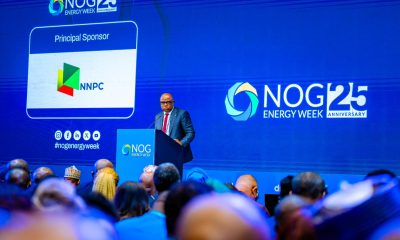
He advocated this while delivering a keynote address at the ongoing 24th Nigeria Oil and Gas (NOG) Energy Week Conference and Exhibition
29 June–3 July 2025, holding in Abuja, Nigeria.

He painted a gloomy picture of energy access with the increasing population rate without commiserate investments in all forms of energy sources.

Speaking of the theme of this years conference theme: “Accelerating Global Energy Progress Through Investment, Partnerships & Innovation”, he said: “OPEC’s World Oil Outlook sees global primary energy demand growing by 23% between now and 2050. This will be driven by many factors, but in the interest of brevity, I will consider demographics, urbanization and economic growth.

“The global population is expected to rise from around 8.2 billion people in 2024 to almost 9.7 by 2050. This growth will be concentrated almost entirely in the non-OECD region.

“Moreover, almost 1.9 billion people are expected to move to cities by 2050. This is equivalent to adding around 111 cities the size of Lagos or 452 cities the size of Abuja to the global urban landscape.

“While this will challenge energy infrastructure, it also represents an important opportunity to mitigate energy poverty for the estimated 675 million people who remain without access to basic forms of energy, and the 2.3 billion who still lack clean cooking fuels.

“Accelerating global energy progress will also be critical in underpinning global economic growth. Notably, we see the global economy almost doubling in size by 2050, largely driven by non-OECD economies.”

The OPEC Secretary General maintained that these three trends alone demonstrate that accelerating global energy progress would clearly require all energies, especially hydrocarbons.

“OPEC’s World Oil Outlook expects oil to retain the largest share of the energy mix in 2050, at almost 30%, while oil and gas combined are expected to remain above 50% between 2024 and 2050.

“Given these trends, there has thankfully been a marked shift in global energy discussions over the past year or so. Policymakers and media are once again increasingly recognizing the need to deliver energy security and affordability alongside emissions reductions.

“Crucially, developing countries – many of which still face energy poverty and limited access to finance – must be allowed to utilize their natural resources to benefit their economies and people”, he declared.


Advertisement
Click to comment

Leave a Reply

Your email address will not be published. Required fields are marked *

RENEWED HOPE AGENDA

NRS: MANAGE YOUR TAXES ONLINE

Our Naira Our Pride

NNPC: WE ARE HIRING

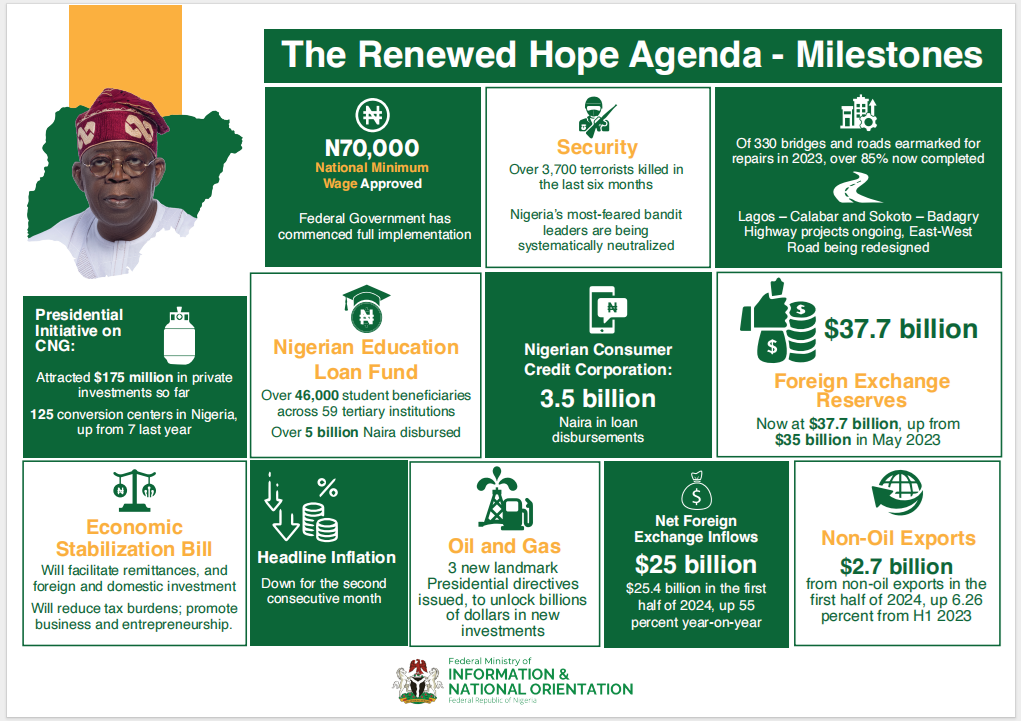
THE RENEWED HOPE AGENDA

ADVERTISEMENT

PRESS RELEASE

Click to read full text


CAVEAT EMPTOR

Advertisement

CBN Advert

Click the link to visit
Advertisement
Advertisement
Advertisement

Happy New Year

Facebook

Advertisement
Advertisement

Breaking News...